Green vs Red Passport
February 18, 2026
Taiwan Lanterns
February 18, 2026Earth’s Most Alien Place
There are places on Earth that feel untouched. And then there is Socotra Island.
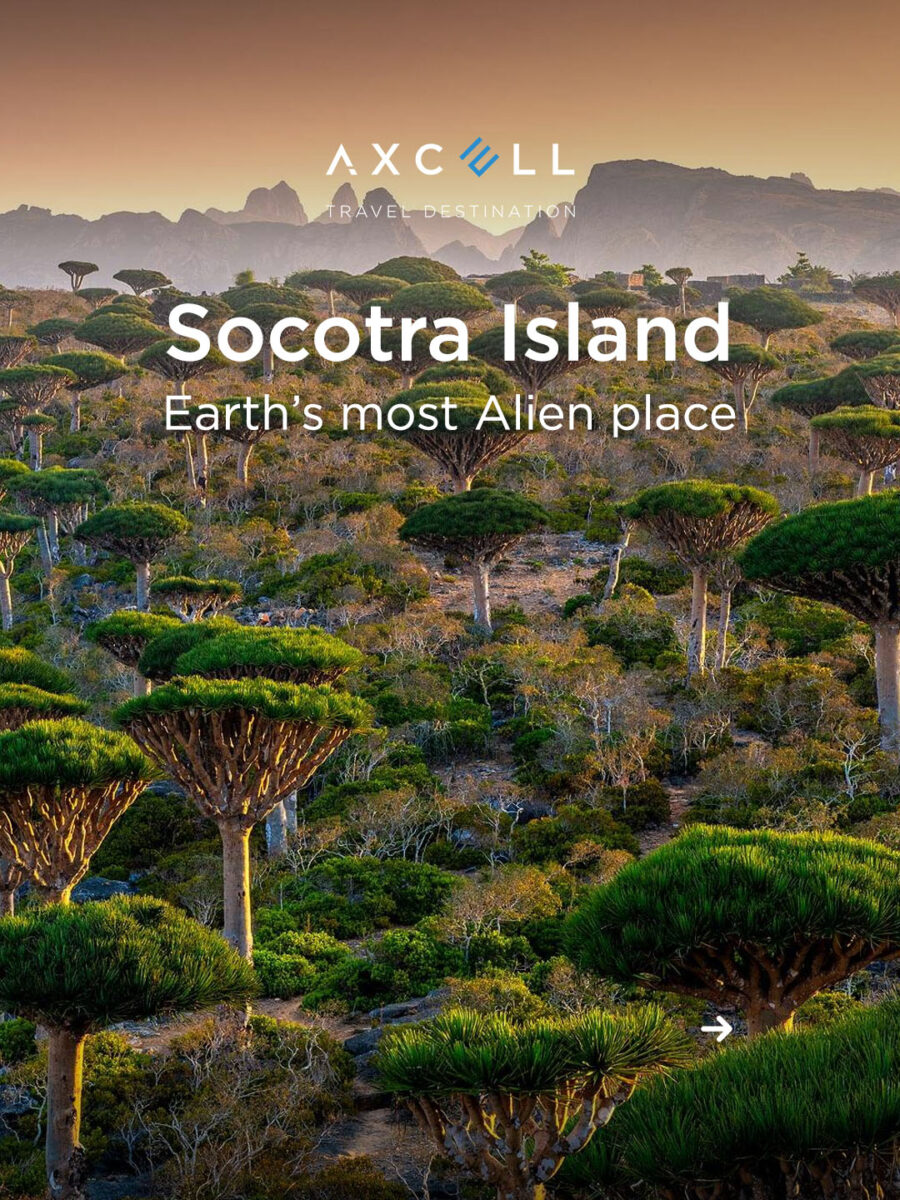
Floating in the Arabian Sea, far from mainland Africa and the Arabian Peninsula, Socotra feels like a fragment of another planet. Its landscapes are surreal. Its trees look sculpted by imagination rather than evolution. Its coastline remains wild and quiet.
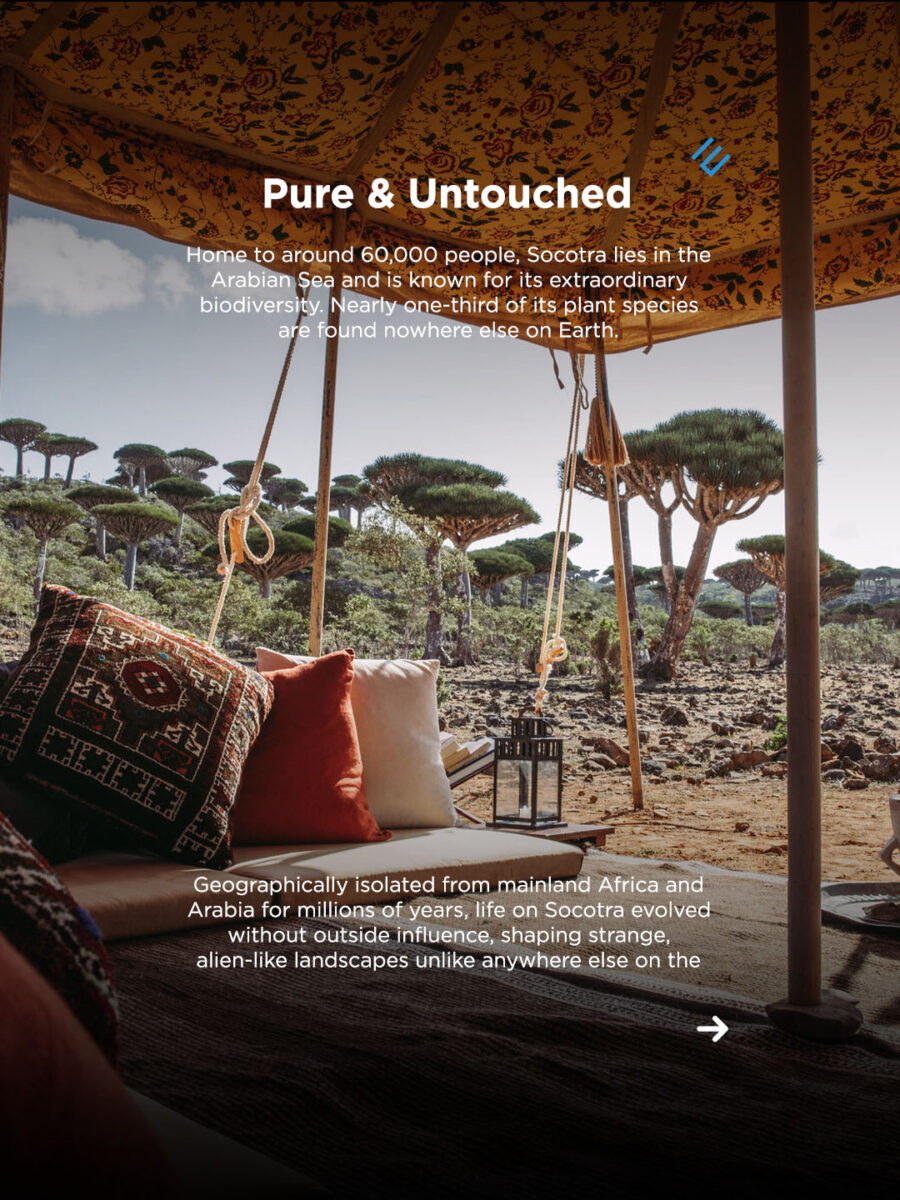
Home to around 60,000 people, Socotra is not just remote—it is biologically extraordinary. Nearly one-third of its plant species are found nowhere else on Earth.
Geographic isolation has shaped an ecosystem unlike any other.
This is not a typical island getaway.
This is Earth at its strangest—and most beautiful.
A World Shaped by Isolation
Millions of years without outside influence
A Geological Time Capsule
Socotra separated from mainland Africa millions of years ago. Cut off from continental ecosystems, plants and animals evolved independently.
This long isolation created what scientists call high endemism—species that exist nowhere else.
Walking across the island feels like stepping into a prehistoric landscape.
There are no dense urban skylines, no large-scale development. Nature dominates.
Biodiversity Like No Other
Socotra’s biodiversity is so unique that it has earned recognition as a UNESCO World Heritage Site.
The island’s flora includes:
Rare desert roses
Cucumber trees
Frankincense species
The legendary Dragon Blood Tree
Each species has adapted to harsh winds, dry climates, and rugged terrain.
Life here evolved differently.
And it shows.
The Dragon Blood Trees
An icon of another world
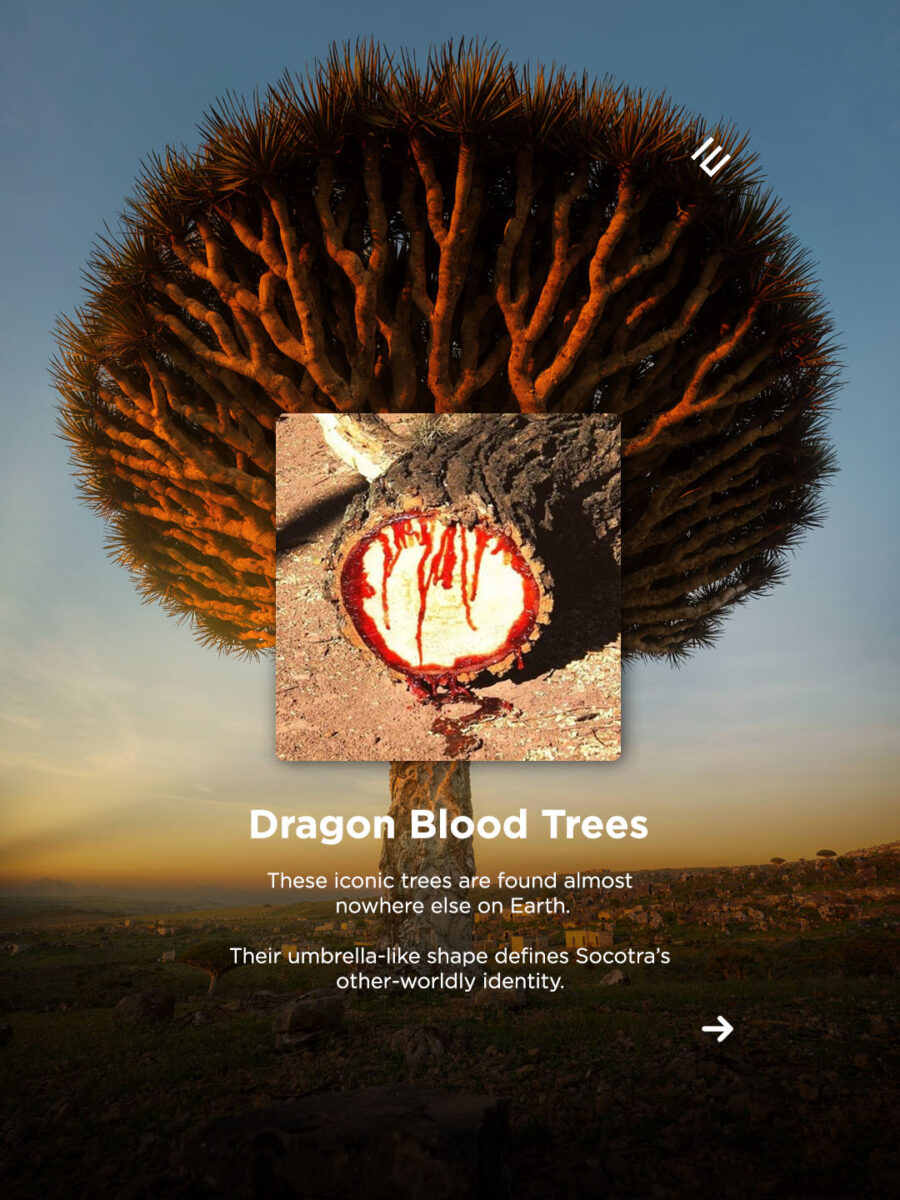
If Socotra has a symbol, it is the Dragon Blood Tree.
These umbrella-shaped trees appear almost mythical. Their wide, dense canopy spreads outward like an open parasol, casting circular shadows on rocky ground.
Why They Look So Unique
The Dragon Blood Tree evolved its distinctive shape to survive extreme conditions.
The umbrella-like canopy:
Reduces evaporation
Protects the trunk from harsh sunlight
Collects moisture from mist and humidity
The tree produces a deep red resin, historically used as dye, medicine, and incense—hence the dramatic name.
Standing beneath one feels surreal, as if you’ve stepped into a science fiction film.
Pristine Coastlines
Isolation in its purest form
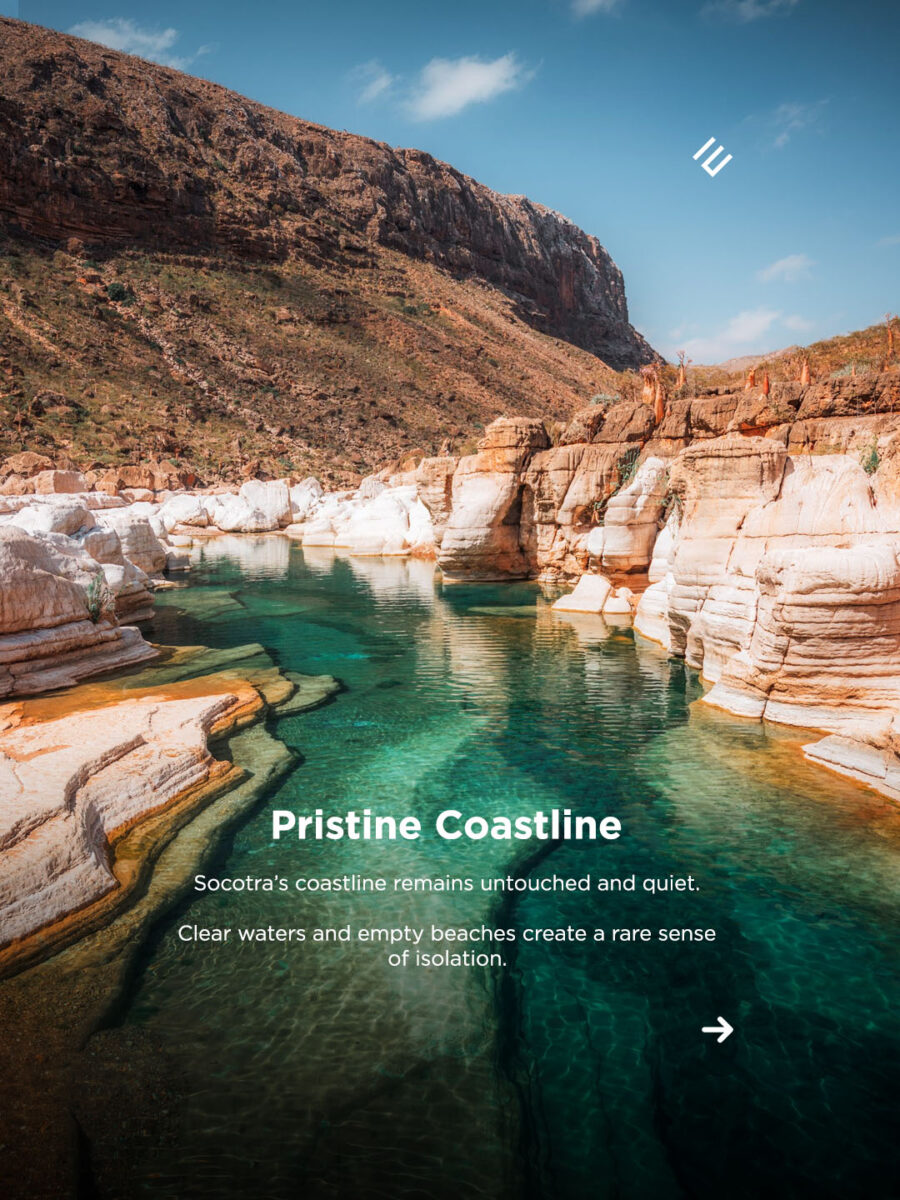
Socotra’s coastline remains remarkably untouched.
Unlike many popular beach destinations, you won’t find:
Luxury resorts lining the shore
Crowded beach clubs
Endless rows of umbrellas
Instead, you’ll discover:
Clear turquoise waters
Vast empty beaches
Gentle waves meeting untouched sand
The silence here is powerful.
It’s the kind of quiet that allows you to hear wind over dunes and waves against rock.
A Rare Sense of Solitude
In a world where even remote destinations are increasingly developed, Socotra offers something rare: true isolation.
You can walk for miles without encountering another person.
The experience feels raw and authentic.
Not curated.
Not commercialized.
Simply natural.

Surreal Landscapes
Ancient and untamed
Beyond the coastline, Socotra’s interior is equally striking.
Limestone Plateaus & Rugged Mountains
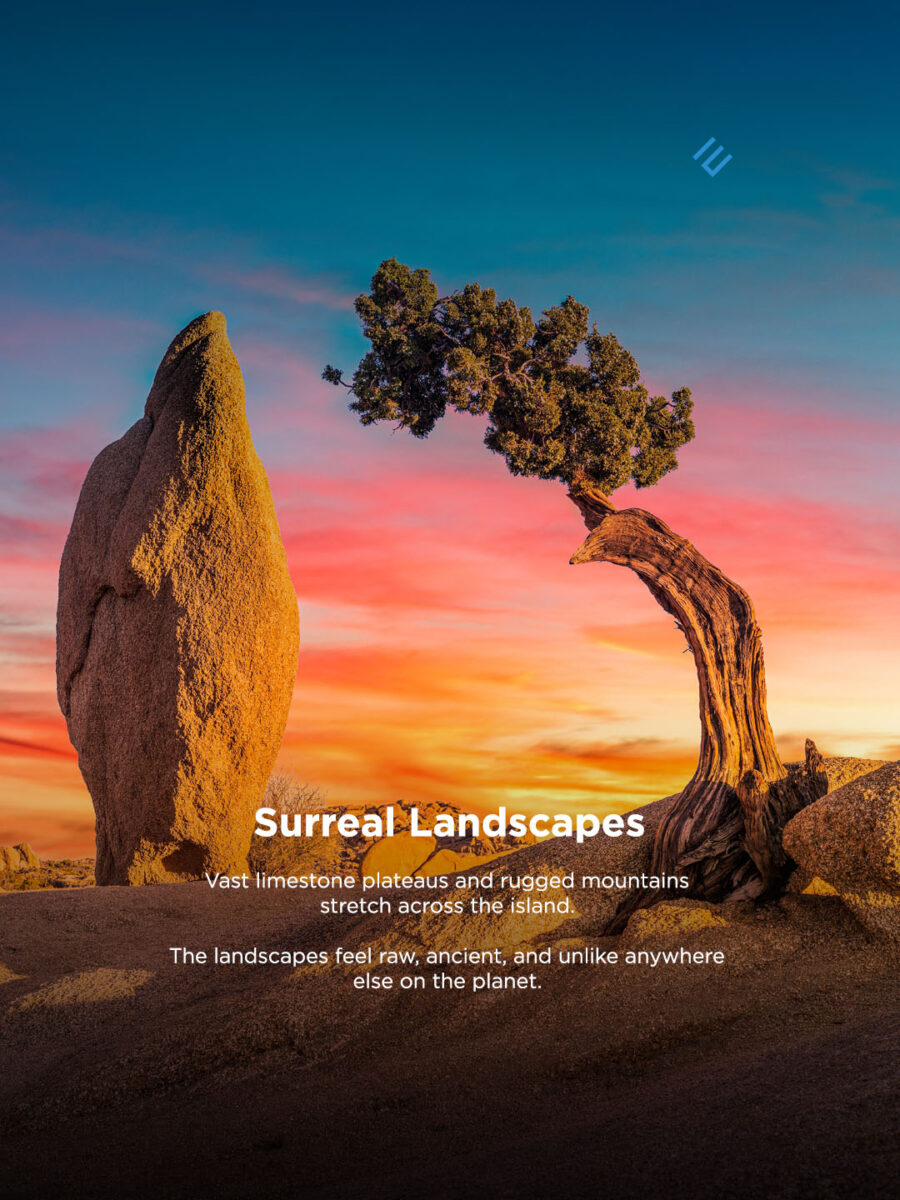
Vast limestone plateaus stretch across the island, carved by wind and time.
Jagged mountain ranges rise dramatically, their peaks often cloaked in mist.
The terrain feels ancient—weathered by millions of years of exposure.
Every direction reveals something unusual:
Twisted trees
Towering rock formations
Unfamiliar plant shapes
It’s not just beautiful.
It’s otherworldly.
Landscapes That Feel Cinematic
Photographs of Socotra often look edited or digitally enhanced.
But the colors are real.
The shapes are real.
The contrast between white limestone, deep green vegetation, and bright blue sea creates a visual experience unlike anywhere else.
It’s easy to understand why many describe Socotra as “Earth’s most alien place.”
Life on the Island
Despite its remoteness, Socotra is home to around 60,000 residents.
Local communities live in harmony with the environment, relying on traditional livelihoods such as fishing and livestock herding.
Infrastructure remains limited. Tourism is carefully managed.
The island’s relative isolation has helped preserve its authenticity.
Visiting Socotra requires patience, planning, and respect for local culture and fragile ecosystems.
It is not a casual stop—it is a commitment.
Why Socotra Feels Different
In an era where many destinations feel increasingly similar—luxury hotels, curated experiences, predictable itineraries—Socotra stands apart.
It offers:
No polished facades
No artificial attractions
No mass tourism
Instead, it offers raw beauty and biological wonder.
It challenges travelers to step outside comfort zones.
To appreciate landscapes that feel unfamiliar.
To experience Earth in a form rarely seen.
A Reminder of Earth’s Wild Imagination
Socotra Island reminds us that our planet is still capable of surprise.
Its Dragon Blood Trees stretch like living sculptures.
Its coastlines whisper in solitude.
Its mountains stand timeless and quiet.
It is not glamorous in the conventional sense.
But it is extraordinary.
In a world that often feels mapped, photographed, and filtered, Socotra remains a place of mystery.
And perhaps that is its greatest luxury.
Because sometimes, the most unforgettable journeys are not about comfort or convenience.
They are about witnessing something so unique that it feels almost impossible.
Socotra is not just a destination.
It is proof that Earth still holds alien beauty within its own borders.