Gratitude and Prosperity
A sacred bamboo arch of devotion
What Is a Penjor?
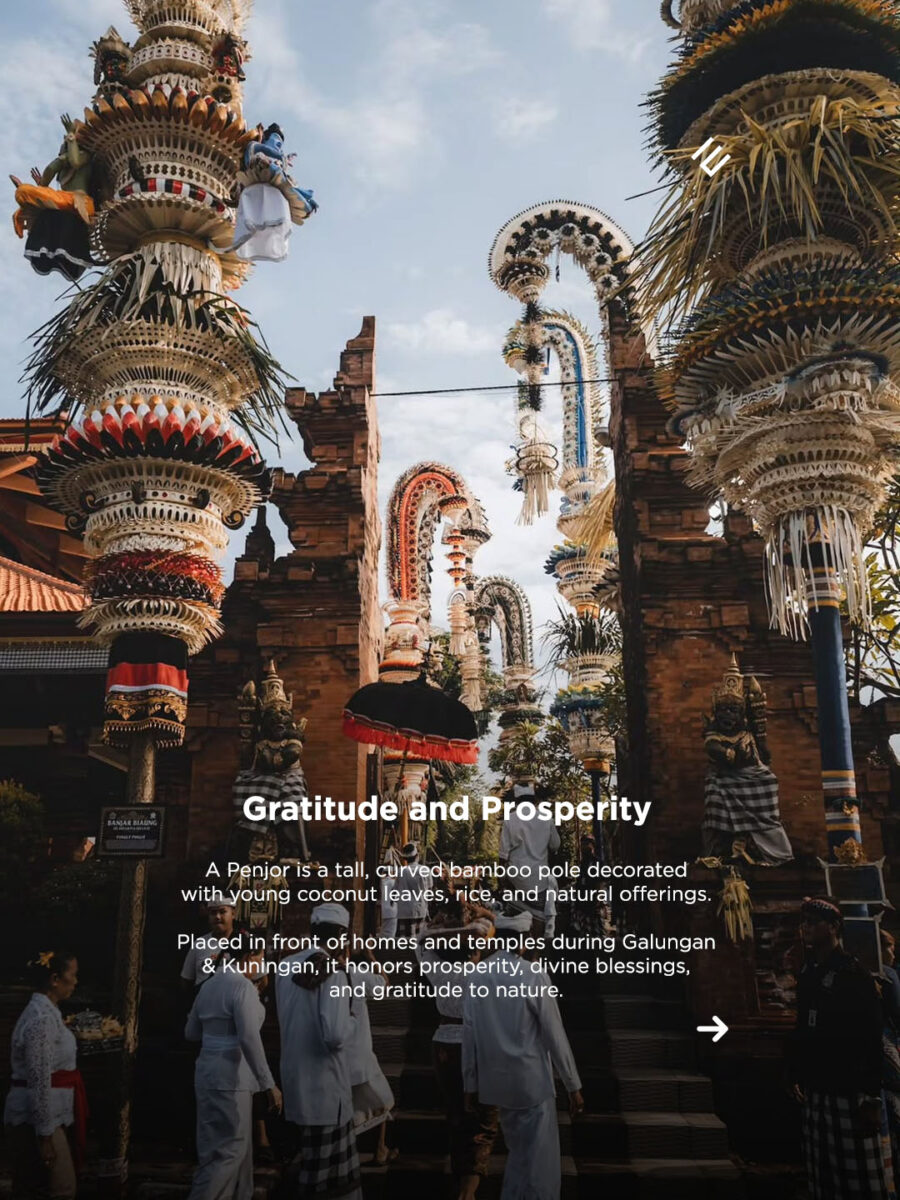
A Penjor is a tall, curved bamboo pole decorated with:
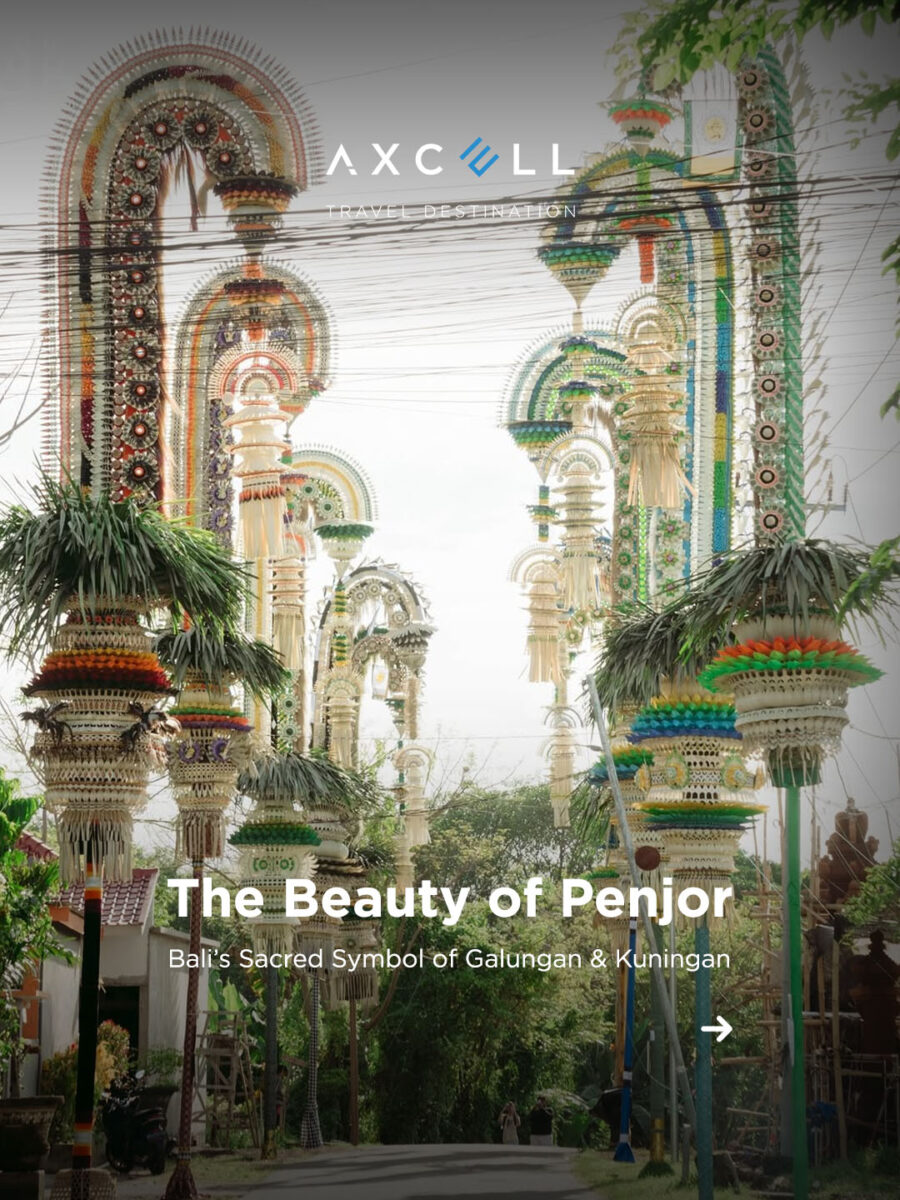
Placed in front of homes and temples, Penjor line the streets like sacred gateways. Their curved shape resembles Mount Agung—the spiritual axis of Bali—and symbolizes the sacred mountain where divine energy resides.
Each Penjor becomes both offering and prayer.
Honoring Divine Blessings
During Galungan, Balinese Hindus celebrate the victory of dharma (good) over adharma (evil). It is a time when ancestral spirits are believed to return to earth to visit their families.
Penjor stand as welcoming gestures—expressions of gratitude for:
Prosperity
Abundant harvest
Divine protection
Harmony with nature
They are not temporary ornaments made for display. They are spiritual statements of thankfulness.
Crafted with Care
A family tradition of devotion
Handmade by Families
In the days leading up to Galungan, Balinese families gather to create their Penjor together.
Bamboo is carefully selected and shaped. Coconut leaves are woven into intricate patterns. Rice and grains are attached thoughtfully.
The preparation becomes a shared ritual—connecting generations through craft and prayer.
Children watch and learn. Elders guide with experience. The act of making Penjor becomes an offering in itself.
Raised on Penampahan Galungan
The day before Galungan, known as Penampahan Galungan, families complete and raise their Penjor.
Standing tall in front of each home, the Penjor symbolizes readiness to welcome blessings and ancestral spirits.
The streets of Bali transform into corridors of devotion.
The Meaning Behind Each Ornament
Every detail carries symbolism
A Penjor is not random decoration. Each element holds meaning rooted in Balinese Hindu philosophy.
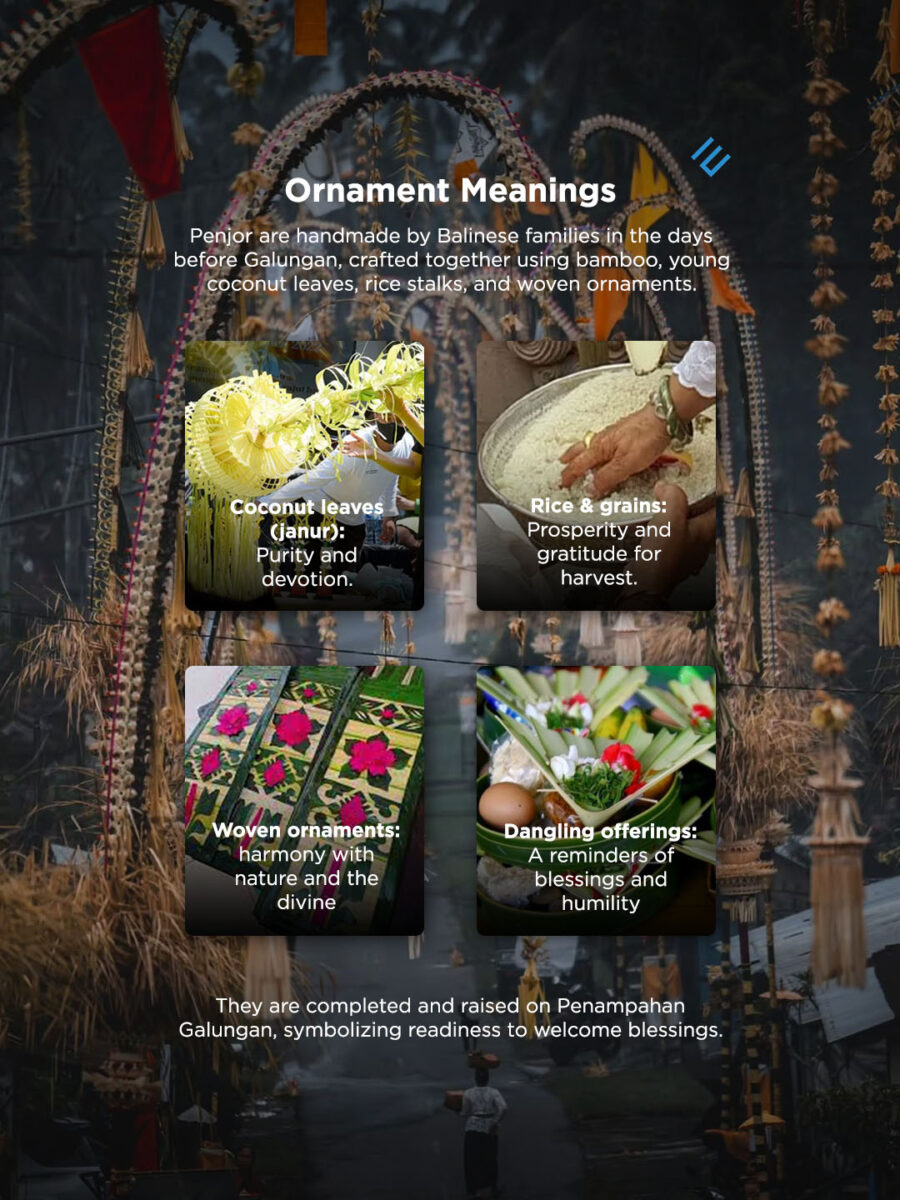
Coconut Leaves (Janur) — Purity & Devotion
Young coconut leaves, woven into delicate shapes, represent sincerity and purity.
Their vibrant green color reflects life and renewal.
Janur expresses devotion offered with a clean heart.
Rice & Grains — Prosperity & Gratitude
Rice is sacred in Bali, connected to Dewi Sri, the goddess of rice and fertility.
Including rice stalks in Penjor symbolizes:
It is a reminder that prosperity flows from nature’s generosity.
Woven Ornaments — Harmony with Nature
The intricate patterns woven into Penjor reflect the balance between humans, nature, and the divine—a core principle of Balinese philosophy known as Tri Hita Karana.
Harmony is not abstract; it is lived daily.
Penjor visually express this balance.
Dangling Offerings — Humility & Blessings
At the base of each Penjor hangs an offering known as “sampian.”
These offerings represent humility and gratitude. They remind families that prosperity should be received with modesty and respect.
The gentle swaying of these ornaments in the wind symbolizes life’s constant movement.