Europe’s Grape Harvest Season
February 15, 2026Top Fall Escapes
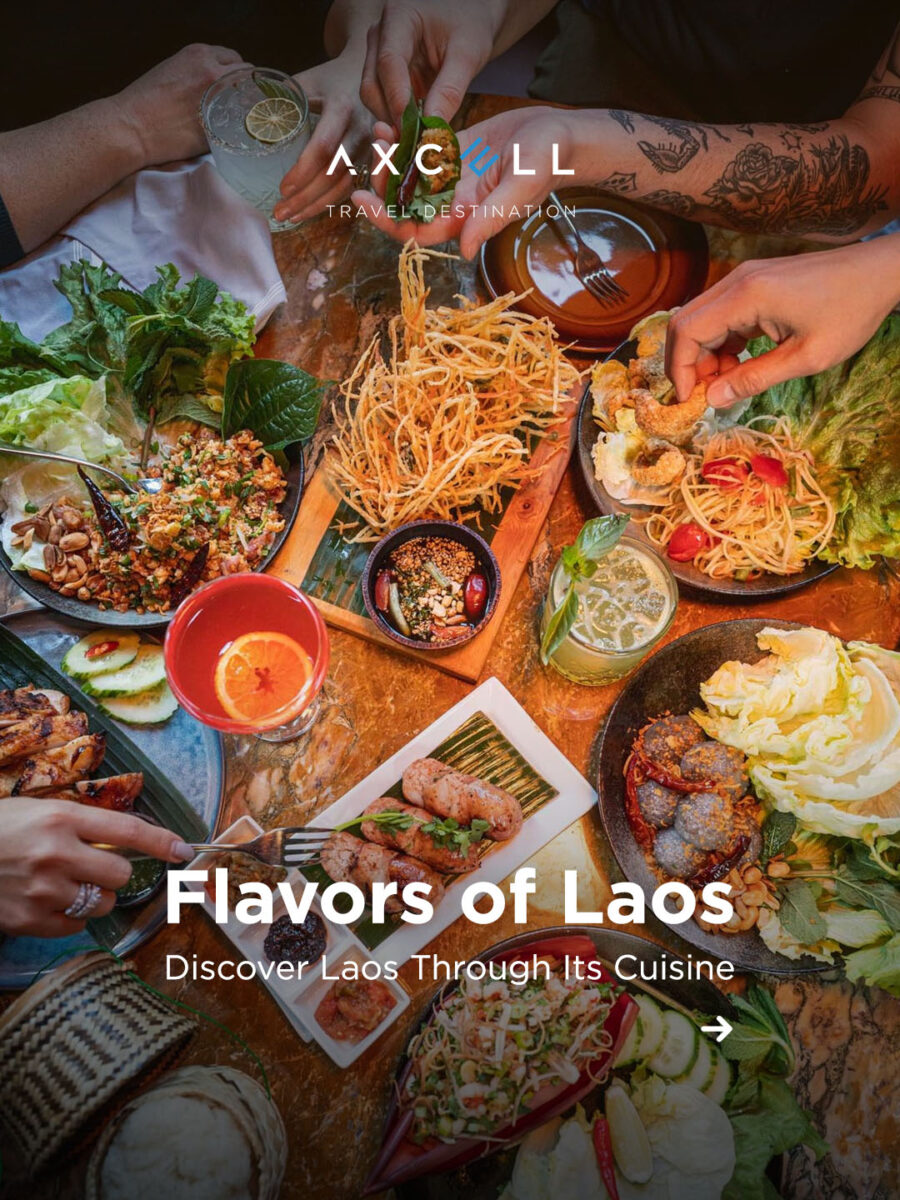
February 15, 2026Discover Laos Through Its Cuisine
There is a quiet magic to Laos. Mornings begin with saffron-robed monks walking softly through mist-covered streets. The Mekong River flows steadily past wooden homes and temple walls. Markets awaken not with noise, but with rhythm — the chopping of herbs, the clatter of baskets, the scent of charcoal rising into warm air.
To understand Laos, you must sit at its table.
Laotian cuisine is not flashy. It does not compete for attention. Instead, it invites you to slow down, taste carefully, and notice the balance of flavors — spicy yet fresh, earthy yet bright, simple yet deeply layered.
From vibrant minced salads to fragrant herbal stews, Lao food reflects its landscapes: rivers rich with fish, forests filled with aromatic plants, and mountains that shape both climate and culture.
This is not simply about dishes.
It is about identity, tradition, and community.
The Soul of Lao Cuisine
Freshness, fire, and harmony
A Land Connected to the Mekong
Laos is defined by the Mekong River. Flowing through the country from north to south, it shapes agriculture, fishing traditions, and daily life. River fish appear in countless dishes, often grilled, steamed, or wrapped in banana leaves.
The landscape determines the plate.
Mountain herbs, wild vegetables, freshwater fish, and sticky rice form the backbone of Lao cooking.
Food here is local because it has always needed to be.
Sticky Rice – The Heart of Every Meal
Unlike many neighboring countries, Laos centers its cuisine on sticky rice (khao niao). Served in small woven bamboo baskets, it is eaten by hand — gently rolled into small portions and dipped into shared dishes.
Sticky rice is more than a staple. It is ritual.
Meals are communal. Plates are placed in the center. Everyone shares. There is no rush, no individual servings arranged with precision. The beauty lies in togetherness.
Herbs Over Heavy Sauces
Where Thai cuisine may lean toward rich curries, Lao food often highlights raw herbs and bright acidity. Mint, dill, coriander, lemongrass, and lime juice dominate many recipes.
Spice is present, but it enhances rather than overwhelms. Fermented fish sauce adds depth. Toasted rice powder brings nuttiness.
The result is cuisine that feels alive — layered yet clean.
Signature Dishes That Define Laos
Four iconic flavors you cannot miss
Laap — The National Dish
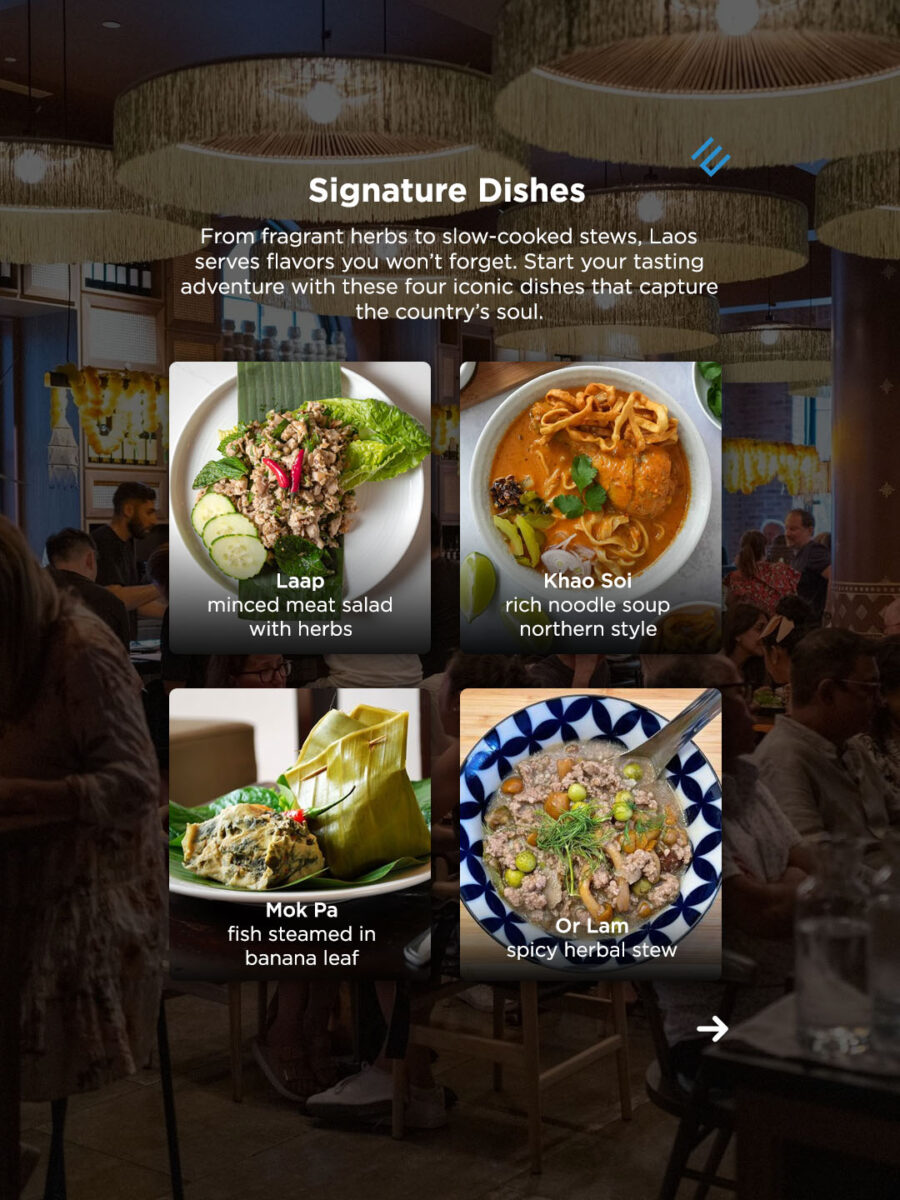
Laap is often described as the national pride of Laos. At first glance, it appears simple: minced meat mixed with herbs. But its flavor tells a far richer story.
Typically made with chicken, pork, beef, or fish, Laap combines:
Fresh mint and coriander
Lime juice
Fish sauce
Chili flakes
Toasted rice powder
The toasted rice powder gives Laap its signature texture and nutty aroma. The herbs add brightness. Lime provides acidity. Chili introduces warmth.
Laap is commonly served during celebrations — weddings, festivals, and family gatherings. It represents prosperity and unity.
One bite delivers contrast: cool herbs against spice, tang against savory depth. It is refreshing and bold at once.
Khao Soi — Northern Comfort in a Bowl
In northern Laos, especially around Luang Prabang, mornings often begin with Khao Soi.
Unlike the coconut-rich Thai version, Lao Khao Soi features a tomato-based broth simmered with minced pork, fermented soybean paste, and garlic. Hand-cut rice noodles soak up the rich flavors.
It is hearty but not heavy — ideal for cool mornings in the highlands.
Sitting in a small roadside stall with a steaming bowl of Khao Soi, you feel the warmth of the dish and the hospitality of its maker.
Mok Pa — Wrapped in Banana Leaf
Mok Pa reflects Laos’ intimate relationship with its rivers.
Fresh river fish is seasoned with lemongrass, kaffir lime leaves, chili, and herbs. It is then wrapped in banana leaves and gently steamed.
When unwrapped, fragrant steam rises softly — carrying the scent of forest and water.
Steaming preserves the fish’s natural sweetness, while the herbs infuse delicate complexity. The banana leaf adds a subtle, earthy aroma.
It is simple, elegant, and deeply local.
Or Lam — The Herbal Stew of Luang Prabang
In Vientiane, the riverside along the Mekong becomes a relaxed dining destination at sunset.
Food stalls and open-air restaurants serve grilled meats, papaya salad, sticky rice, and cold drinks as the sky turns golden.
There is no hurry. Conversations stretch long into the evening.
Dining here is about atmosphere as much as flavor.

Where to Taste Authentic Lao Flavors
From riverside evenings to bustling markets
Vientiane Riverside
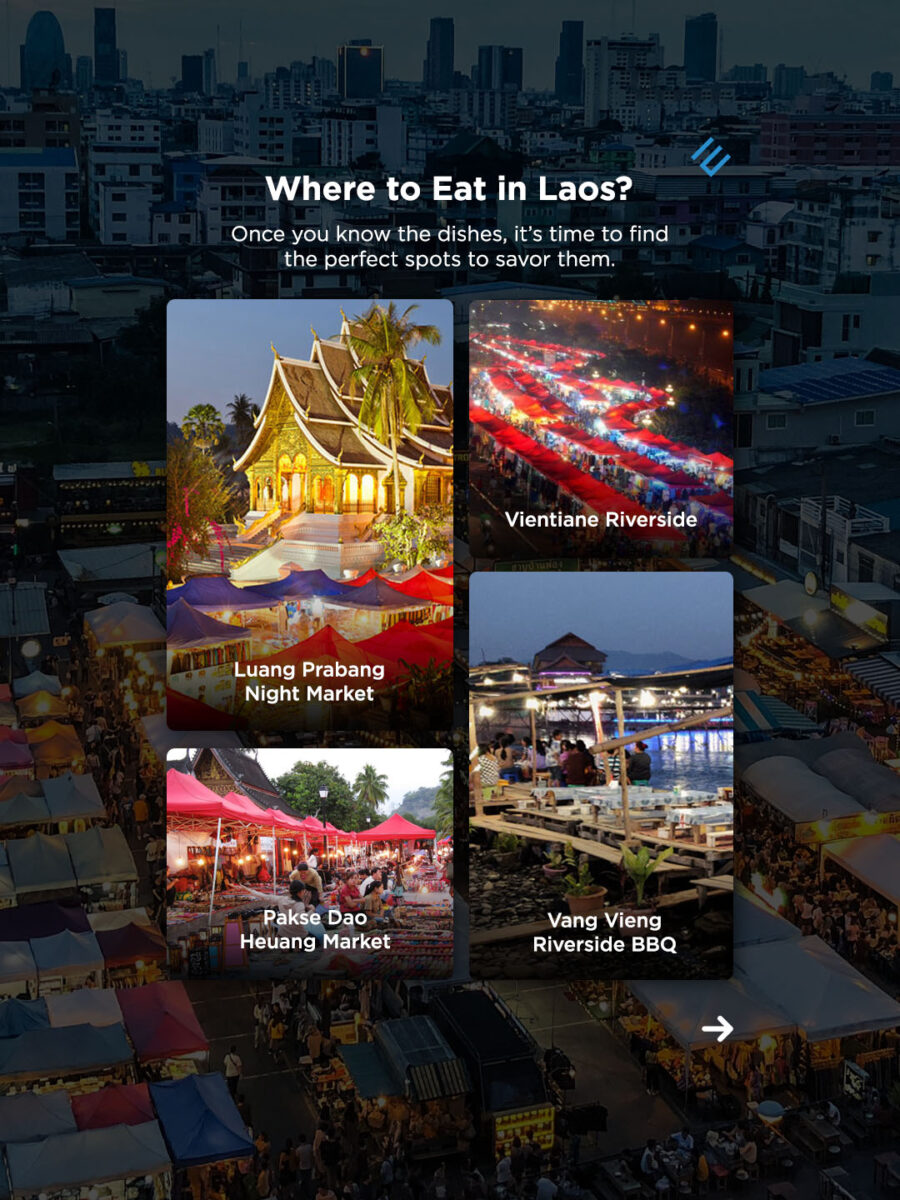
In Vientiane, the riverside along the Mekong becomes a relaxed dining destination at sunset.
Food stalls and open-air restaurants serve grilled meats, papaya salad, sticky rice, and cold drinks as the sky turns golden.
There is no hurry. Conversations stretch long into the evening.
Dining here is about atmosphere as much as flavor.
Luang Prabang Night Market
The Night Market in Luang Prabang is a sensory delight. Vegetarian buffets display colorful dishes, while grilled fish and coconut desserts tempt passersby.
Lantern lights illuminate temple rooftops nearby. Aromas drift through the evening air.
It is a place where travelers and locals mingle over shared flavors.
Pakse’s Dao Heuang Market
In southern Laos, Pakse offers Dao Heuang Market — a vibrant morning hub of produce, spices, and river fish.
Here you see the ingredients that shape Lao cuisine: bundles of mint, baskets of chilies, jars of fermented paste, and freshly caught fish glistening on ice.
It is the raw beginning of every dish.
Vang Vieng Riverside BBQ
In Vang Vieng, riverside barbecue spots offer grilled skewers and sticky rice against a backdrop of limestone mountains.
After a day exploring caves and rivers, smoky grilled meats taste especially satisfying.
It is casual, authentic, and deeply memorable.
Cooking in Luang Prabang
From tasting to understanding
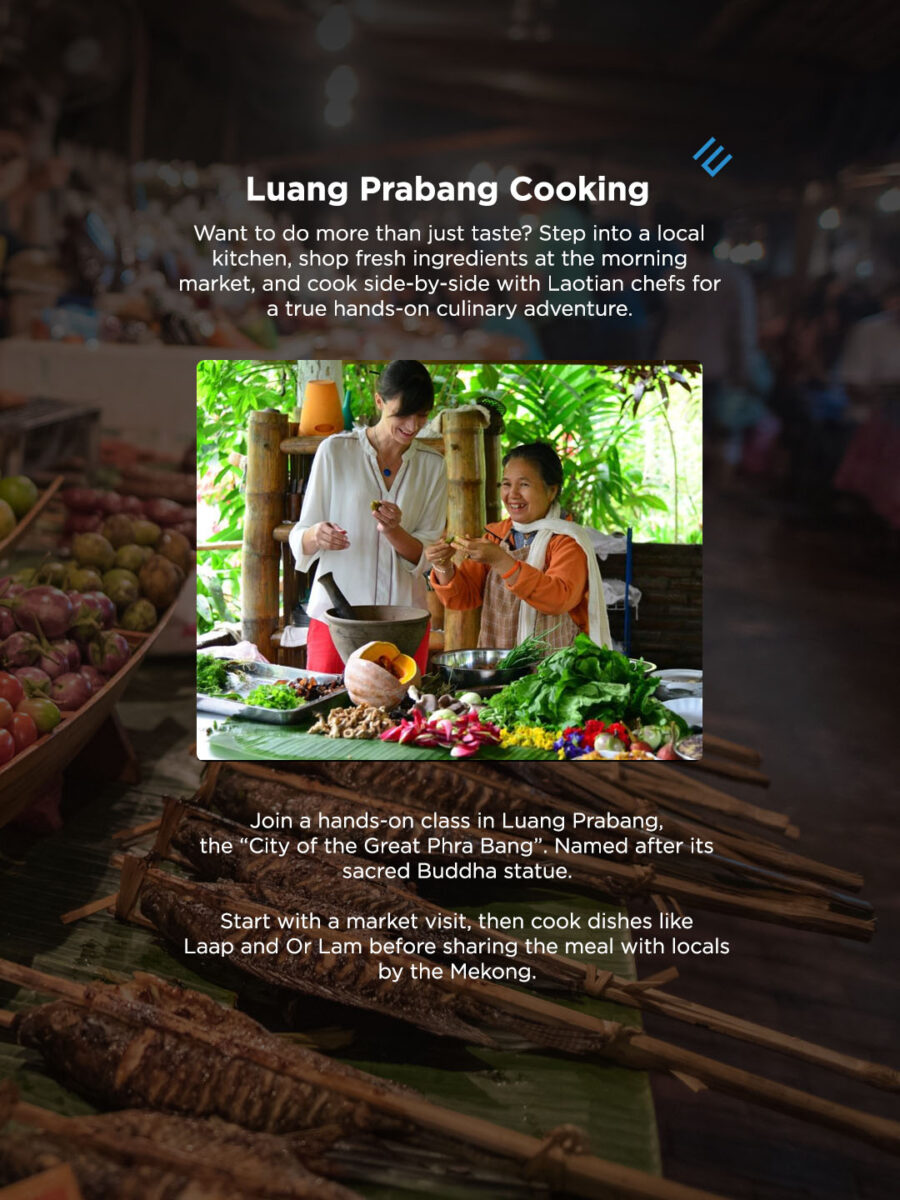
In Luang Prabang — often called “The City of the Great Phra Bang” — cooking classes offer a deeper connection to Lao culture.
A typical experience includes:
Visiting the morning market to select fresh herbs and fish
Learning traditional preparation techniques
Cooking dishes like Laap and Or Lam
Sharing your meal beside the Mekong River
Cooking here teaches more than recipes. It reveals patience, respect for ingredients, and the value of community.
It transforms travelers into participants
Tasting the Spirit of Laos
Laos does not overwhelm you with spectacle.
It welcomes you quietly.
Its cuisine mirrors that spirit — bold yet balanced, simple yet deeply meaningful.
From the herbal brightness of Laap to the warming depth of Or Lam, from riverside sunsets in Vientiane to lantern-lit nights in Luang Prabang, every meal becomes part of the journey.
When you eat in Laos, you taste more than flavor.
You taste landscape.
You taste tradition.
You taste connection.
And long after the journey ends, what remains is not just memory —
but the lingering warmth of a meal shared along the Mekong.