Don’t Pack These | Travel Items That Could Get You in Trouble
February 13, 2026
3 Countries You Can’t Reach by Plane
February 13, 2026Japan’s Most Joyful Dance Festival
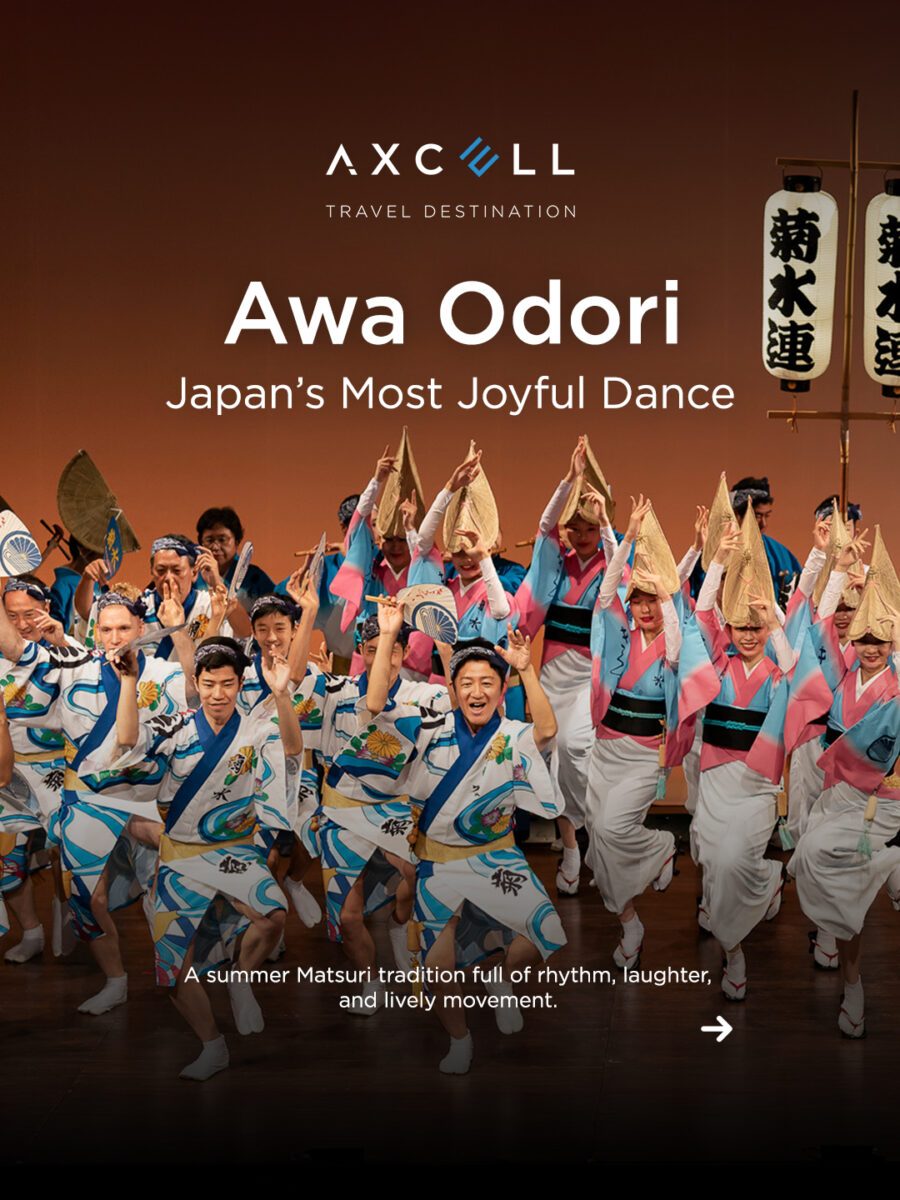
When summer arrives in Japan, the country bursts into festival season. Lanterns glow, fireworks light the sky, and traditional drums echo through the streets. Among all the vibrant celebrations, one festival stands out for its rhythm, laughter, and irresistible energy: Awa Odori.
Held in Tokushima, Awa Odori is often called Japan’s most joyful dance festival. It’s not just a performance—it’s a shared experience where the line between dancer and audience disappears.
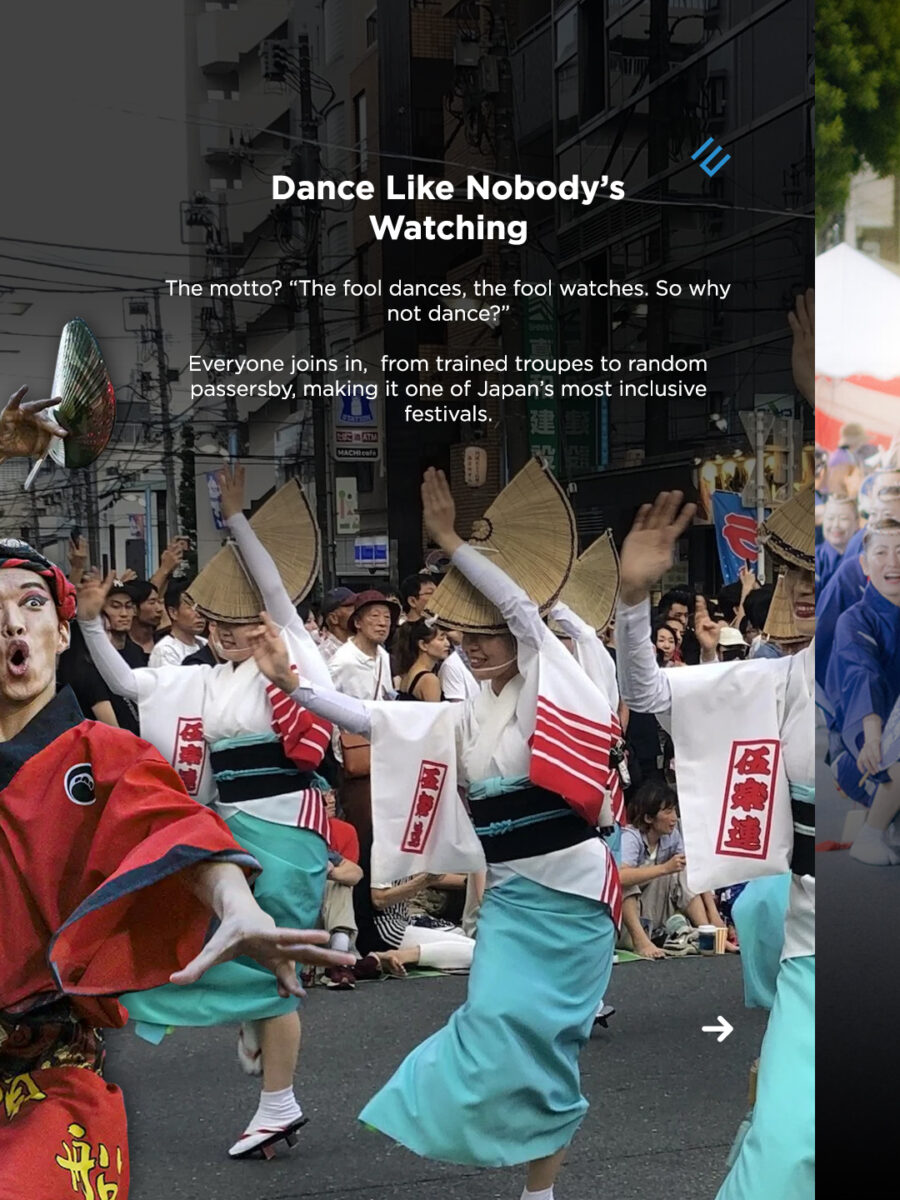
With its famous motto—“The fool dances, the fool watches. So why not dance?”—Awa Odori invites everyone to join the rhythm.
What Is Awa Odori?
A dance rooted in tradition and celebration
The Meaning Behind the Name
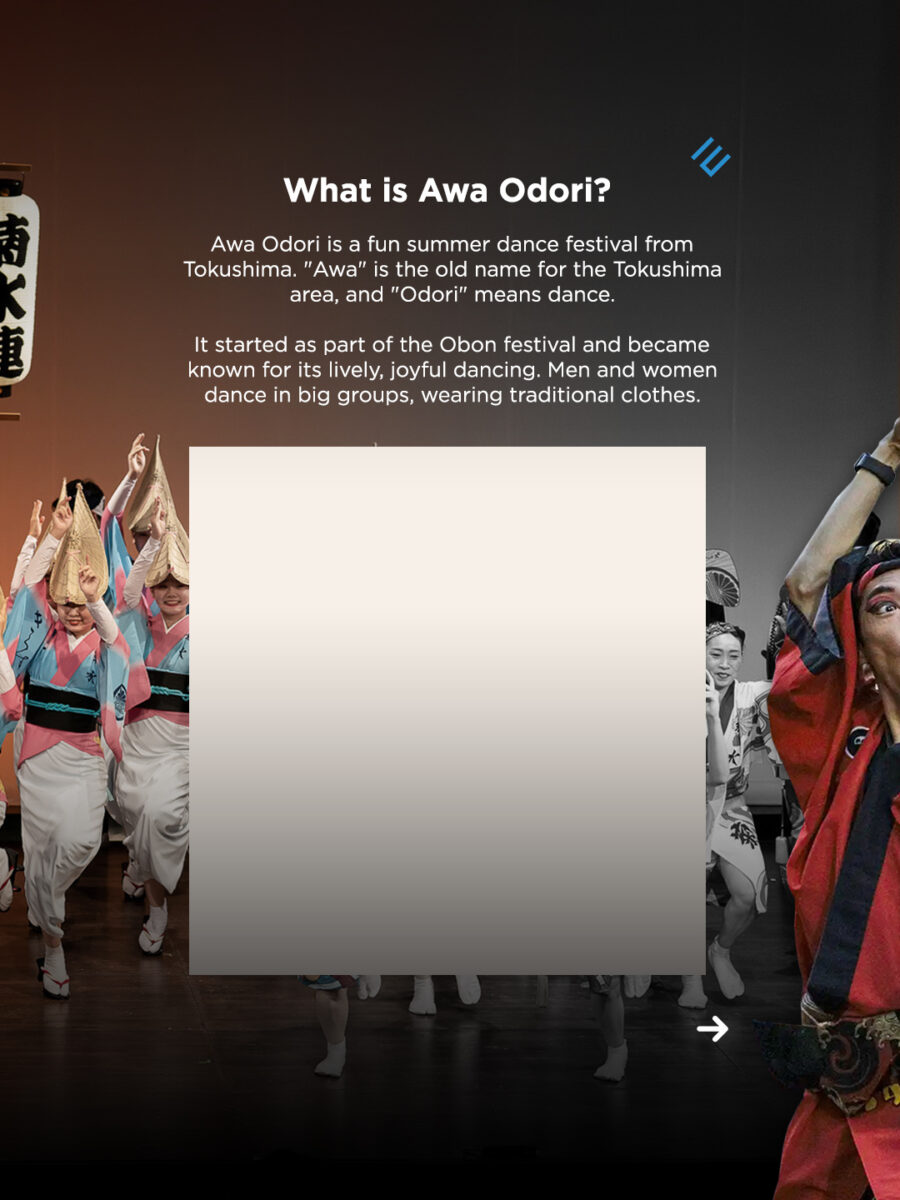
“Awa” is the historical name for the Tokushima region, while “Odori” simply means dance. Together, the name reflects the festival’s origins in local culture and identity.
Awa Odori began as part of the Obon celebration—a Buddhist event honoring ancestral spirits. Over centuries, what started as spiritual observance evolved into a lively public festival filled with music and dance.
Today, it blends history and fun in perfect harmony.
A Tradition That Spans Centuries
The festival dates back more than 400 years. While its exact origins are debated, one popular story traces it to celebrations following the completion of Tokushima Castle in the late 16th century.
Over time, the spontaneous dancing of locals transformed into organized troupes known as “ren,” who rehearse and perform choreographed routines.
Yet despite its long history, Awa Odori remains playful and welcoming.
The Dance and the Energy
Where rhythm takes over the streets
Unique Dance Styles
Men and women traditionally dance in separate groups, each with distinct styles:
Women often wear straw hats and elegant yukata, dancing with graceful, precise movements.
Men dance more energetically, with dynamic gestures and playful expressions.
The movements may appear simple, but they require coordination and stamina.
The rhythm is driven by traditional instruments such as shamisen, taiko drums, and bamboo flutes.
“Dance Like Nobody’s Watching”
What truly sets Awa Odori apart is its inclusive spirit.
The famous saying goes:
“The fool dances, the fool watches. If both are fools, you might as well dance.”
It’s a reminder not to overthink—just join in.
During the festival, you’ll see:
Professional dance troupes
Local community groups
Children learning the steps
Tourists jumping into the rhythm
It’s impossible not to smile.
A Festival for Everyone
One of Japan’s most inclusive celebrations
Unlike some traditional events where audiences simply observe, Awa Odori actively invites participation.
Visitors can join casual dance groups called “niwaka ren,” where beginners are taught simple steps before joining the parade.
This openness makes Awa Odori one of the most approachable cultural experiences in Japan.
No special skill required—just enthusiasm.

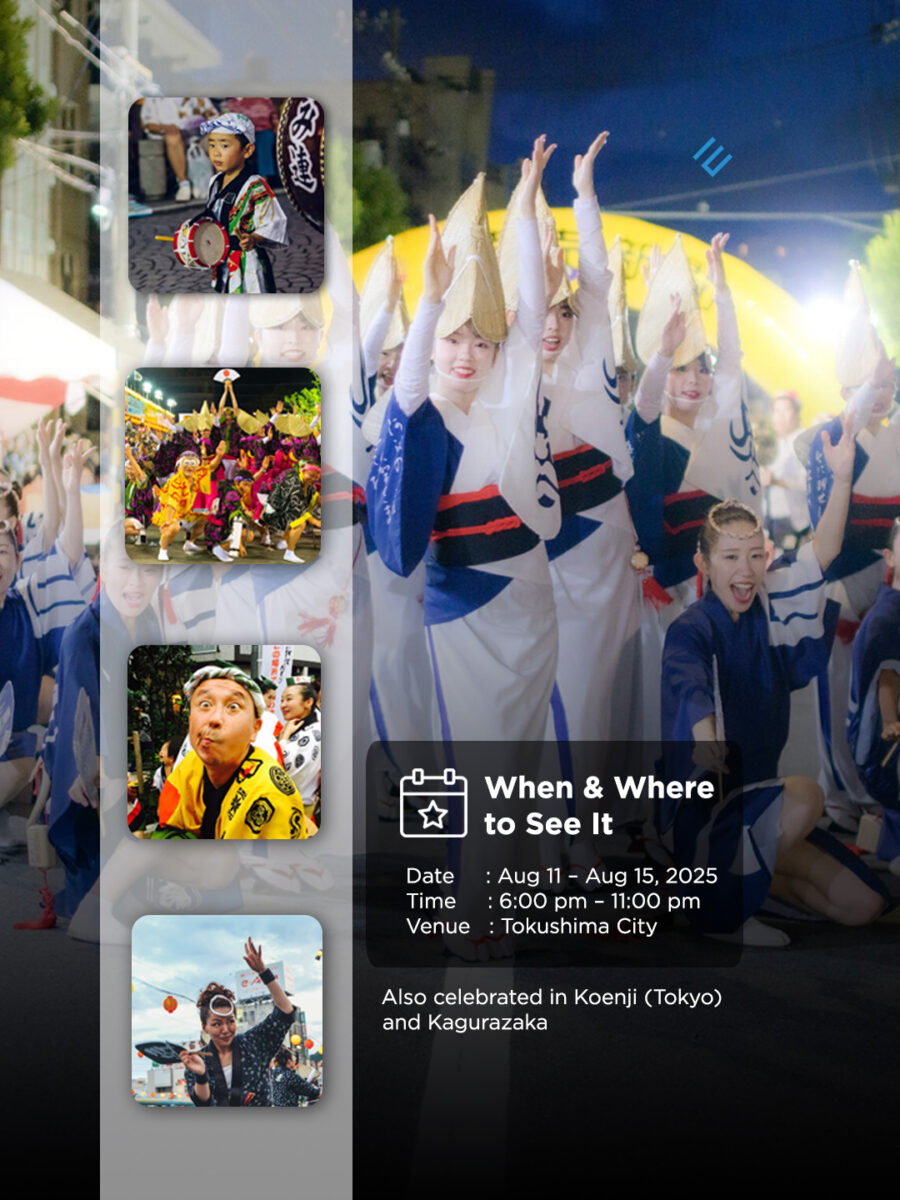
When & Where to See It
Plan your summer around the rhythm
Main Celebration in Tokushima
The largest and most famous Awa Odori takes place in Tokushima City.
Dates: August 11 – August 15, 2025
Time: 6:00 PM – 11:00 PM
Venue: Tokushima City
For five nights, the city becomes a stage. Streets close to traffic, viewing areas fill with spectators, and dance troupes perform in designated zones.
The atmosphere feels electric yet joyful.
Other Cities Celebrate Too
While Tokushima hosts the original and largest event, Awa Odori is also celebrated elsewhere:
Koenji in Tokyo holds one of the biggest Awa Odori festivals outside Tokushima.
Kagurazaka also hosts a lively version in the capital.
These urban adaptations bring the tradition to new audiences while preserving its core spirit.
The Atmosphere After Sunset
Lanterns, laughter, and summer air
As evening falls, paper lanterns glow above the streets. Food stalls line the sidewalks, offering classic festival snacks such as yakisoba and shaved ice.
The combination of:
Rhythmic chanting
Traditional instruments
Warm summer air
Bright yukata patterns
creates a sensory experience that feels distinctly Japanese.
It’s not just about watching dance—it’s about feeling connected.
Why Awa Odori Feels So Special
In a country known for precision and etiquette, Awa Odori offers something wonderfully freeing.
It celebrates joy over perfection.
It encourages participation over observation.
It reminds people to embrace the moment rather than worry about looking foolish.
In that way, Awa Odori feels timeless. It connects modern crowds with centuries of tradition while staying vibrant and relevant.
When Joy Becomes Tradition
Awa Odori is more than a dance festival. It’s a reminder that celebration can be simple and inclusive.
In Tokushima’s summer streets, strangers move in rhythm together. Laughter replaces hesitation. Music carries through warm night air.
Whether you’re a seasoned dancer or someone who claims to have “two left feet,” Awa Odori invites you to join.
Because in the end, as the motto suggests:
If both the dancer and the watcher are fools,
you might as well dance.
And in that joyful moment, you’ll understand why Awa Odori is one of Japan’s most beloved summer traditions.