What Is Matsuri?
More than just a festival
The Meaning Behind the Celebration
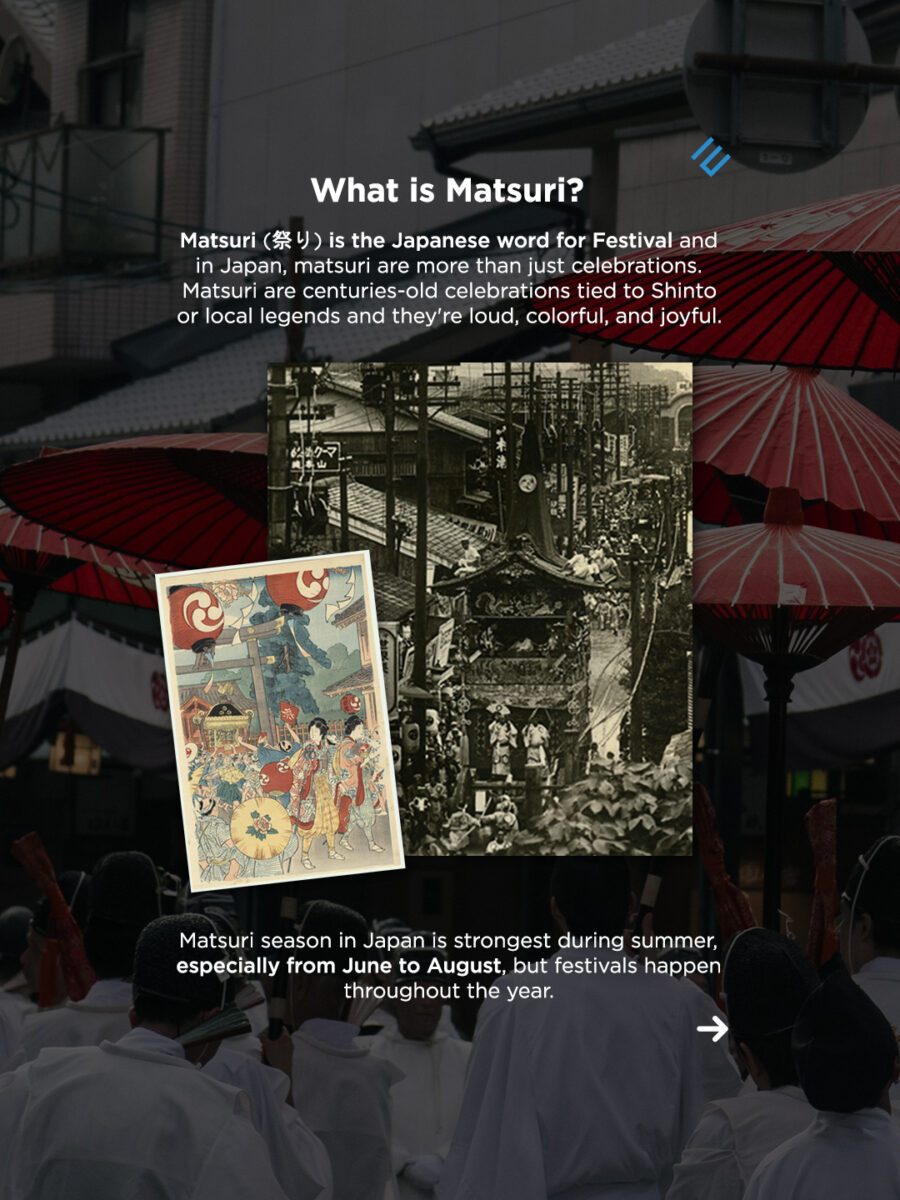
“Matsuri” (祭り) simply means “festival” in Japanese. But in Japan, a matsuri is much more than a public event.
Many matsuri are centuries-old celebrations rooted in:
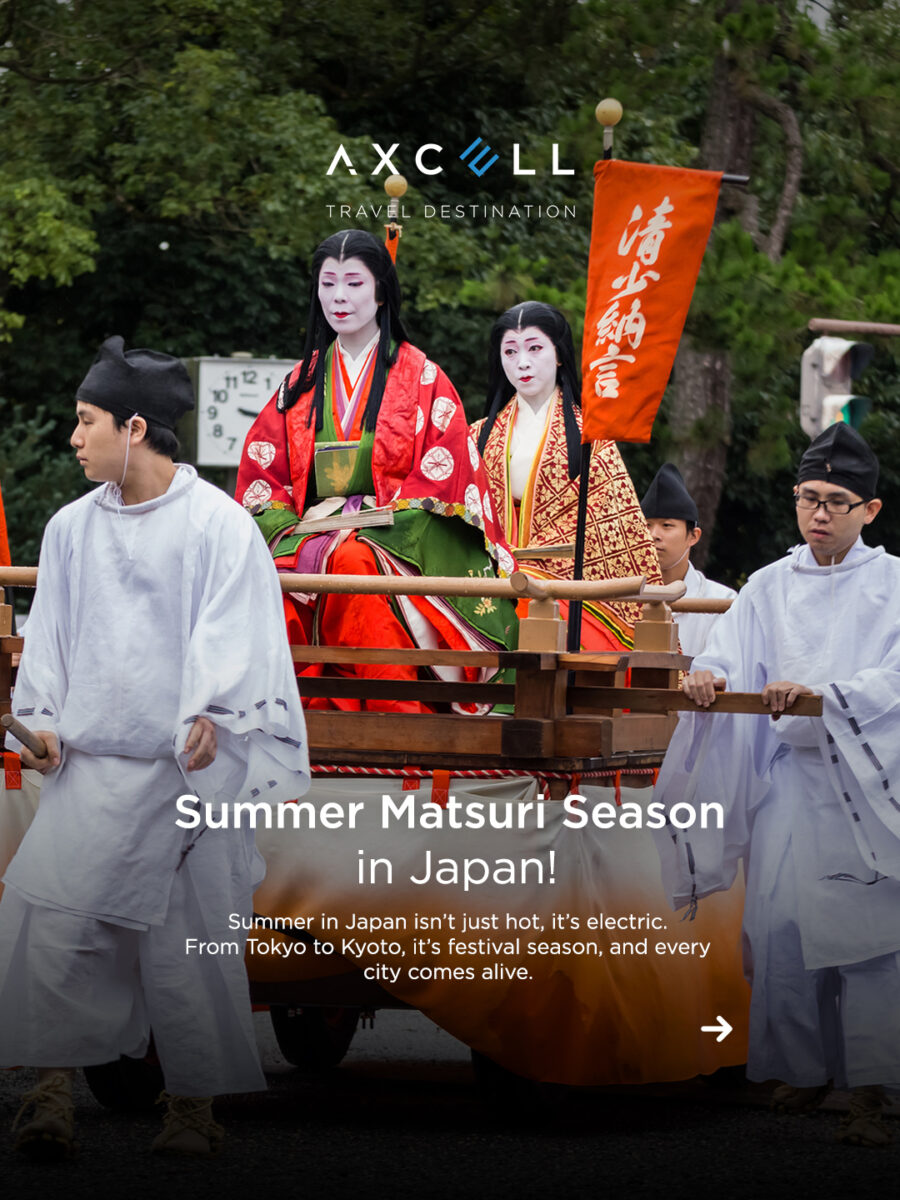
Shrines and temples often play a central role, with portable shrines (mikoshi) carried through the streets as part of the festivities.
These celebrations honor gods, spirits, and community bonds.
A Celebration of Community
Matsuri are deeply communal. Entire neighborhoods participate in organizing parades, performances, and food stalls.
You’ll see:
Children in traditional attire
Elders guiding rituals
Volunteers coordinating floats
Families gathering under lantern light
While each festival has its own unique story, the spirit remains the same: shared joy and cultural pride.
What You’ll See (and Eat!)
Summer magic, Japanese style
A Visual Spectacle
At a summer matsuri, expect sensory overload—in the best way.
Colorful paper lanterns line the streets. Taiko drums pound rhythmically. Fireworks explode overhead, illuminating crowds below.
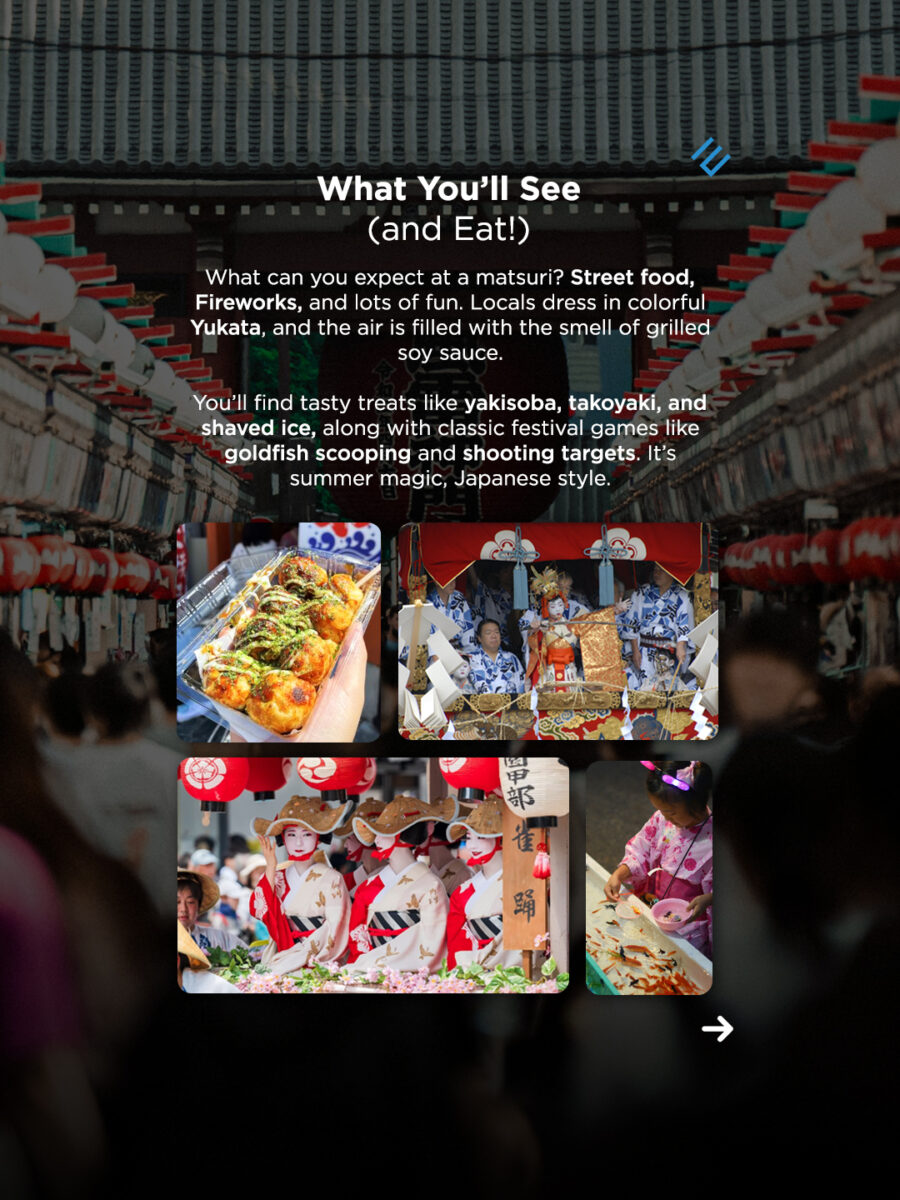
Locals wear yukata—light cotton summer kimono in floral patterns and bright hues. The sight of hundreds of people dressed traditionally against a backdrop of modern cityscapes is unforgettable.
The atmosphere feels festive yet nostalgic.
Street Food Heaven
Food is central to the matsuri experience.
As you wander through rows of yatai (street stalls), you’ll smell grilled soy sauce, sizzling noodles, and sweet treats in the air.
Popular festival foods include:
Yakisoba (fried noodles with vegetables and meat)
Takoyaki (octopus-filled dough balls)
Kakigōri (shaved ice with syrup)
Grilled corn brushed with soy sauce
The combination of smoky aromas and sweet summer air creates an irresistible experience.
Classic Festival Games
Matsuri also feature traditional games and activities such as:
Goldfish scooping
Shooting target games
Ring toss competitions
These simple amusements add a playful element, making the festival feel like a nostalgic summer fair.
Where & When to Go
Four iconic summer matsuri to plan your trip around
While festivals occur year-round, summer—from June to August—is peak season. Each region hosts its own unique celebration.
Here are four of the most famous summer matsuri in Japan:
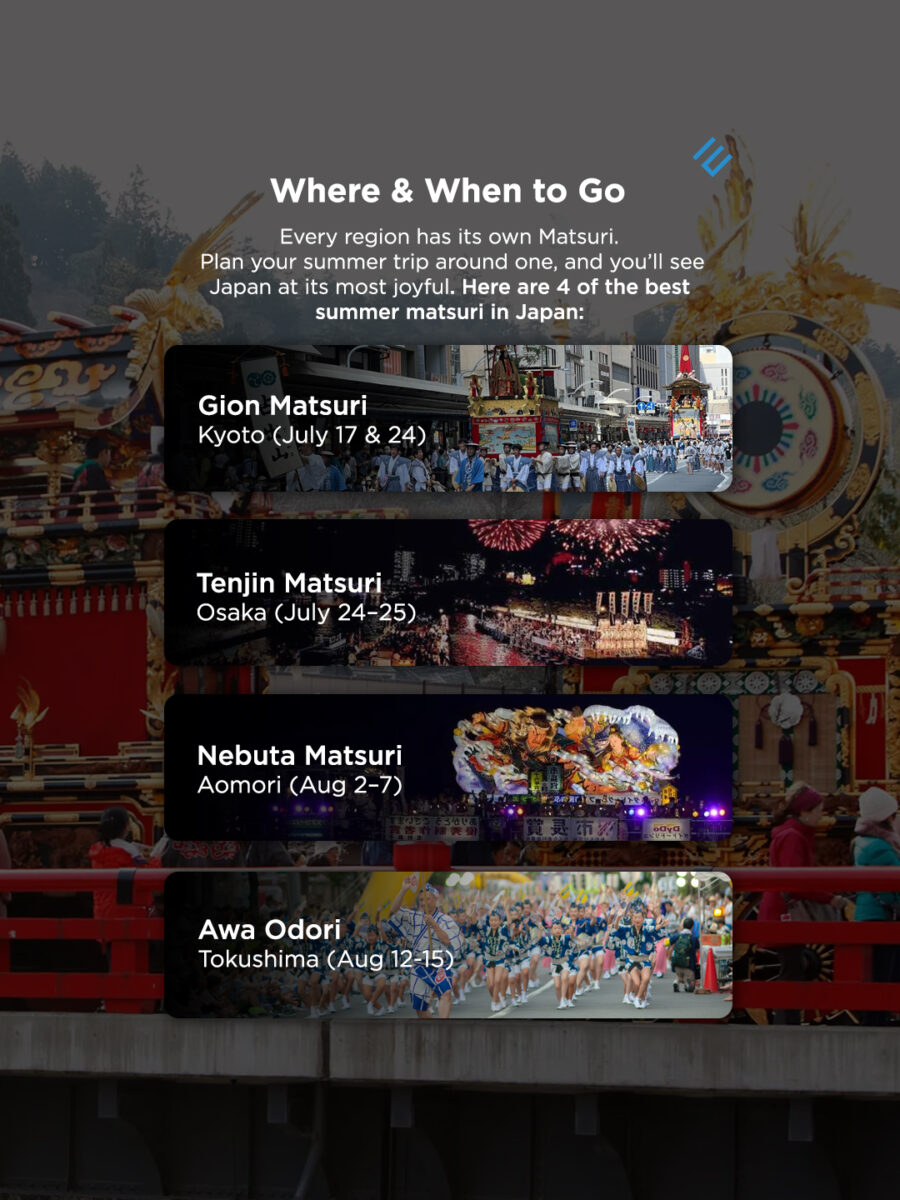
Gion Matsuri — Kyoto
July 17 & 24
Held in Kyoto, the Gion Matsuri is one of Japan’s most historic festivals, dating back over 1,000 years.
Massive, intricately decorated floats called yamaboko parade through the streets. The craftsmanship of these floats is breathtaking, blending woodwork, textiles, and traditional artistry.
Gion Matsuri offers a blend of elegance and grandeur in a city already rich with tradition.
Tenjin Matsuri — Osaka
July 24–25
Celebrated in Osaka, the Tenjin Matsuri is known for its river procession and dramatic fireworks display.
Boats carrying performers and shrine representatives glide along the river, while fireworks light up the skyline.
It’s energetic, lively, and distinctly Osaka in spirit.
Nebuta Matsuri — Aomori
August 2–7
In northern Japan, Aomori hosts the spectacular Nebuta Matsuri.
Giant illuminated floats depicting warriors, mythical creatures, and dramatic scenes are paraded through the streets at night.
The scale and artistry of these glowing floats make Nebuta Matsuri one of the most visually striking festivals in Japan.
Awa Odori — Tokushima
August 12–15
Held in Tokushima, the Awa Odori is famous for its traditional dance performances.
Groups of dancers move rhythmically through the streets, accompanied by shamisen music and chants.
Visitors are even encouraged to join in, making it one of the most interactive summer festivals.