Where the World Welcomes 2025
February 10, 2026
January in Ubud
February 10, 2026A Season of Stillness, Reflection, and Gentle Discovery
Travel does not always need spectacle to feel meaningful. Sometimes, the most powerful journeys happen in moments of calm—when crowds fade, sounds soften, and a place reveals itself without interruption. In Kyoto, January is such a moment.
Stripped of cherry blossoms, festival banners, and peak-season energy, Kyoto in winter returns to its essence. Temples breathe in silence, gardens rest beneath bare branches, and traditions unfold at a pace set not by visitors, but by time itself. This is a season for travelers who value depth over density, atmosphere over attraction, and presence over pace.
Below are the ways Kyoto’s quiet beauty emerges in January—through its weather, its rhythm, and its enduring traditions.
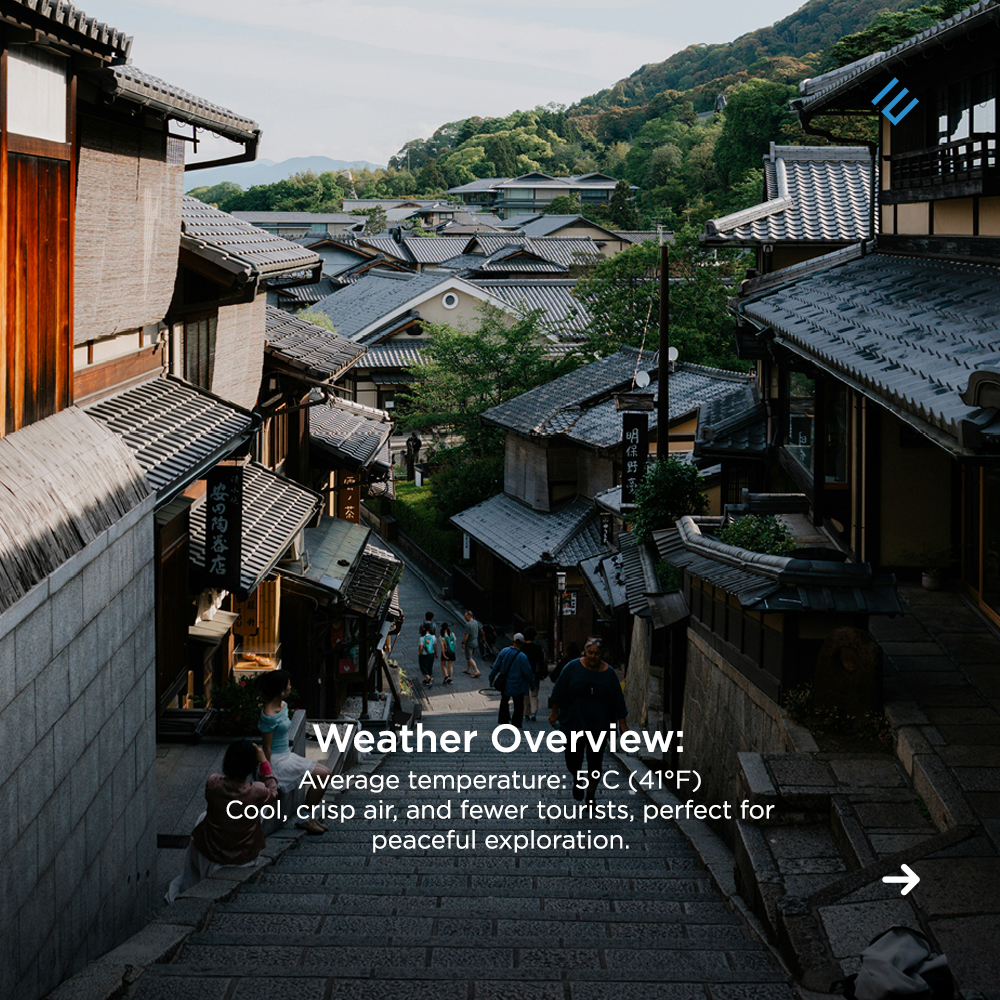
Weather Overview | Winter in Kyoto - A Different Kind of Comfort
January in Kyoto is defined by clarity. With average temperatures around 5°C (41°F), the air feels crisp and clean, sharpening the senses rather than numbing them. Mornings often begin with pale light and visible breath, while afternoons are cool and bright, ideal for unhurried walks through temple grounds and historic neighborhoods.
Snow is not constant, but when it arrives, it transforms the city into something fleeting and deeply poetic. Rooflines dusted in white, stone paths softened by frost, and gardens momentarily suspended in stillness feel less like scenes to photograph and more like moments to witness quietly. Snow in Kyoto is never guaranteed—and that impermanence makes it all the more meaningful.
Light, Texture, and Awareness
Winter light in Kyoto sits lower in the sky, creating long shadows and gentle contrasts. Without dense foliage, architectural details come forward: the grain of wooden beams, the curve of tiled roofs, the careful placement of stones in gardens. The city feels more legible, more honest.
Cold weather also changes how you move. You pause more often. You seek warmth in tea houses, linger beneath temple eaves, and notice small details—steam rising from cups, incense smoke drifting slowly, the sound of footsteps on gravel. January encourages attentiveness, turning weather into an active part of the experience rather than a condition to endure.
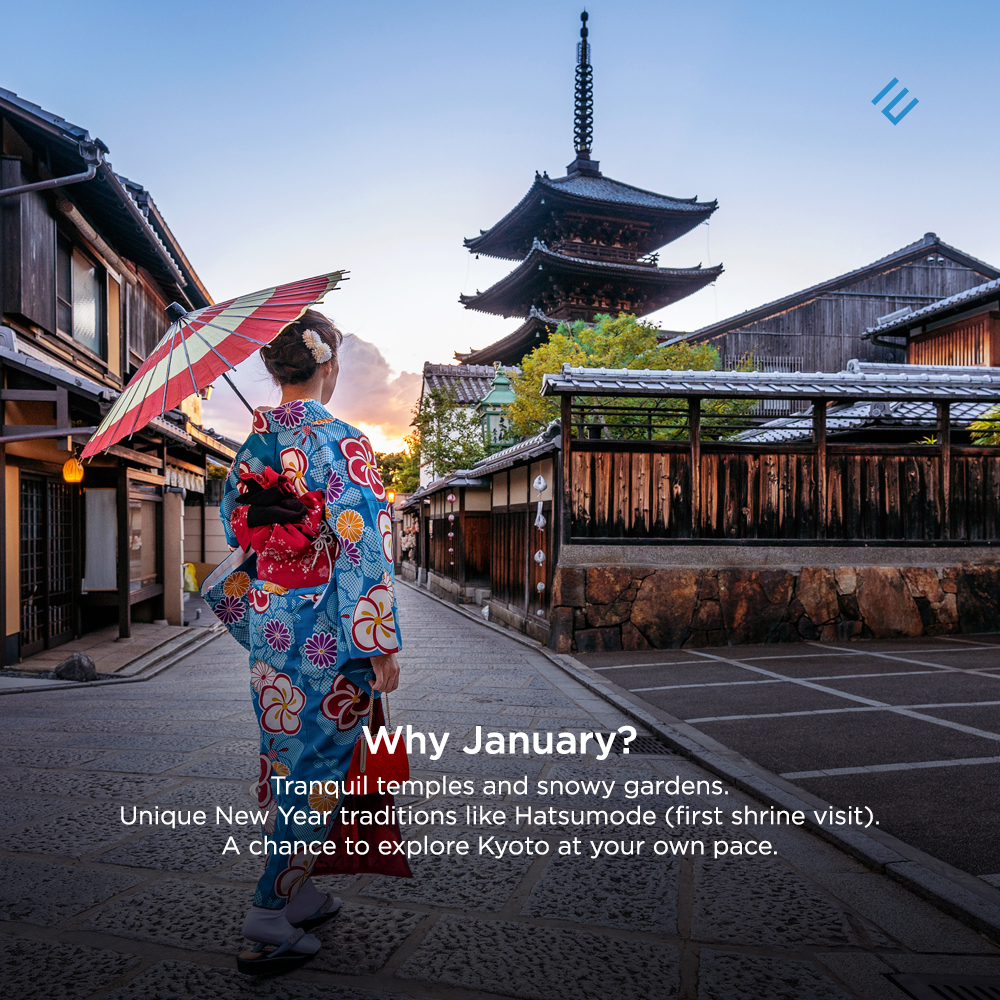
Why January?
Temples Without the Crowd
The greatest luxury of January in Kyoto is space. With fewer visitors, temples regain their intended atmosphere as places of reflection rather than checkpoints. Courtyards feel expansive, halls echo softly, and silence becomes part of the architecture.
Gardens designed for contemplation reveal their winter character. Moss deepens in color, stones become more pronounced, and raked gravel patterns appear sharper and more deliberate. In the absence of lush greenery, the underlying philosophy of balance and restraint becomes visible. Winter does not diminish these spaces—it clarifies them.

A City at Its Natural Pace
January restores Kyoto’s natural rhythm. Shops open quietly. Neighborhoods feel lived-in rather than visited. Locals move without urgency, and travelers are free to observe rather than compete for space.
Without peak-season pressure, wandering becomes purposeful in a different way. You can walk without a destination, sit without an agenda, and leave gaps in the day unfilled. Kyoto rewards this openness. The city begins to feel cohesive—not a collection of famous sites, but a living whole shaped by daily routines.
Seeing Kyoto Between the Highlights
In January, the spaces between landmarks become as meaningful as the landmarks themselves. Residential streets, quiet shrines, neighborhood cafés, and early-morning markets reveal a side of Kyoto often missed. This is where the city feels most authentic—not curated, not rushed, simply lived.
For travelers seeking understanding rather than accumulation, January offers a Kyoto that feels deeply personal.
New Year Traditions - The Meaning of Hatsumode
January in Kyoto carries spiritual weight. The New Year is one of the most important moments in Japanese culture, marked by reflection, gratitude, and intention. Central to this season is Hatsumode, the first shrine or temple visit of the year.
Hatsumode is not a performance. It is a quiet, collective ritual. Families, couples, and individuals visit shrines to offer prayers for health, peace, and guidance. Bells are rung gently. Incense smoke curls into the winter air. Written wishes are tied with care, not urgency.
Participating Through Presence
For travelers, Hatsumode offers a rare form of cultural participation—one that does not require full understanding to be meaningful. Standing respectfully, observing rituals, moving with the flow of locals—these actions create connection without intrusion.
In Kyoto, this tradition feels especially grounded. As the cultural heart of Japan, the city offers a setting where spiritual practices are deeply embedded rather than symbolic. The atmosphere is calm and communal, blending personal reflection with shared purpose.
A Broader New Year Mindset
Beyond shrine visits, January in Kyoto reflects a broader cultural reset. Seasonal decorations are understated. Food traditions emphasize simplicity and symbolism. The year feels newly opened, like a blank page approached with care rather than urgency.
This approach reframes the idea of celebration. Renewal is not loud. It is intentional.
Kyoto, Understood Through Stillness
Kyoto in January does not announce itself. It waits. And in that waiting, it reveals a depth that busy seasons often conceal. This is the city without ornament—quiet, contemplative, and profoundly present.
Traveling here at this time invites a shift in mindset. You stop collecting moments and begin inhabiting them. You move less, but feel more. And in that stillness, Kyoto’s quiet beauty becomes unmistakable.
For those willing to embrace winter’s calm, January offers more than a visit to Kyoto.
It offers a deeper way of seeing—both the city, and the journey itself.