Sa Pa & Fansipan – Vietnam’s Highland Wonders
January 2, 2026
Wae Rebo – Hiddem Gem in Indonesia
January 2, 2026Mdina - The Silent City of Malta, Where History Whispers Through Stone
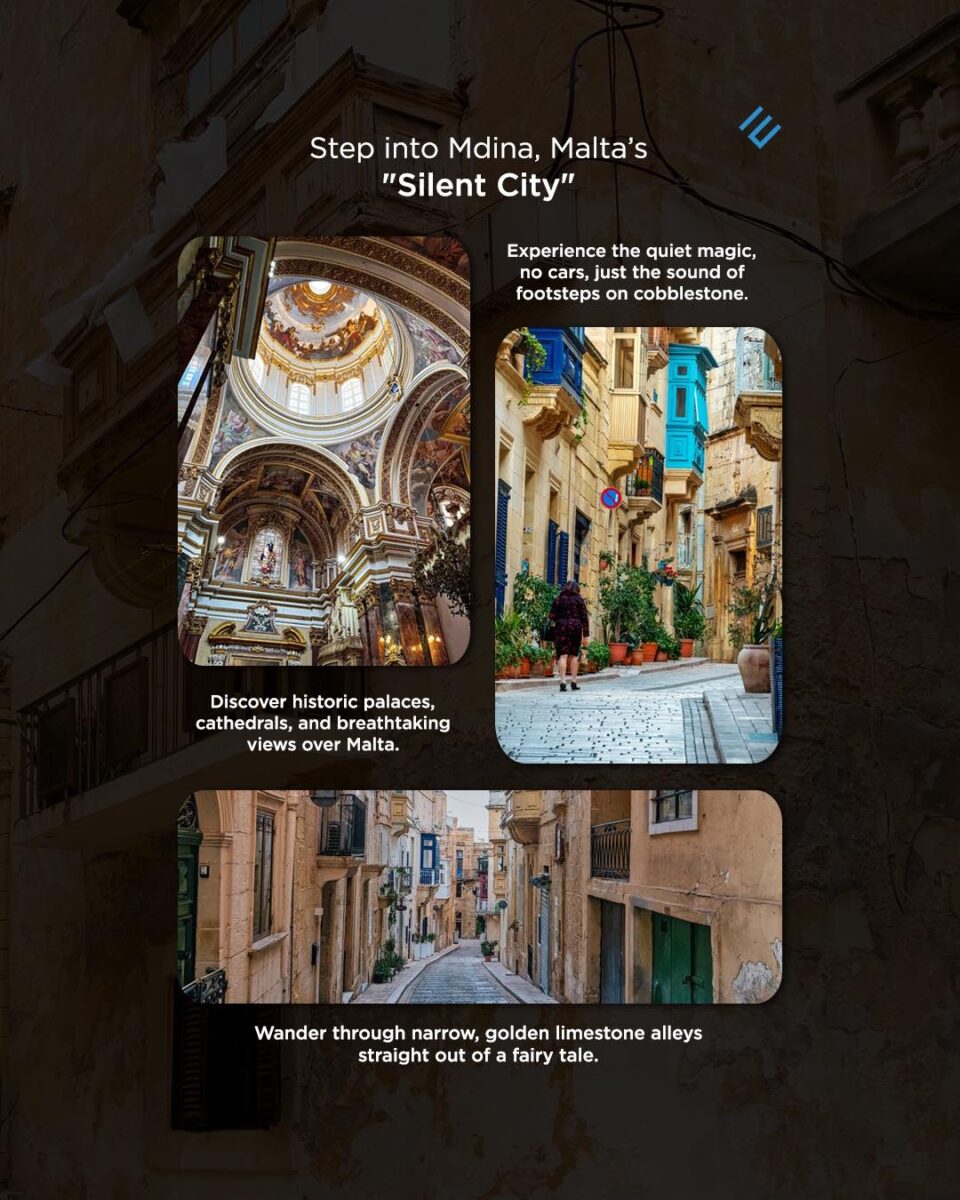
Tucked away in the heart of Malta, Mdina is a city unlike any other. With no traffic, no modern noise, and no rush, Mdina feels suspended in time—an enclosed world of golden limestone walls, narrow alleys, and profound silence. Often called The Silent City, Mdina offers travelers something increasingly rare in today’s world: stillness, atmosphere, and deep historical presence.
Visiting Mdina is not about ticking off attractions.
It is about stepping into a mood, a memory, and a story that has been quietly unfolding for centuries.
A City Shaped by Centuries
Mdina’s history stretches back over 4,000 years, making it one of Europe’s oldest continuously inhabited settlements. Founded long before Malta became a crossroads of civilizations, Mdina has been shaped by Phoenicians, Romans, Arabs, Normans, and the Knights of St. John. Each era left its mark—layered not in chaos, but in remarkable harmony.
Once the capital of Malta, Mdina was the island’s political, religious, and cultural center. Its strategic hilltop location offered protection and visibility, while its massive walls symbolized power and permanence. Even after the capital moved to Valletta, Mdina retained its prestige—becoming a city of nobility, faith, and quiet authority.
Walking through Mdina today feels like walking through living history.
Silence as an Experience
What makes Mdina truly extraordinary is its silence. Cars are largely forbidden within the city walls, reserved only for a handful of residents. Without engines, horns, or crowds, sound fades into subtle details—the echo of footsteps on stone, the whisper of wind through narrow streets, the distant toll of church bells.
This absence of noise is not empty.
It is immersive.
The silence sharpens awareness. You notice textures in the walls, patterns in doorways, shadows shifting across archways. Mdina invites travelers to slow down, breathe deeply, and experience place through presence rather than movement.
Streets That Tell Stories
Mdina’s streets are narrow, winding, and intentionally disorienting—a defensive design meant to confuse invaders. Today, they create a sense of mystery and discovery. Every turn reveals something new: a hidden courtyard, a carved stone balcony, a centuries-old door bearing noble family crests.
Golden limestone buildings glow warmly under the Mediterranean sun, giving the city an almost cinematic quality. At night, lanterns cast soft light onto the walls, transforming Mdina into a dreamlike setting that feels more imagined than real.
It’s no surprise Mdina has been used as a filming location for historical dramas and fantasy worlds—its atmosphere is timeless and transportive.

Architecture of Power and Faith
Mdina’s skyline is dominated by the St. Paul’s Cathedral, a masterpiece of Baroque architecture built on the site where, according to tradition, the Roman governor Publius met the Apostle Paul. Inside, ornate details, marble floors, and sacred art reflect the city’s deep religious heritage.
Beyond the cathedral, palaces and grand residences line the streets—once home to Malta’s noble families. Their imposing façades contrast with the quiet life within the walls, reflecting a city built not for trade or noise, but for dignity and contemplation.
Every structure in Mdina feels intentional. Nothing is accidental.
A City Best Explored Slowly
Mdina is not large, but it rewards slow exploration. Sitting on a stone bench, watching light move across ancient walls, can be as meaningful as visiting landmarks. Cafés tucked into old buildings offer peaceful places to pause, sip coffee, and observe the rhythm of the city—or lack of it.
From Mdina’s bastions, panoramic views stretch across Malta’s countryside all the way to the sea. These viewpoints remind visitors of the city’s strategic importance and offer moments of quiet reflection above the island.
Here, time loosens its grip.
Mdina by Day and Night
By day, Mdina glows. Sunlight reflects off limestone, creating warm hues that change with the hour. Tourists arrive, but even at its busiest, Mdina remains calm. Crowds disperse naturally through its maze-like streets, and moments of solitude are always within reach.
By night, Mdina becomes something else entirely. As day visitors leave, silence deepens. Lanterns illuminate empty streets, shadows lengthen, and the city feels deeply personal—almost sacred. Many travelers say that experiencing Mdina at night is the moment they truly fall in love with it.
It feels like the city is revealing itself only to those who stay.
Why Mdina Feels Different
Mdina stands apart because it has resisted modern intrusion. There are no neon signs, no traffic lights, no rush to adapt. Instead, the city preserves a way of being—one rooted in continuity, restraint, and respect for the past.
What makes Mdina unforgettable:
A completely car-free historic core
Profound silence and calm
Layers of history spanning millennia
Cinematic medieval architecture
An atmosphere that encourages reflection
It is not a place you rush through.
It is a place you absorb.
A Reminder of What Travel Can Be
In a world where travel often feels fast and crowded, Mdina offers a powerful reminder of another kind of journey—one centered on stillness, atmosphere, and depth. It shows that wonder does not always come from scale or spectacle, but from presence.
Mdina teaches travelers that silence can be just as memorable as sound, and that the most meaningful experiences often happen when we slow down enough to notice them.
Would You Visit This Magical Place?
Mdina is not for everyone—and that is precisely its strength. It calls to travelers who value mood over movement, history over hype, and quiet beauty over constant stimulation.
If you’ve ever dreamed of stepping into a medieval world where time seems to pause, where stone walls whisper stories, and where silence becomes part of the experience, Mdina is waiting.
✨🏰 Would you visit this magical place?
Because some cities don’t ask to be explored.
They ask to be felt.