

Derinkuyu – City Beneath Cappadocia
December 31, 2025
Dolomites Trekking – Welcome to Italy’s Summer Wonderland
December 31, 2025Built on a Volcano, Attacked 26 Times, and Still Standing Strong
Edinburgh Castle: Scotland’s Crown Jewel of Power, History, and Resilience
Perched high above the city skyline, commanding attention from nearly every corner of the capital, Edinburgh Castle is more than just a landmark—it is the beating heart of Scotland. Built atop an extinct volcano, attacked no fewer than 26 times, and still standing strong after centuries of conflict, Edinburgh Castle is one of the most dramatic and symbolically powerful fortresses in the world.
This is not simply a castle you visit.
It is a place you feel—layered with battles, royalty, rebellion, and tradition that echo through its ancient stone walls.

A Fortress Forged by Fire and Stone
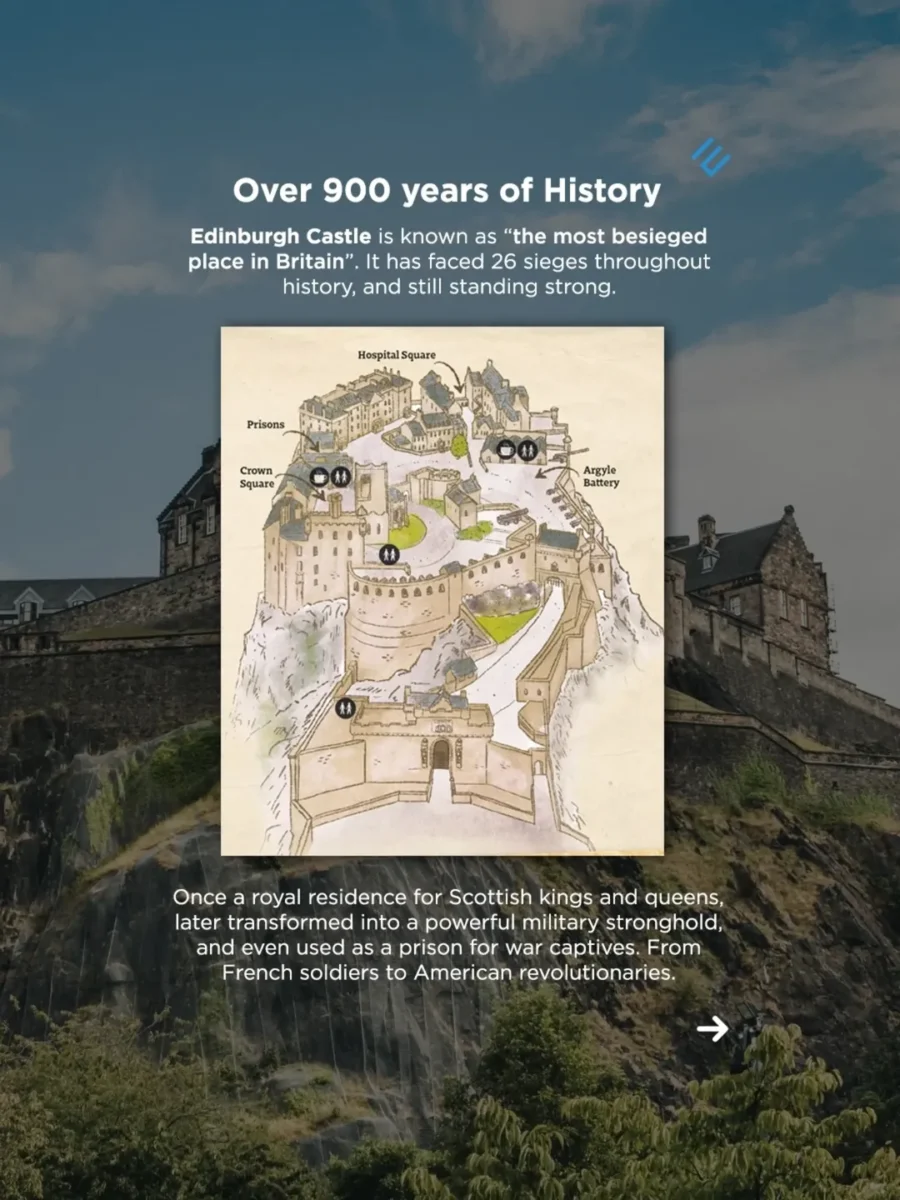
Edinburgh Castle rises from Castle Rock, the solid core of an extinct volcano that erupted more than 300 million years ago. This natural foundation gave the castle its most defining advantage: near-impenetrable defenses. With sheer cliffs on three sides, Castle Rock made direct assaults nearly impossible, turning the site into one of the most strategically valuable strongholds in Britain.
Long before the castle’s current structures took shape, the rock itself was recognized as a place of power. Human settlement here dates back over 2,000 years, but it was during the medieval period that Edinburgh Castle emerged as a symbol of dominance, survival, and sovereignty.
Its location was no accident. Whoever controlled the castle controlled Scotland.
A History Written in Conflict
Edinburgh Castle holds the record as the most besieged place in Great Britain, having been attacked at least 26 times throughout its history. These were not minor skirmishes—many were decisive moments in Scotland’s turbulent past.
From wars with England to internal struggles for the Scottish crown, the castle stood at the center of conflict. It changed hands multiple times during the Wars of Scottish Independence, witnessing battles that shaped the nation’s identity. Each siege left its mark, strengthening the castle’s reputation as a fortress that could be challenged—but never easily defeated.
Despite relentless attacks, political upheaval, and centuries of warfare, Edinburgh Castle endured. Its survival is not just architectural—it is symbolic of Scotland’s resilience and determination.
Home of Scottish Royalty and National Treasures
Beyond its military importance, Edinburgh Castle also served as a royal residence. Kings and queens once lived within its walls, including Mary, Queen of Scots, who gave birth to James VI of Scotland here in 1566—later to become James I of England, uniting the crowns.
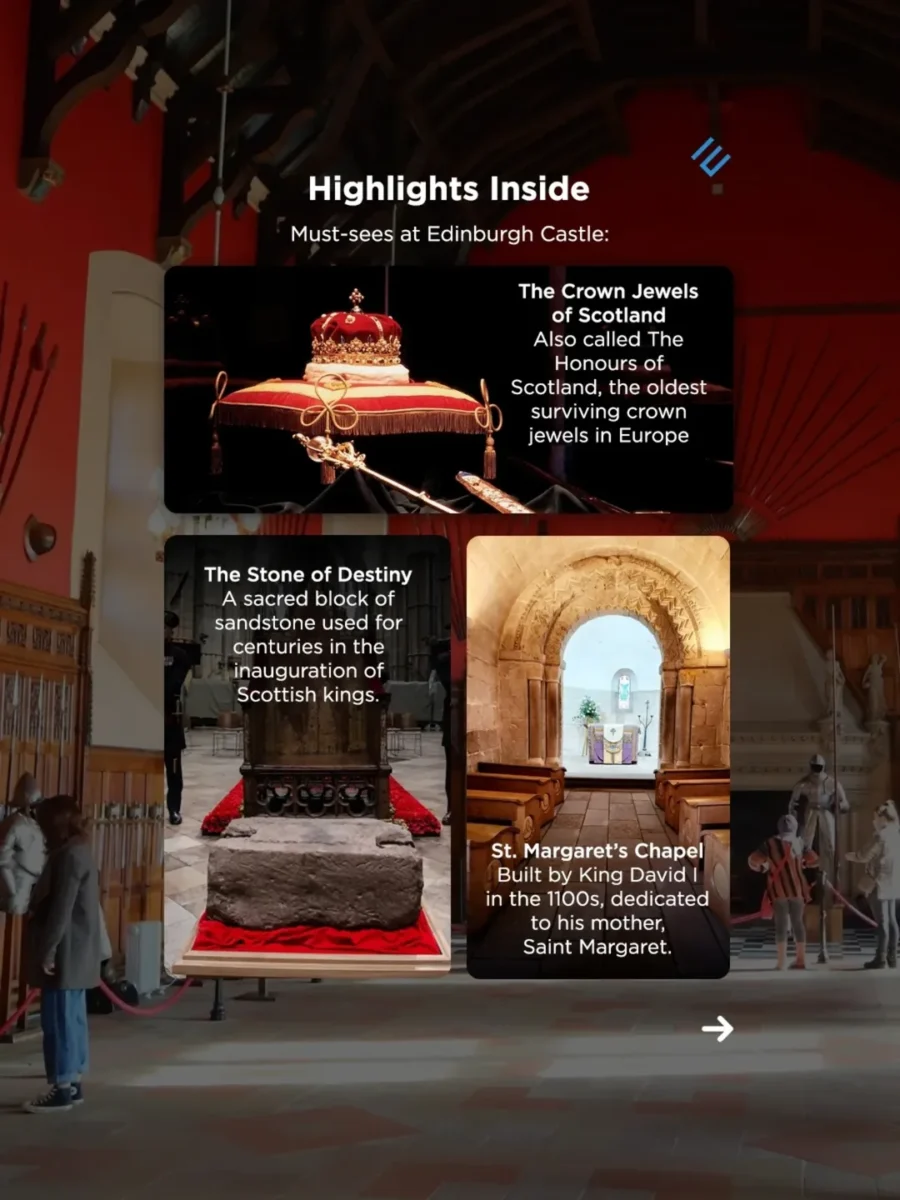
Inside the castle are some of Scotland’s most treasured symbols of nationhood. The Honours of Scotland—the Scottish Crown Jewels—are proudly displayed, representing sovereignty, ceremony, and continuity. Nearby lies the Stone of Destiny, used for centuries in the coronation of Scottish monarchs and long contested by English kings.
These artifacts are not merely historical objects; they are embodiments of Scotland’s struggle for identity and independence.
Beyond its military importance, Edinburgh Castle also served as a royal residence. Kings and queens once lived within its walls, including Mary, Queen of Scots, who gave birth to James VI of Scotland here in 1566—later to become James I of England, uniting the crowns.
Inside the castle are some of Scotland’s most treasured symbols of nationhood. The Honours of Scotland—the Scottish Crown Jewels—are proudly displayed, representing sovereignty, ceremony, and continuity. Nearby lies the Stone of Destiny, used for centuries in the coronation of Scottish monarchs and long contested by English kings.
These artifacts are not merely historical objects; they are embodiments of Scotland’s struggle for identity and independence.
A Living Military Stronghold
Although centuries have passed since its most violent days, Edinburgh Castle has never fully left military service. For generations, it functioned as an active garrison, prison, and storage site for weapons and supplies. Soldiers lived, trained, and prepared for war within its walls, reinforcing the castle’s reputation as a living fortress rather than a relic.
Today, this military legacy is preserved through museums and regimental displays, offering insight into Scotland’s martial history—from medieval warriors to modern regiments. Walking through the castle grounds, visitors move through layers of time, where each courtyard and hall reflects a different era of defense and duty.
The One O’Clock Gun - A Tradition That Still Roars
One of the most iconic experiences at Edinburgh Castle is the firing of the One O’Clock Gun. First introduced in 1861, the cannon is fired every day (except Sundays, Good Friday, and Christmas Day) precisely at 1:00 PM.
Originally, the gun served a practical purpose: helping ships in the Firth of Forth synchronize their marine chronometers. Today, it has become a beloved tradition—one that startles first-time visitors and delights locals year after year.
Hearing the cannon thunder across the city is a powerful reminder that Edinburgh Castle is not frozen in time. It is still alive, still speaking, still commanding attention.
Would you hear the One O’Clock Gun in person?
Architecture That Tells a Story
Unlike many castles designed with symmetry and elegance, Edinburgh Castle feels rugged, layered, and uncompromising. Its architecture reflects centuries of adaptation—buildings added, reinforced, and rebuilt as needs changed.
From the Great Hall, with its impressive hammerbeam roof, to St. Margaret’s Chapel—the oldest surviving building in Edinburgh—each structure contributes to the castle’s complex identity. This is architecture shaped by survival, not ornament.
Every stone feels purposeful. Every wall tells a story.
A View Worth Defending
Standing atop Edinburgh Castle, it becomes instantly clear why this site was fought over so fiercely. The panoramic views stretch across the city, from the historic Royal Mile to the distant hills beyond. On clear days, the landscape unfolds in all directions, offering a breathtaking sense of scale and perspective.
This commanding view is not just beautiful—it was once vital. From here, defenders could spot approaching enemies long before they reached the city gates. Today, visitors enjoy the same vantage point, not for defense, but for reflection and awe.
More Than a Castle—A National Symbol
Edinburgh Castle is not merely a tourist attraction. It is a symbol of Scotland itself—its strength, endurance, and pride. Through invasion, rebellion, and political change, the castle remained, adapting without surrendering its identity.
For Scots, it represents heritage and resilience. For visitors, it offers a profound connection to a nation shaped by struggle and spirit.
Why Edinburgh Castle Belongs on Your Travel List
Edinburgh Castle stands apart from castles that impress only with beauty. It impresses with meaning.
What makes it unforgettable:
Built atop an extinct volcano
One of the most attacked fortresses in history
Home to Scottish royalty and crown jewels
A living military tradition with the One O’Clock Gun
Sweeping views over one of Europe’s most atmospheric cities
This is history you don’t just read about—you walk through it.
Experience It for Yourself
No photograph or description can fully capture the power of standing within Edinburgh Castle’s walls, hearing the cannon fire, and feeling the weight of centuries beneath your feet. It is a place that transforms curiosity into understanding and admiration into respect.
If you are drawn to destinations where history is dramatic, layered, and alive, Edinburgh Castle deserves a place on your journey.
🏰 Would you hear the One O’Clock Gun in person?
Because some places don’t just tell stories—
they defend them, shape them, and carry them forward through time.
