From 1964 to Today
How the Bullet Train Changed Rail Travel Forever
The Birth of a Revolution
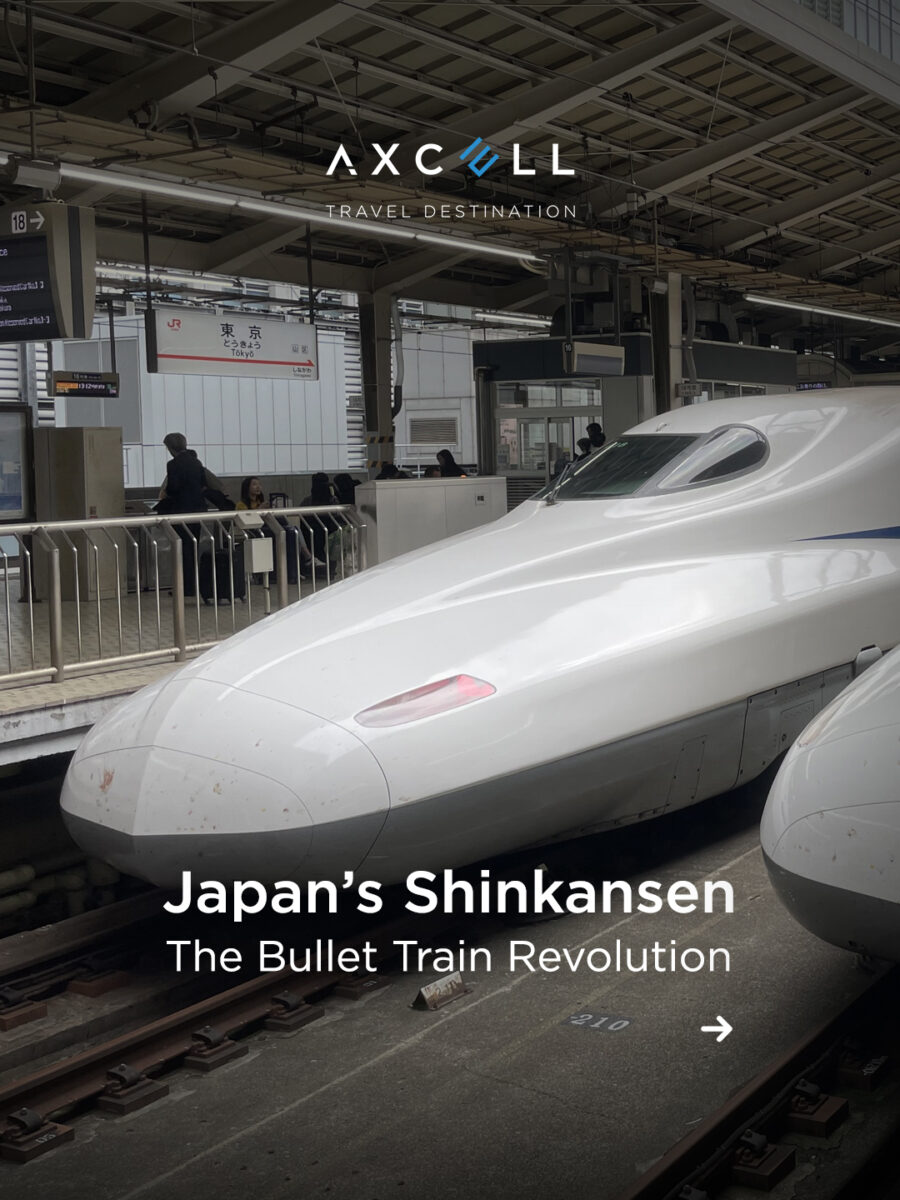
The first Shinkansen line, the Tōkaidō Shinkansen, connected Tokyo and Osaka in time for the 1964 Tokyo Olympics. It instantly reduced travel time between Japan’s two largest cities and showcased Japan’s post-war technological progress to the world.
The train’s aerodynamic nose and streamlined design looked like something from the future. It earned the nickname “bullet train” because of its speed and shape.
More importantly, it proved that high-speed rail could be safe, reliable, and commercially successful.
Expanding Across the Nation
Today, the Shinkansen network stretches from the southern island of Kyushu to the northern reaches of Hokkaido.
Major hubs include:
Tokyo
Kyoto
Osaka
Nagoya
Hiroshima
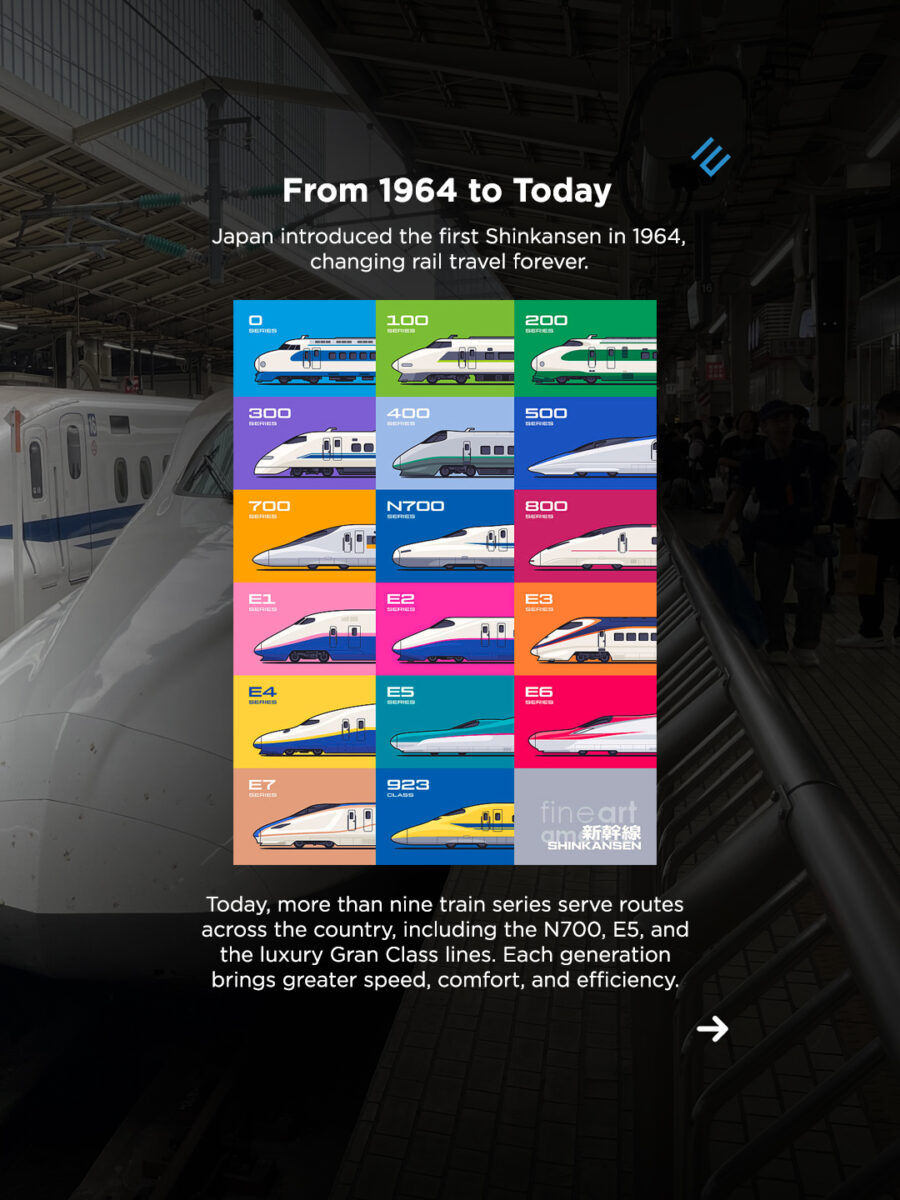
The network now includes more than nine train series, such as the N700, E5, and luxury Gran Class lines. Each generation introduces improvements in speed, aerodynamics, comfort, and energy efficiency.
What began as a single line has become the backbone of domestic travel in Japan.
Speed, Precision & Innovation
Engineering excellence at 320 km/h
World-Leading Speed
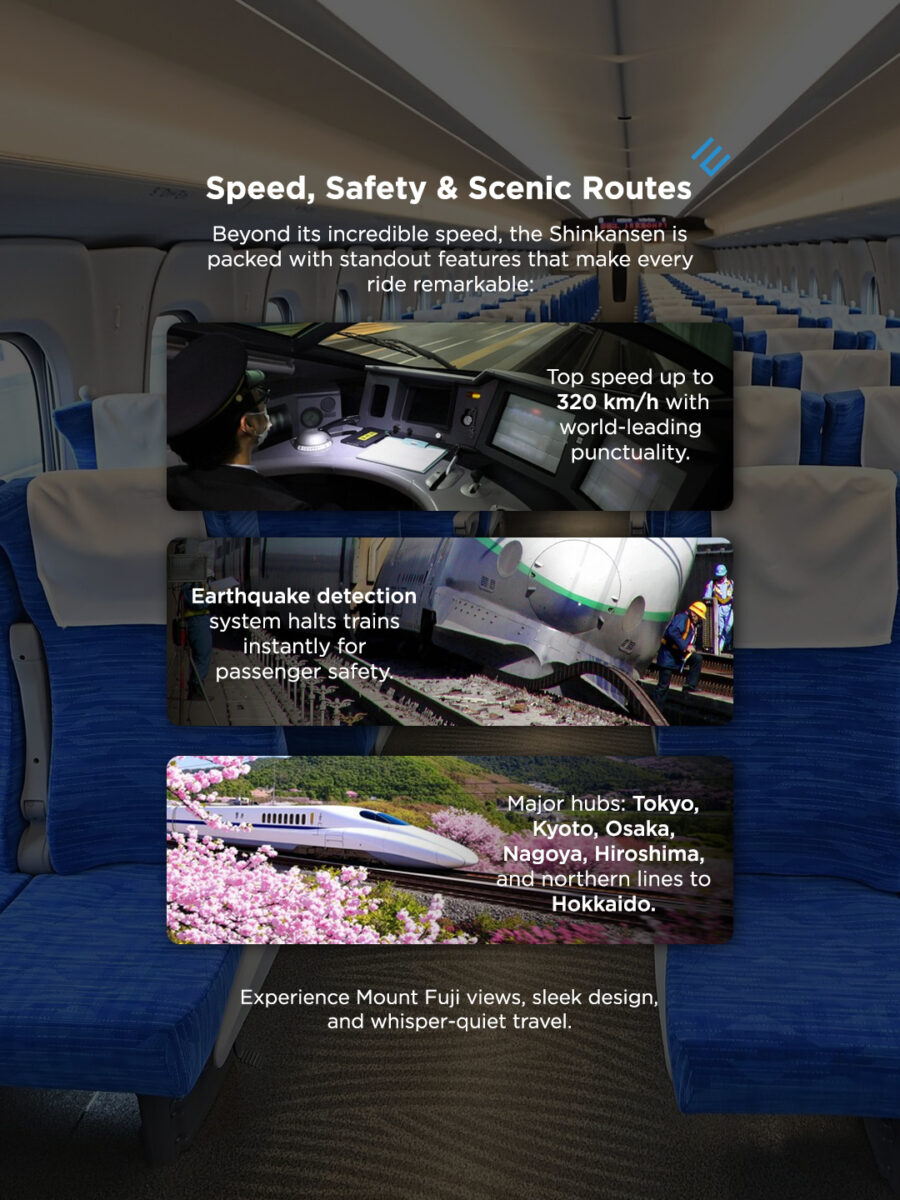
Modern Shinkansen trains reach top speeds of up to 320 km/h.
Yet speed alone does not define the experience. What truly sets the Shinkansen apart is its remarkable punctuality. Delays are measured in seconds, not minutes. Annual average delay times are famously minimal, often less than a minute.
For commuters, business travelers, and tourists alike, reliability is part of the system’s identity.
Earthquake Detection & Safety
Japan is one of the most earthquake-prone countries in the world. Designing a high-speed rail network in such conditions required extraordinary engineering.
The Shinkansen incorporates:
Advanced earthquake detection systems
Automatic emergency braking
Seismometers along tracks
If seismic activity is detected, trains halt instantly. Since its launch in 1964, the Shinkansen has maintained an exceptional safety record.
Speed never compromises security.
Scenic Routes & Unforgettable Views
More than just fast travel
One of the most magical aspects of riding the Shinkansen is the scenery.
Mount Fuji from Your Window
On the route between Tokyo and Osaka, passengers are often treated to spectacular views of Mount Fuji.
On clear days, the snow-capped peak rises dramatically in the distance—a postcard-perfect moment framed by large panoramic windows.
Unlike airplanes, which lift you above the clouds, the Shinkansen keeps you grounded in the landscape.
Whisper-Quiet Travel
Despite traveling at extraordinary speeds, the Shinkansen is remarkably quiet. The ride feels smooth, almost gliding. Conversations are comfortable. There’s minimal vibration.
The design prioritizes passenger comfort, combining efficiency with serenity.