Vapes & E-Cigarettes
Not Just a Personal Choice Abroad
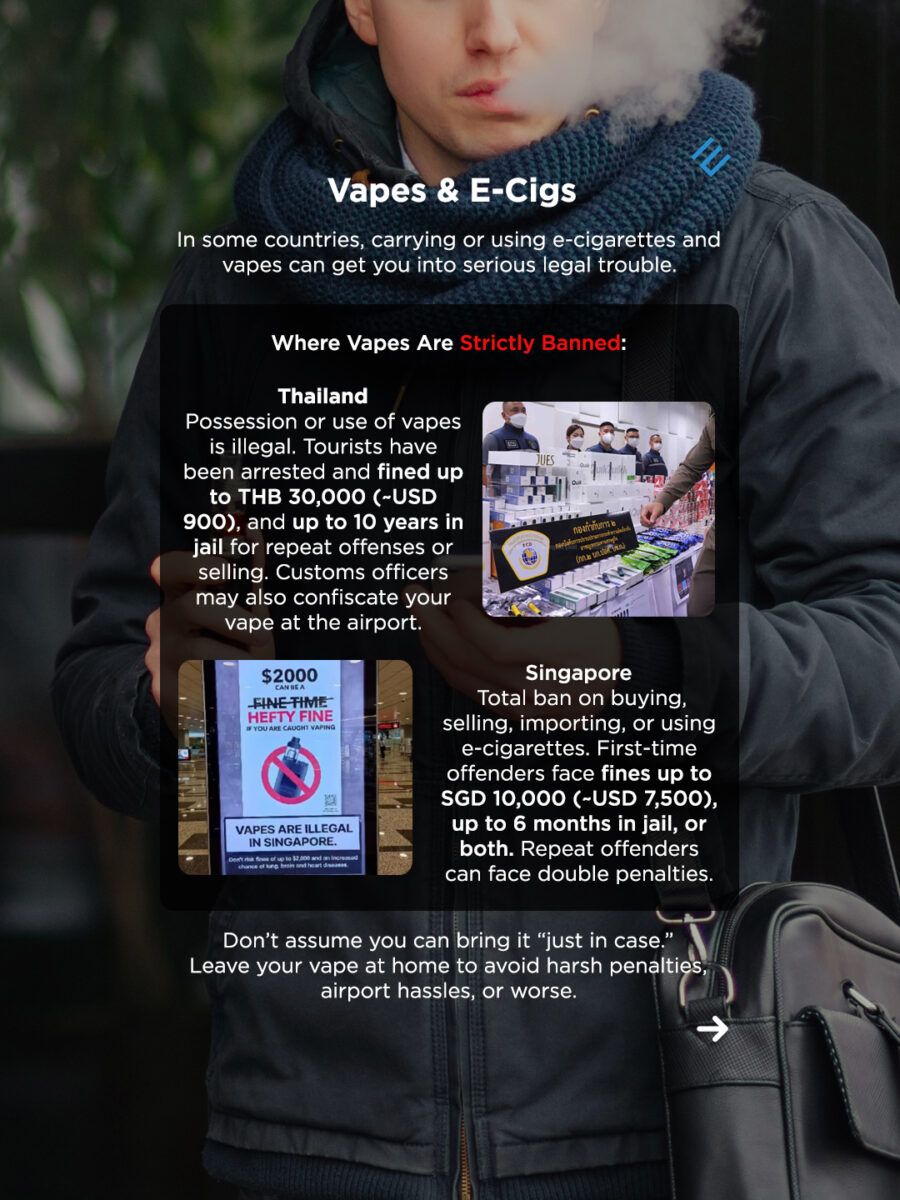
In many countries, vaping is widely accepted. However, in others, e-cigarettes and vaping devices are strictly banned.
Carrying one in your bag—even without using it—can result in confiscation, fines, or even arrest.
Thailand — Strict Prohibition
In Thailand, possession or use of vapes is illegal.
Tourists have reportedly faced:
Even if your vape remains in your luggage, customs officers may seize it upon arrival.
Thailand treats vaping devices as prohibited imports, not casual travel items.
Singapore — Total Ban
In Singapore, the laws are even stricter.
The buying, selling, importing, and using of e-cigarettes is completely banned.
First-time offenders may face:
Repeat offenders face even harsher penalties.
There are no exceptions for tourists.
Why You Should Leave It at Home
Even if you think you won’t use it, carrying a vape “just in case” is not worth the risk.
Airport hassles, heavy fines, and potential legal trouble can ruin your trip before it even begins.
When in doubt—don’t pack it.
Drones & Tech Gadgets
Not Always Welcome
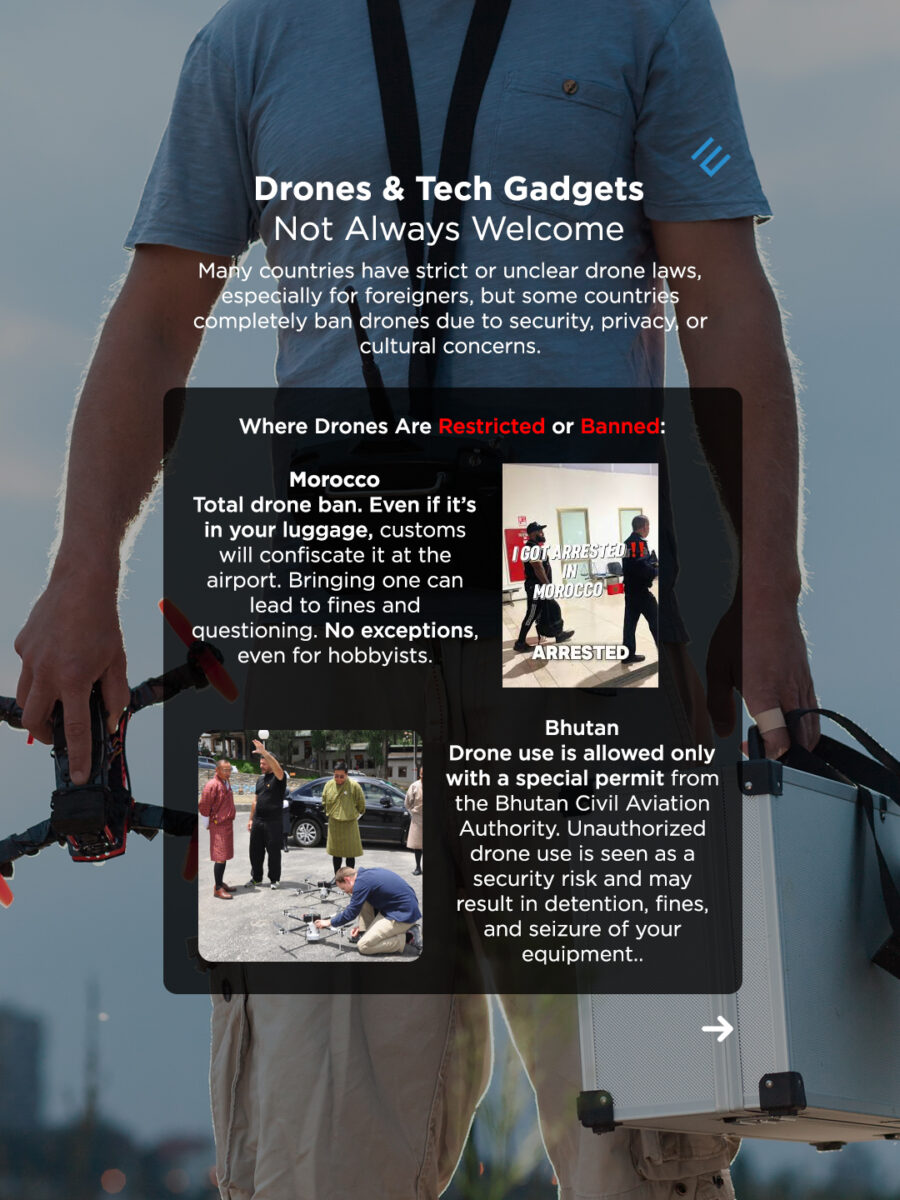
Drones are increasingly popular for travel photography, but not every country welcomes them.
Some destinations have strict licensing requirements. Others ban drones entirely due to:
Assuming you can “just fly it for a few shots” may result in serious consequences.
Morocco — Total Drone Ban
In Morocco, drones are completely banned.
Even if the drone stays inside your luggage, customs authorities may confiscate it at the airport.
Bringing one into the country can result in:
Immediate seizure
Questioning
Possible fines
There are no hobbyist exemptions.
Bhutan — Permit Required
In Bhutan, drones are allowed only with special authorization from the Bhutan Civil Aviation Authority.
Unauthorized use may lead to:
Detention
Equipment seizure
Fines
Drone laws in Bhutan are tied closely to national security and privacy concerns.
Research Before You Fly
Drone regulations change frequently. Always:
Check official government websites
Confirm permit requirements
Avoid assuming social media footage reflects legal permission
When in doubt, leave the drone behind.
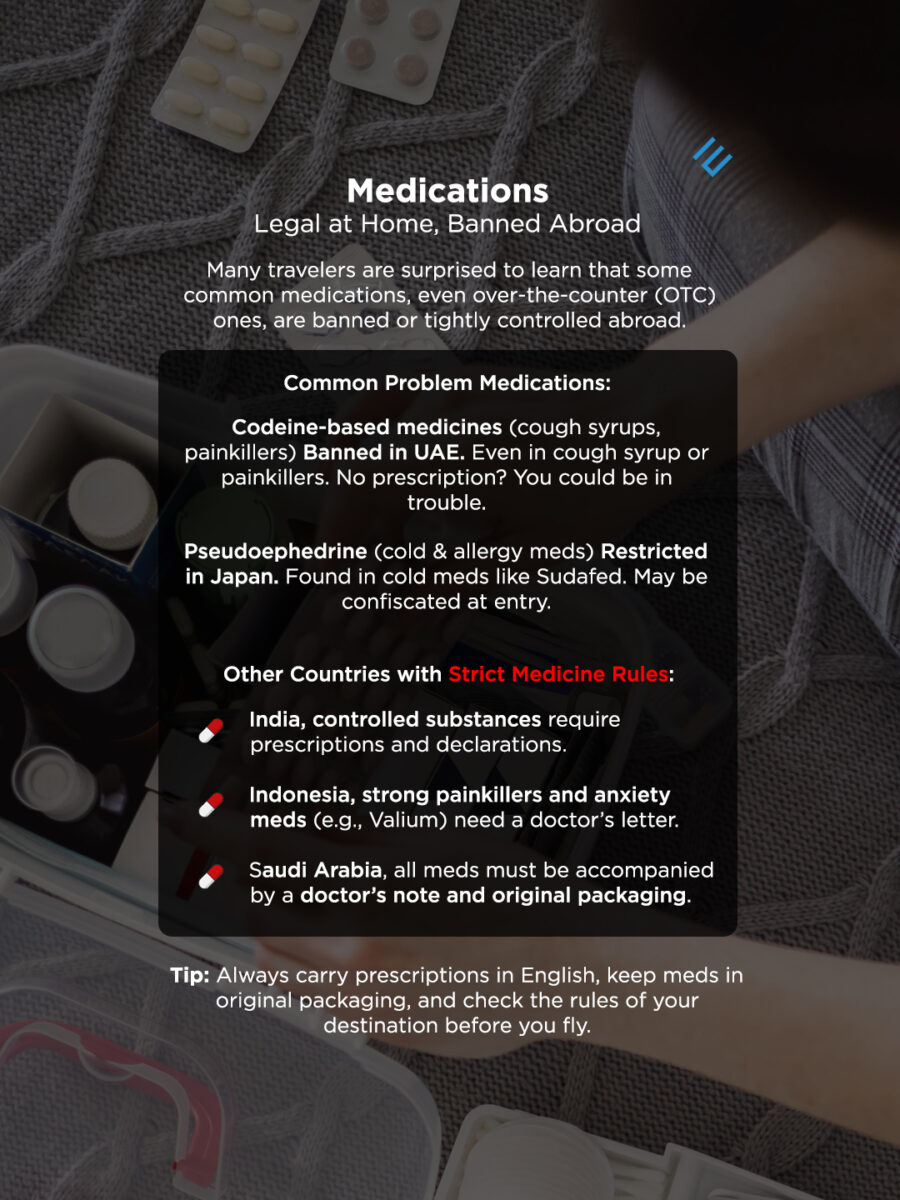
Medications - Legal at Home, Banned Abroad
The Most Overlooked Risk
Many travelers are surprised to discover that common medications—even over-the-counter ones—are tightly regulated in some countries.
Ingredients that are easily available at home may be classified as controlled substances elsewhere.
Common Problem Medications
Codeine-Based Medicines
In the United Arab Emirates, codeine-based medicines—including certain cough syrups and painkillers—are banned without proper documentation.
Carrying them without a prescription could result in serious legal trouble.
Pseudoephedrine
In Japan, pseudoephedrine—found in many cold and allergy medicines like Sudafed—is restricted.
Medications containing this ingredient may be confiscated at entry.
Other Countries with Strict Medication Rules
India
Controlled substances require prescriptions and declarations.
Indonesia
Strong painkillers and anxiety medications (such as Valium) require a doctor’s letter.
Saudi Arabia
All medications must be accompanied by a doctor’s note and kept in original packaging.
Failure to comply can lead to confiscation or questioning.
How to Travel Safely with Medication
Before flying:
Carry prescriptions in English
Keep medications in original packaging
Bring a doctor’s letter explaining your condition
Check official embassy or government health websites
Never transfer pills into unmarked containers when traveling internationally.