

Awa Odori
February 13, 2026
La Tomatina
February 13, 2026Tiny Nations with Big Stories — No Runway Required
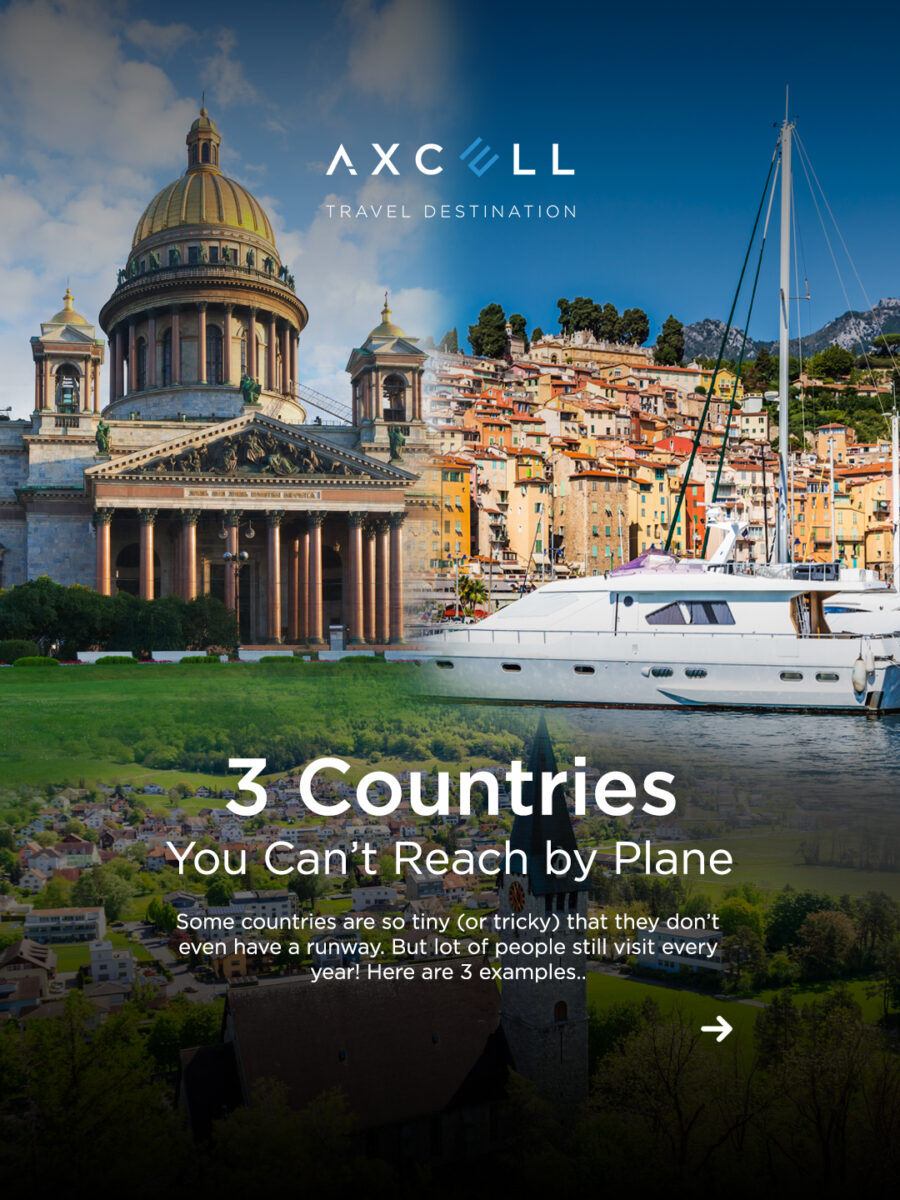
When we think of international travel, we usually imagine boarding a flight directly to our destination. Airports feel like the universal gateway to the world. But what if your destination doesn’t even have a runway?
Believe it or not, there are countries so small—or so geographically unique—that they don’t have a single airport within their borders. And yet, thousands (even millions) of visitors travel to them every year.
These destinations prove something fascinating: you don’t always need a plane to reach somewhere extraordinary.
Here are three countries you can’t fly into directly—but are absolutely worth the journey.
Vatican City
The world’s smallest country
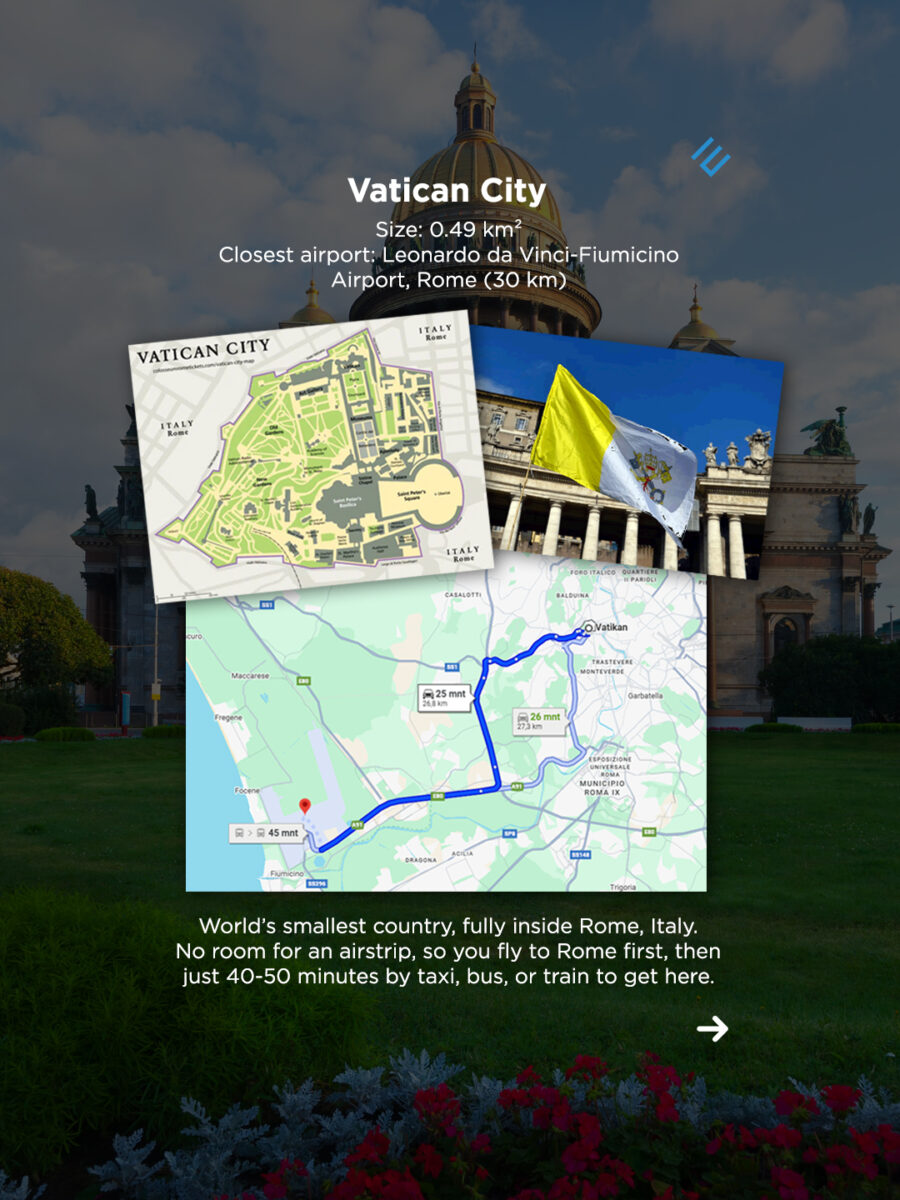
At just 0.49 km², Vatican City holds the title of the smallest country in the world.
Located entirely within Rome, Vatican City has no airport, no train station, and no space for a runway.
Why There’s No Airport
Simply put—there’s no room.
Vatican City is surrounded on all sides by Rome. Its territory consists mainly of:
St. Peter’s Basilica
The Vatican Museums
St. Peter’s Square
Administrative buildings
With such limited land area, constructing an airstrip is impossible.
How to Get There
The closest airport is Leonardo da Vinci–Fiumicino Airport, located about 30 kilometers from Vatican City.
After landing in Rome, travelers can reach Vatican City in about 40–50 minutes by:
Taxi
Bus
Train
Metro
Since Vatican City is essentially inside Rome, entering it feels seamless.
Why People Visit
Despite its tiny size, Vatican City attracts millions each year for its spiritual, historical, and artistic significance.
Visitors come to see:
St. Peter’s Basilica
The Sistine Chapel
Michelangelo’s masterpieces
Papal ceremonies
Small in size, monumental in influence.
Monaco
Luxury without a runway
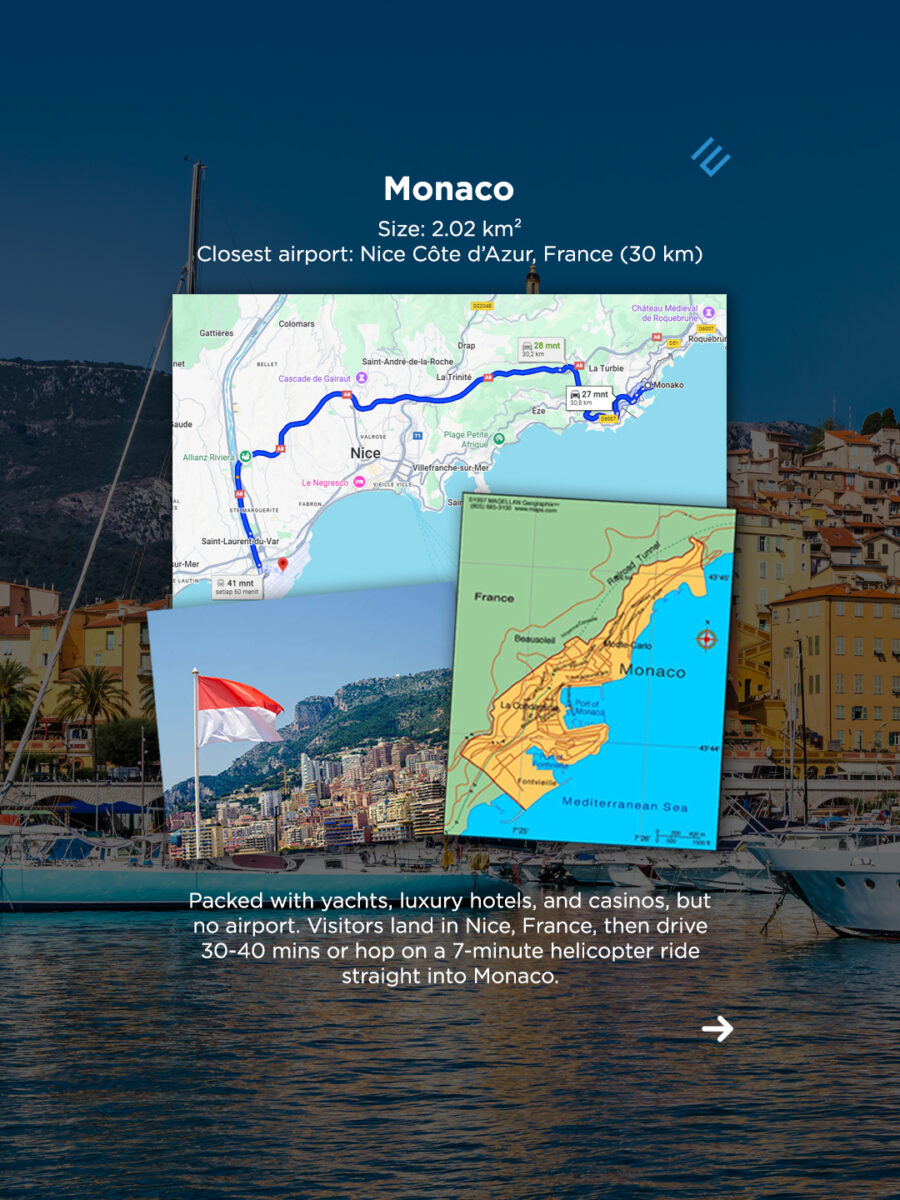
Covering just 2.02 km², Monaco is the second-smallest country in the world.
Known for yachts, casinos, Formula 1 racing, and glamorous Mediterranean views, Monaco may look like a place where private jets land daily—but it actually has no airport.
Why Monaco Has No Airport
Monaco is densely built along steep hillsides overlooking the sea. There’s simply no flat land large enough for a runway.
Every square meter is dedicated to residences, luxury hotels, and iconic attractions like:
The Monte Carlo Casino
The harbor filled with superyachts
Scenic coastal roads
Space is a premium luxury here.
How to Get There
Most visitors fly into Nice Côte d’Azur Airport in France, about 30 kilometers away.
From Nice, travelers can reach Monaco by:
Car (30–40 minutes)
Train (scenic coastal ride)
Helicopter transfer (around 7 minutes)
Yes—a helicopter ride is one of the fastest ways to arrive.
Why People Love Monaco
Despite its size, Monaco offers:
Mediterranean elegance
High-end shopping
Stunning cliffside views
International events
It’s a microstate with a global reputation.
Liechtenstein
A mountain nation without a runway
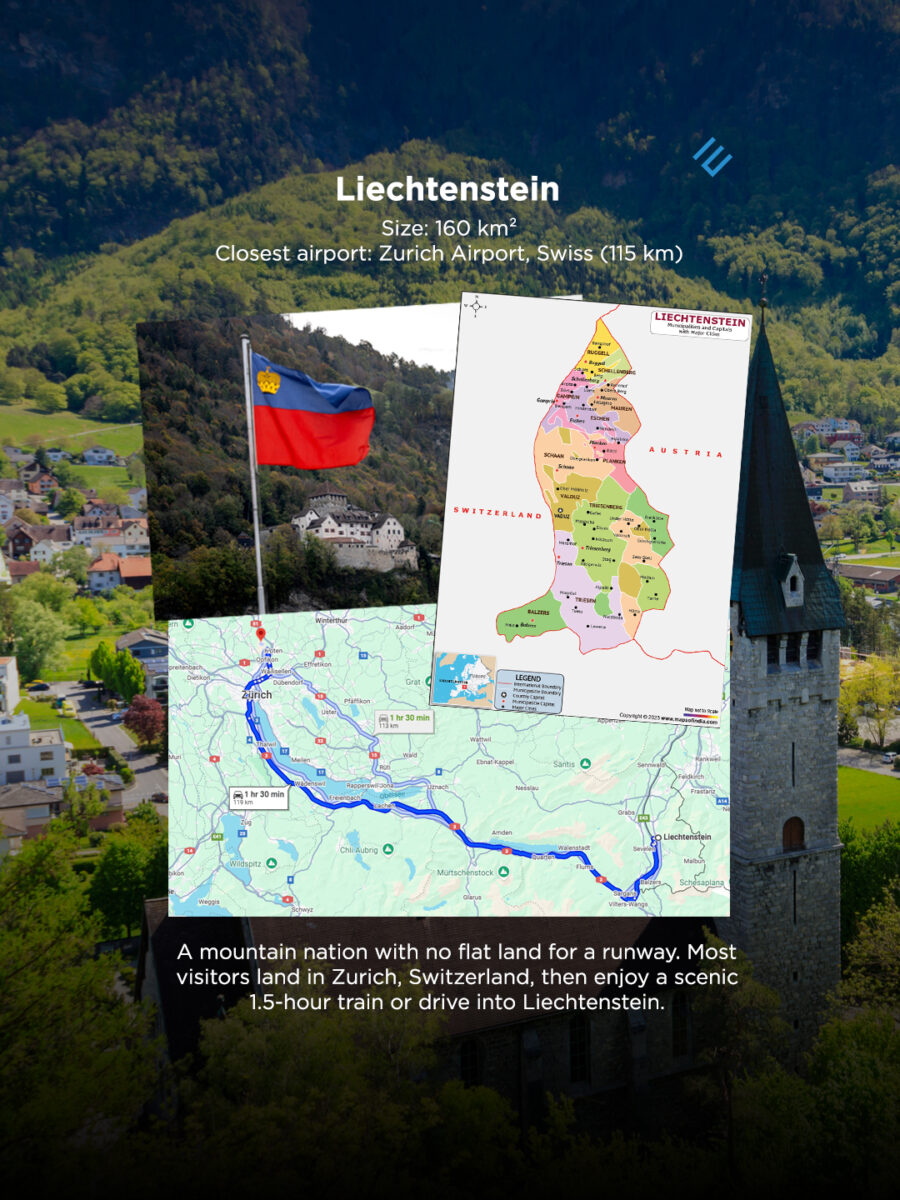
At 160 km², Liechtenstein is significantly larger than Vatican City or Monaco—but still has no airport.
Nestled between Switzerland and Austria, this alpine country is known for its dramatic mountain landscapes and peaceful atmosphere.
Why There’s No Airport
Liechtenstein’s terrain is mountainous, with very limited flat land suitable for constructing a runway.
Its geography is defined by:
Alpine peaks
Narrow valleys
The Rhine River
Building a commercial airport here would be both difficult and unnecessary given its proximity to larger neighboring countries.
How to Get There
Most travelers fly into Zurich Airport in Switzerland, approximately 115 kilometers away.
From Zurich, visitors can reach Liechtenstein in about 1.5 hours by:
Train
Bus
Car
The journey itself is scenic, passing through Swiss countryside and mountain views.
Why Visit Liechtenstein?
Liechtenstein offers:
Charming villages
Alpine hiking trails
Castle views
A peaceful, low-key European escape
It’s an ideal destination for travelers who appreciate nature and quiet sophistication.
Why These Countries Thrive Without Airports
In today’s aviation-driven world, it might seem surprising that a country could function—and flourish—without its own airport.
But these three nations prove that:
Proximity to major cities matters.
Efficient transport links compensate for size.
Unique identity attracts visitors regardless of infrastructure.
Being small doesn’t mean being inaccessible.
In fact, the journey often becomes part of the experience.
Arriving in Vatican City after walking through Rome’s historic streets…
Driving along the Mediterranean coast into Monaco…
Taking a scenic train through Swiss landscapes before entering Liechtenstein…
Each arrival feels intentional.
Travel Isn’t Always About Direct Flights
Vatican City, Monaco, and Liechtenstein may not have airports—but they have something far more valuable: character.
They remind us that travel isn’t only about convenience. Sometimes, the most memorable destinations require an extra step—a short train ride, a scenic drive, or even a helicopter hop.
And perhaps that’s part of their charm.
No runway.
No direct landing.
But plenty of reasons to visit.
Because in the end, the journey to reach a place often makes the arrival even more meaningful.
Why Guided Exploration Makes a Difference
To explore Machu Picchu beyond surface beauty requires insight. Knowledge of history, symbolism, and cultural context transforms a visit into a narrative experience. A guided journey reveals connections between structures, explains alignments with the sun and mountains, and brings clarity to what might otherwise feel overwhelming.
With expert guidance, moments gain meaning. A stone becomes a calendar. A window becomes an astronomical marker. A terrace becomes evidence of agricultural brilliance.
This is how Machu Picchu shifts from being impressive to being unforgettable.
Travel with Intention, Not Just Itineraries
Machu Picchu is not a destination to rush. Weather, light, and timing all influence how the site reveals itself. Early mornings offer mist and quiet. Midday brings clarity and color. Late afternoons soften the landscape with golden tones.
A thoughtfully designed itinerary allows space for these changes—balancing exploration with reflection. It respects the site, the environment, and the traveler’s experience.
This approach turns a visit into a journey of meaning rather than a checklist of sights.
A Place That Changes How You See the World
Many travelers describe Machu Picchu as transformative. Not because of grandeur alone, but because of what it represents: a civilization that achieved sophistication through harmony rather than dominance.
Standing among the ruins, surrounded by peaks and sky, perspective shifts. Modern concerns feel smaller. Time feels deeper. The experience becomes emotional, not just visual.
Machu Picchu leaves an imprint—not on your camera roll, but on your understanding of human possibility.
Craft Your Story Beyond the View
Want to explore Machu Picchu beyond the postcard views?
A journey this meaningful deserves careful design—one that uncovers hidden stories, respects the land, and allows moments to unfold naturally.
With Axcell Travel Destination, your Machu Picchu experience can be crafted with expert insight and personal intention. From guided exploration to seamless logistics, every detail is designed to deepen understanding and connection.
📩 DM us for a personalized Machu Picchu experience.
Because Machu Picchu isn’t just something you visit.
It’s a story you step into—one written in stone, cloud, and human imagination.
