Swap Snow for Sunshine
February 11, 2026How Italians Celebrate Valentine’s
February 11, 2026
Why the Rainy Months Reveal the Island’s Most Magical Side
When travelers think of tropical getaways, they often picture endless sunshine and dry blue skies. But in Lombok, there is a season that quietly outshines the rest—not because it is dry, but because it is alive.
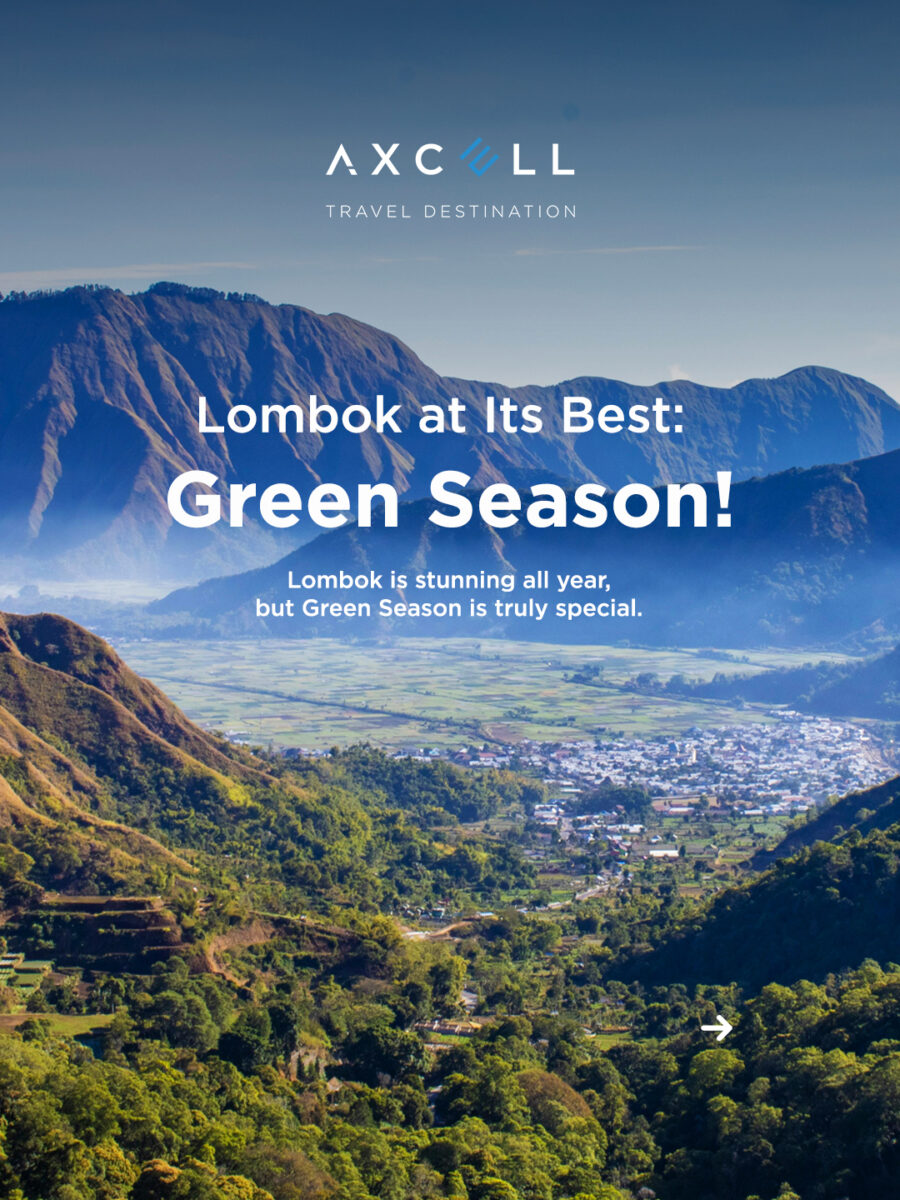
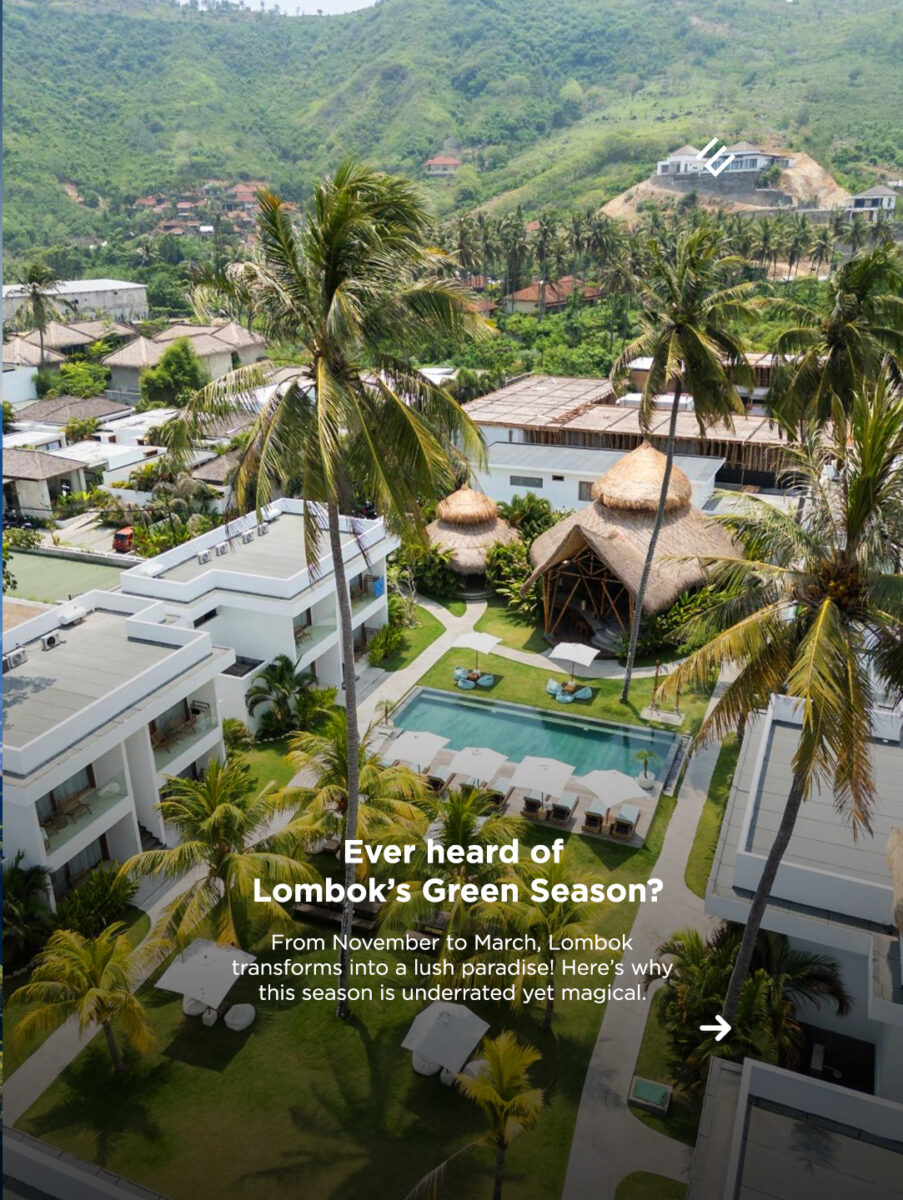
From November to March, Lombok enters what locals and seasoned travelers call the Green Season. While many hesitate at the word “rainy,” those who understand this time of year know that it transforms the island into something extraordinary.
Hills turn emerald. Rice fields shimmer with life. Waterfalls surge with energy. And beaches feel calmer, softer, and more personal.
Green Season in Lombok isn’t something to avoid—it’s something to embrace.
What Is Lombok’s Green Season? | November to March - Nature at Its Peak
Green Season refers to Lombok’s wetter months, typically from November through March. Rain showers are frequent but rarely constant. Instead of day-long storms, the island often experiences tropical bursts—intense but brief—followed by fresh air and glowing skies.
This rhythm nourishes the land. Forests deepen in color. Grasslands become velvety carpets of green. Rivers and waterfalls regain their strength.
Rather than limiting exploration, this season enhances it—offering a Lombok that feels vibrant and dynamic.
An Underrated Window for Travel
Many travelers prioritize dry season travel, leaving Green Season quieter and less crowded. Yet this is precisely what makes it magical. The island breathes differently when fewer visitors are present.
Accommodations often offer better availability. Landscapes feel untouched. And the experience becomes more intimate.
Lush & Vibrant Landscapes - Rice Fields in Their Full Glory
During Green Season, Lombok’s rice terraces transform dramatically. Fields that may appear golden or muted during dry months burst into brilliant shades of green. The contrast between paddies and palm trees creates a landscape that feels almost surreal.
Morning mist drifting over emerald hills adds to the atmosphere, especially in rural villages and countryside roads. The island looks not just beautiful—but alive.
Forests and Waterfalls Reawakened
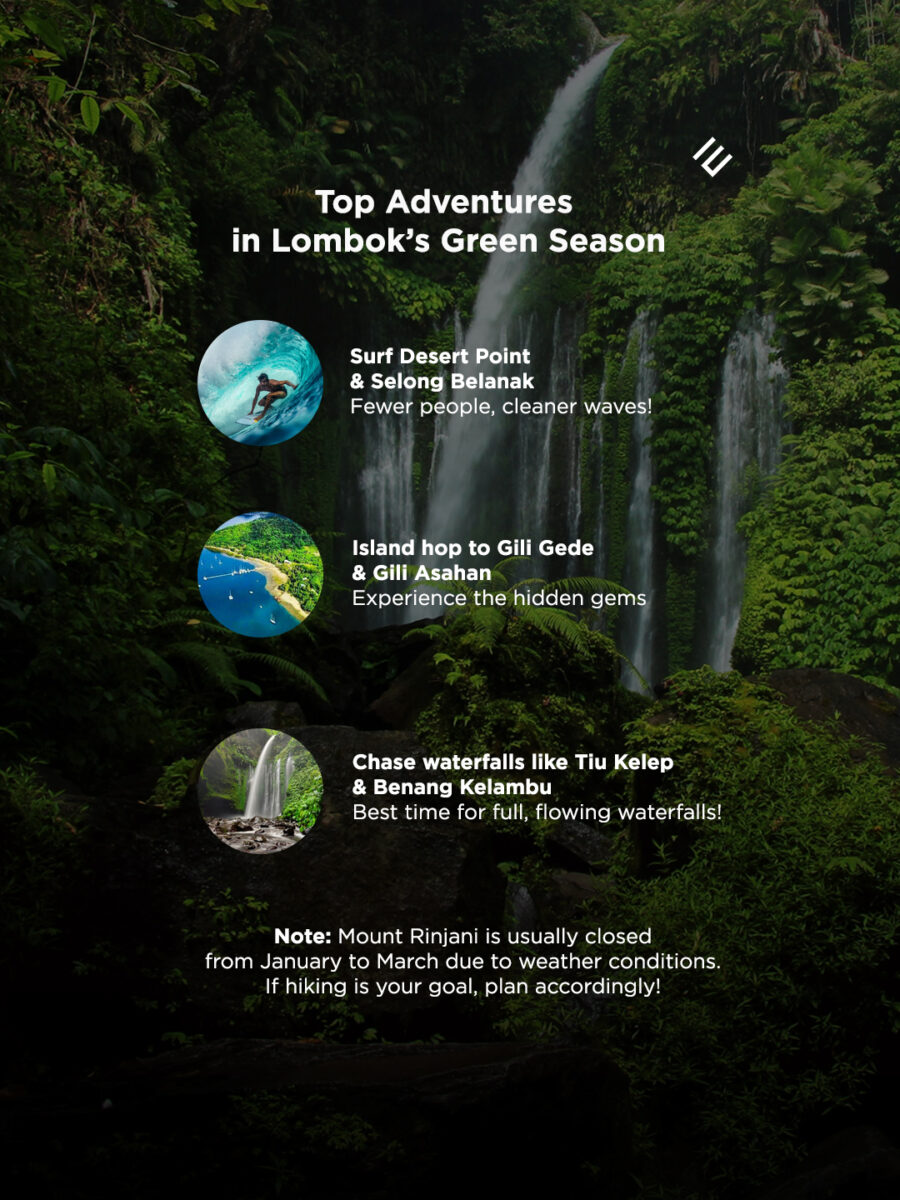
Rainfall rejuvenates Lombok’s inland forests. Trails feel cooler, leaves glisten, and waterfalls flow more powerfully. Nature becomes immersive, not just scenic.
For hikers and photographers, this season offers unparalleled depth of color and texture. Every shade of green feels richer. Every path feels quieter.
Green Season reminds visitors that Lombok is more than beaches—it is a living ecosystem.
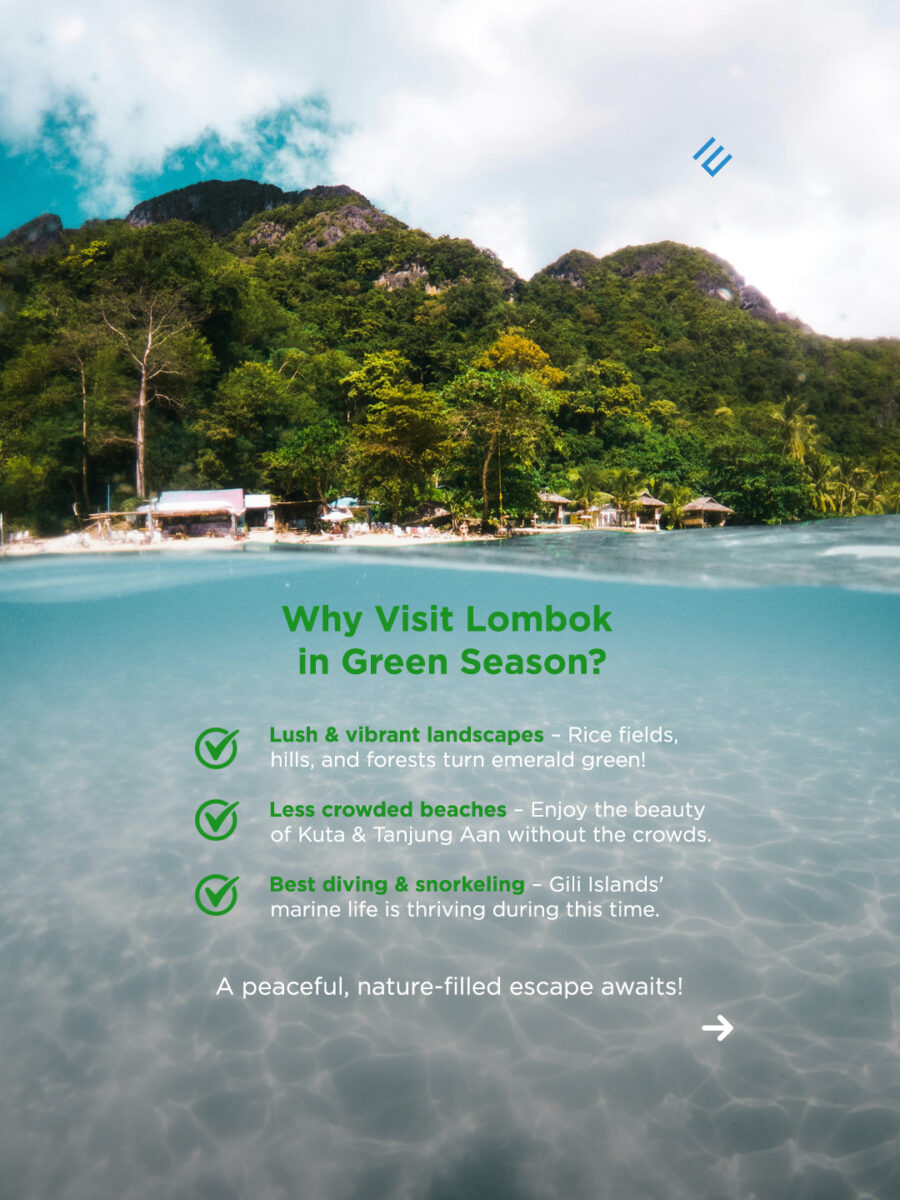
Less Crowded Beaches - Kuta Lombok Without the Rush
The southern coastline, including Kuta Lombok, is known for its dramatic beaches and relaxed surf culture. During peak dry months, these shores can become lively with visitors.
In Green Season, however, beaches often feel spacious and calm. Walking along the sand becomes a personal experience rather than a crowded one.
Cloud formations after rain often create dramatic skies, enhancing sunset views and adding texture to coastal photography.
The Beauty of Tanjung Aan
Nearby Tanjung Aan is especially captivating during this time. Its turquoise waters contrast sharply against the lush hills that frame the bay.
With fewer crowds, swimming and relaxing feel effortless. The sound of waves becomes more pronounced without background noise. Even beach cafés seem slower, inviting longer stays.
Green Season transforms beaches from social hubs into peaceful retreats.
Thriving Marine Life Around the Gili Islands - A Season of Abundance
Off Lombok’s northwest coast lie the famous Gili Islands—Gili Trawangan, Gili Air, and Gili Meno. These islands are celebrated for snorkeling and diving, and Green Season offers unique advantages.
Nutrient-rich waters during this period often support thriving marine ecosystems. Coral reefs appear vibrant, and marine life remains active. Visibility can still be excellent, particularly during calm weather windows.
Fewer Divers, More Space
Just as on land, fewer visitors mean more personal underwater experiences. Snorkeling feels less crowded, and dive groups are often smaller.
Floating above coral gardens while tropical fish weave below feels immersive and unhurried. For many, Green Season reveals the Gilis in a softer, more serene way.
The Rhythm of Rain - Tropical Showers with Purpose
Rain in Lombok’s Green Season rarely dominates the entire day. Showers often arrive in bursts, cooling the air and intensifying colors. Afterward, the island feels refreshed—almost polished.
This pattern encourages flexibility. Travelers adjust plans naturally, perhaps exploring inland during dry windows and enjoying quiet café moments during rain.
A Different Kind of Luxury
Green Season redefines luxury. It is not about constant sunshine; it is about contrast—the scent of wet earth, the sound of rainfall on palm leaves, the glow of sun breaking through clouds.
It invites slower mornings, deeper relaxation, and connection with nature’s cycles.
A Peaceful, Nature-Filled Escape | Space to Breathe
One of Green Season’s greatest gifts is space. Without peak-season crowds, Lombok feels expansive. Roads are quieter. Beaches are calmer. Even popular viewpoints feel more intimate.
Travel becomes less about timing and more about presence.
A Season for Reflection
Green landscapes naturally encourage grounding. Surrounded by life and growth, many visitors find themselves slowing down—spending more time observing, listening, and appreciating simplicity.
Green Season isn’t about doing more. It’s about experiencing deeply.
When Lombok Feels Most Alive
Lombok is beautiful year-round. But during Green Season, it reveals a side that feels raw, authentic, and profoundly alive.
Emerald hills stretch endlessly. Beaches breathe quietly. Marine life thrives. Rainfall becomes part of the story, not an obstacle to it.
For travelers willing to see beyond traditional “dry season” expectations, Green Season offers something rare: a Lombok that feels untouched, intimate, and deeply connected to nature.
Sometimes the most magical time to visit isn’t when the skies are cloudless—
but when the island is at its greenest.
Thoughtfully Designed Journeys, Just for You