

Did You Know Why Paris Has “Fake” Buildings?
February 11, 2026
How to Turn a Work Trip Into a Vacation
February 11, 2026Beyond Cherry Blossoms | Discover Japan’s Other Spring Masterpieces
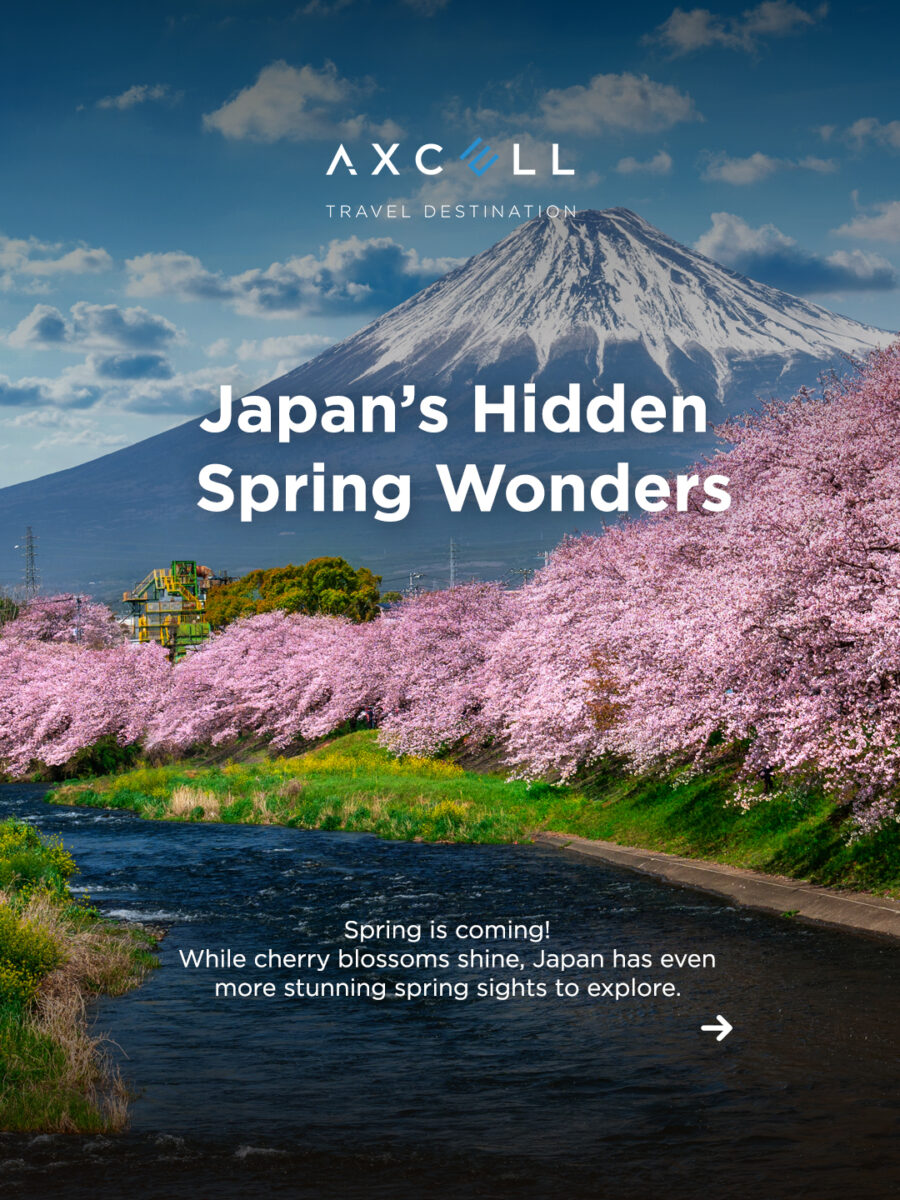
When spring arrives in Japan, the world immediately thinks of cherry blossoms. Soft pink petals floating through the air have become the global symbol of Japanese spring.
But what if you skipped the sakura crowds?
Beyond the famous cherry blossom spots lies a different side of spring—one that feels quieter, more immersive, and equally breathtaking. From rolling hills blanketed in blue flowers to storybook villages and ancient moss forests, Japan offers hidden spring wonders that reveal the season in unexpected ways.
If you’re ready to explore something beyond the typical postcard views, here are three extraordinary destinations that redefine spring in Japan.
Hitachi Seaside Park
A Sea of Nemophila
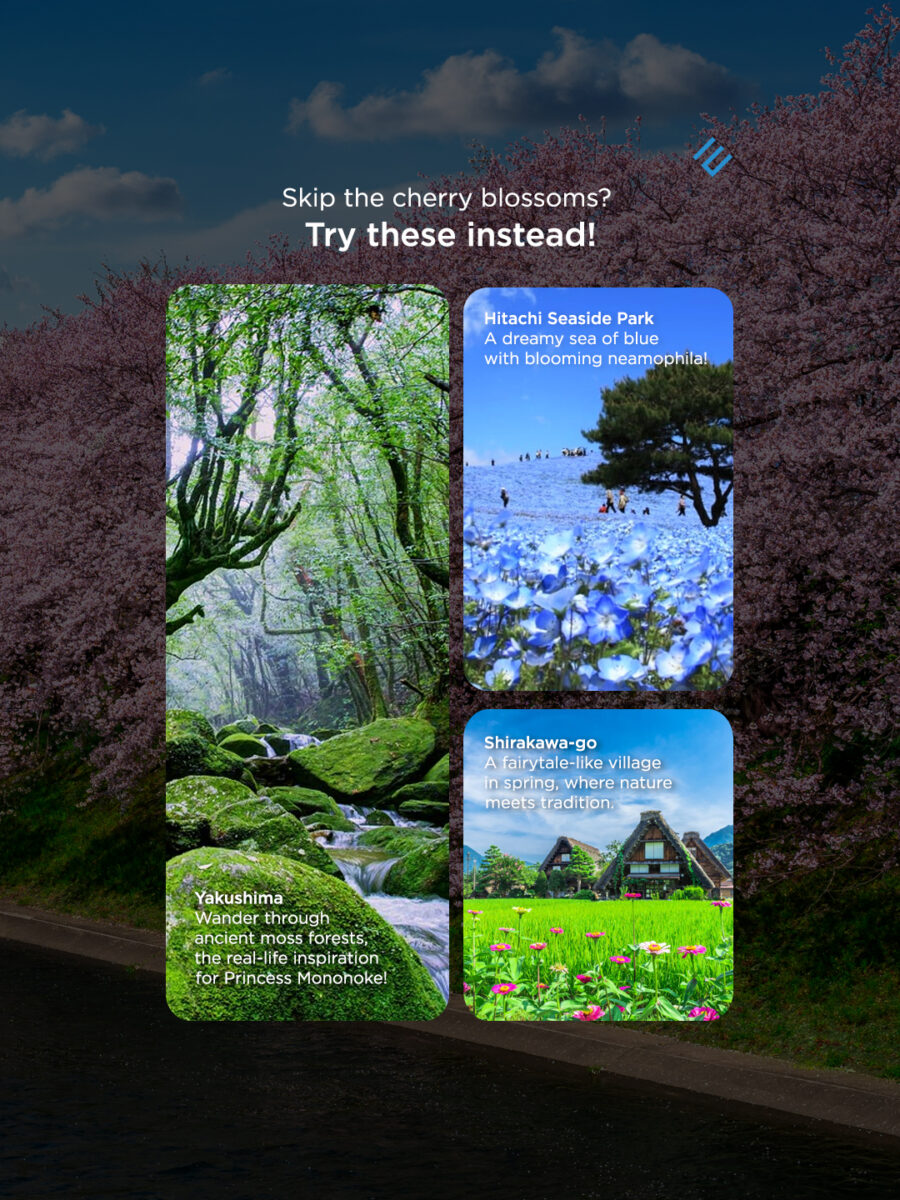
Located in Ibaraki Prefecture, Hitachi Seaside Park transforms into a surreal landscape every spring. Instead of pink cherry blossoms, visitors are greeted by an endless field of delicate blue flowers known as nemophila.
From late April to early May, millions of tiny blue petals blanket Miharashi Hill, creating the illusion of a living sky beneath your feet. The color shifts gently under changing sunlight—from pale powder blue to deeper azure—blending seamlessly with the horizon.
Unlike cherry blossoms, which are scattered throughout cities, this floral spectacle feels expansive and immersive. You’re not just standing beneath blossoms—you’re walking through a sea of blue.
A Different Kind of Spring Atmosphere
One of the reasons Hitachi feels special is its openness. Wide pathways curve gently through the park, allowing visitors to wander at a relaxed pace. The air carries a soft floral scent, and the vast sky overhead amplifies the feeling of freedom.
It’s less about fleeting petals and more about vibrant, grounded color.
The park also features seasonal tulips, daffodils, and other blooms, making it a multi-layered floral experience throughout spring.
Why Choose Nemophila Over Sakura?
Cherry blossom season is famously short and often crowded. Hitachi’s nemophila bloom offers:
A slightly later viewing window
Expansive landscapes
Unique photography opportunities
A calmer atmosphere compared to major sakura cities
For travelers seeking a spring moment that feels dreamy yet less hectic, Hitachi Seaside Park delivers something refreshingly different.
Shirakawa-go
A fairytale village where nature meets tradition
Stepping Into Another Era
Nestled in the mountains of Gifu Prefecture, Shirakawa-go feels like a storybook come to life. Famous for its traditional gassho-zukuri farmhouses—with steep thatched roofs designed to withstand heavy snow—this UNESCO World Heritage site is often associated with winter scenes.
But spring brings its own magic.
As snow melts away, fresh greenery emerges around the village. Rice fields begin to reflect the sky, and mountain backdrops soften under new growth. The contrast between centuries-old wooden homes and vibrant spring landscapes creates a scene that feels both nostalgic and alive.
Spring’s Gentle Transformation
Unlike dramatic flower fields, Shirakawa-go’s beauty is subtle. It’s found in:
Mist drifting between traditional houses
Streams flowing gently through the village
Farmers preparing fields for planting season
Quiet pathways surrounded by blooming trees
Spring here feels intimate rather than spectacular—an invitation to slow down and appreciate harmony between people and nature.
Culture Rooted in Landscape
Shirakawa-go is more than scenery; it’s living heritage. Some of the historic houses still function as homes or guesthouses, allowing visitors to experience rural Japanese life firsthand.
Spring highlights this connection. As nature awakens, daily life continues in rhythm with the seasons—a reminder that in Japan, landscape and culture are inseparable.
For travelers seeking authenticity and tranquility, Shirakawa-go offers a softer, storybook version of spring.
Yakushima
Ancient moss forests and mythical inspiration
A World of Green
Far to the south, off the coast of Kyushu, lies Yakushima—an island often described as mystical. Recognized as a UNESCO World Heritage site, Yakushima is covered in dense forests, misty mountains, and moss that carpets nearly every surface.
In spring, the island feels especially vibrant. Rainfall nourishes ancient cedar trees, some over a thousand years old. The forest floor glows in deep shades of emerald.
This isn’t a typical floral spring destination. It’s a living, breathing ecosystem that feels untouched by time.
A Spring Experience for Adventurers
Yakushima is ideal for travelers who prefer hiking over hanami picnics. Trails range from moderate walks to more demanding climbs, offering encounters with waterfalls, wildlife, and ancient trees.
Spring temperatures are comfortable for exploration, and the forest’s greenery is at its peak.
For those seeking depth over spectacle, Yakushima offers a profound connection to nature.
The Real-Life Inspiration for Princess Mononoke
Yakushima’s mossy forests are widely believed to have inspired the landscapes in the Studio Ghibli film Princess Mononoke. Walking through these trails, it’s easy to see why.
Twisted roots, towering cedars, filtered light, and drifting mist create an atmosphere that feels almost mythical. Spring enhances this mood—bringing fresh growth and renewed energy to the forest.
The result is immersive rather than ornamental. You don’t just look at nature—you step into it.
Rethinking Spring in Japan
More than cherry blossoms
While cherry blossoms are undeniably beautiful, they represent only one interpretation of spring. Japan’s landscapes are diverse, and each region expresses the season differently.
Hitachi Seaside Park celebrates spring with bold color and wide horizons.
Shirakawa-go reveals spring through quiet tradition and rural charm.
Yakushima embodies spring as renewal within ancient forests.
Each destination offers something sakura cannot: distinct personality.
When Spring Becomes a Journey of Discovery
Japan’s spring is more layered than its pink petals suggest. By looking beyond cherry blossoms, travelers can uncover landscapes that feel intimate, dramatic, and deeply rooted in place.
Whether walking through waves of blue flowers, wandering a mountain village, or stepping into a moss-covered forest, these hidden spring wonders reveal a richer side of the season.
Sometimes, the most memorable travel experiences happen when you skip the obvious—and follow curiosity instead.
In Japan, spring doesn’t belong to one flower.
It belongs to every landscape willing to bloom in its own way.
A Place That Changes How You See the World
Many travelers describe Machu Picchu as transformative. Not because of grandeur alone, but because of what it represents: a civilization that achieved sophistication through harmony rather than dominance.
Standing among the ruins, surrounded by peaks and sky, perspective shifts. Modern concerns feel smaller. Time feels deeper. The experience becomes emotional, not just visual.
Machu Picchu leaves an imprint—not on your camera roll, but on your understanding of human possibility.
Craft Your Story Beyond the View
Want to explore Machu Picchu beyond the postcard views?
A journey this meaningful deserves careful design—one that uncovers hidden stories, respects the land, and allows moments to unfold naturally.
With Axcell Travel Destination, your Machu Picchu experience can be crafted with expert insight and personal intention. From guided exploration to seamless logistics, every detail is designed to deepen understanding and connection.
📩 DM us for a personalized Machu Picchu experience.
Because Machu Picchu isn’t just something you visit.
It’s a story you step into—one written in stone, cloud, and human imagination.
