Experience Hong Kong’s International Chinese New Year Night Parade
February 10, 2026Symbolic Dishes You Must Try During Lunar New Year
February 10, 2026
The Simple Habit That Can Transform Your Energy, Mood, and Travel Experience
Travel is exciting—but it can also be exhausting. Early flights, long layovers, time zone changes, packed itineraries, and constant stimulation can quietly drain your energy before you even realize it. Many travelers try to push through fatigue with coffee, sugar, or sheer willpower, only to end the day feeling irritable, unfocused, and overwhelmed.
There is, however, a surprisingly simple habit that seasoned travelers swear by—one that doesn’t require special gear, extra planning, or cutting experiences short.
Quick naps
Not long sleeps. Not disappearing for hours. Just short, intentional rests that allow your body and mind to reset. When done correctly, quick naps can become one of the most powerful tools for stress-free, energized travel.
Why Quick Naps Matter While Traveling - Travel Fatigue Is Real
Travel disrupts nearly every routine your body relies on—sleep schedules, meal times, activity levels, and even exposure to light. Add unfamiliar environments and constant movement, and fatigue becomes inevitable.
Ignoring that fatigue doesn’t make it disappear. It often shows up later as headaches, irritability, poor focus, or low motivation—exactly the things that can turn an amazing trip into a tiring one.
Quick naps work because they interrupt this downward spiral early.
Boosting Energy Without Losing Time
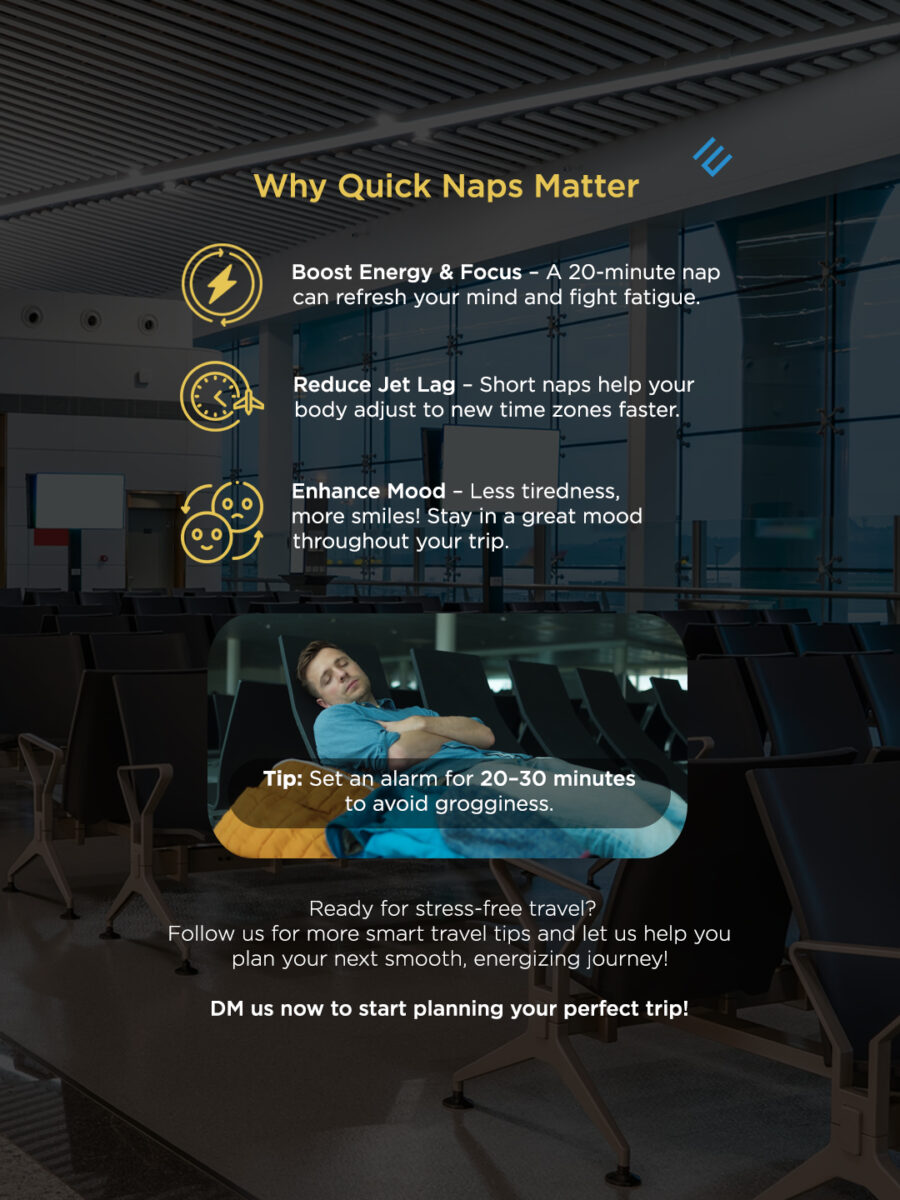
One of the biggest misconceptions about naps is that they “waste time.” In reality, a 20-minute nap can give you more usable energy than pushing through exhaustion for hours.
Short naps allow the brain to rest without entering deep sleep. This means you wake up refreshed rather than groggy, ready to continue exploring, socializing, or navigating travel logistics with clarity.
Think of quick naps as energy investments, not breaks.
Boost Energy & Focus - Mental Sharpness on the Road
Travel demands constant decision-making—finding directions, reading schedules, managing documents, adjusting plans. Fatigue dulls these skills quickly.
A short nap helps reset attention and focus, improving:
Memory and awareness
Reaction time
Problem-solving ability
This is especially valuable during travel days, city-hopping itineraries, or excursions that require concentration.
Better Experiences, Not Just More Activities
Being awake doesn’t always mean being present. Many travelers “see” places without truly experiencing them because they are too tired to absorb details.
Quick naps help you re-engage. Colors appear sharper, conversations feel easier, and moments feel more vivid. Instead of rushing from place to place on autopilot, you experience destinations with intention and clarity.
Reducing Jet Lag the Smart Way - Why Jet Lag Hits So Hard
Jet lag happens when your internal clock is out of sync with your destination. Long naps or irregular sleeping patterns can make this worse by confusing your body even further.
Quick naps, on the other hand, support gradual adjustment.
Short Naps as Time-Zone Bridges
A brief nap helps relieve overwhelming sleep pressure without pushing your body into deep rest at the wrong time. This makes it easier to:
Instead of crashing mid-afternoon or staying wide awake at night, your body learns the new schedule gently.
Strategic Rest Beats Over-Sleeping
The goal isn’t to sleep whenever you’re tired—it’s to sleep intentionally. Short naps give relief without sabotaging nighttime rest, making them one of the most effective tools against jet lag.
Enhancing Mood While You Travel - The Emotional Side of Tiredness
Fatigue doesn’t just affect your body—it affects your emotions. When you’re tired, you’re more likely to feel:
This can quietly erode travel enjoyment, even in beautiful places.
Quick Naps as Mood Reset Buttons
A short nap helps regulate emotional responses. Many travelers report feeling calmer, more positive, and more flexible after resting briefly.
This matters when:
Instead of reacting emotionally, you respond calmly—keeping the trip enjoyable for yourself and those around you.
How to Nap the Right Way While Traveling - The Ideal Nap Length
The sweet spot for travel naps is 20–30 minutes. This allows mental recovery without entering deep sleep.
Tip: Always set an alarm. Even if you don’t fall fully asleep, resting with eyes closed still provides benefits.
Best Times to Nap
Quick naps work best:
Midday to early afternoon
After long travel segments
Before evening activities, not late at night
Avoid napping too close to bedtime, as this may interfere with night sleep.
Where to Nap on the Go
You don’t need a bed. Quick naps can happen:
On flights or trains
In hotel rooms
At airports during layovers
In quiet cafés, parks, or lounges
Comfort matters less than quiet and intention.
Changing Your Travel Mindset - Letting Go of the “Do Everything” Mentality
Many travelers feel guilty resting—afraid of missing out. But constant activity often leads to burnout, not fulfillment.
Quick naps allow you to:
Travel longer without exhaustion
Enjoy evenings instead of crashing early
Stay present throughout the trip
Rest doesn’t reduce your experience—it protects it.
Travel Smarter, Not Harder
Experienced travelers know that pacing matters. They build rest into their journeys, not as an afterthought, but as a strategy.
Quick naps are one of the easiest ways to travel smarter—requiring no extra cost, planning, or sacrifice.
Small Pauses Create Better Journeys
Quick naps may seem insignificant, but their impact is anything but small. They sharpen your focus, stabilize your mood, reduce jet lag, and help you enjoy travel with more energy and intention.
In a world that celebrates constant movement, choosing to pause—briefly and mindfully—can be the most powerful travel decision you make.
Travel isn’t just about where you go.
It’s about how you feel while you’re there.
And sometimes, the best way to move forward…
is to rest for just a moment.
Thoughtfully Designed Journeys, Just for You