Travel Tip | Take Quick Naps Whenever Possible
February 10, 2026
Dreaming of a Magical Trip Without the Long Lines?
February 10, 2026When Food Becomes a Language of Hope, Blessings, and New Beginnings
Lunar New Year is more than a celebration—it is a deeply symbolic moment of renewal, reunion, and intention. Across homes, temples, and dining tables, traditions unfold with meaning passed down through generations. Among these traditions, food holds a central role, serving not only to nourish the body, but to communicate wishes for prosperity, longevity, and abundance in the year ahead.
During Lunar New Year, meals are never random. Every dish tells a story. Every ingredient carries a hope. To eat is to participate in a cultural language that speaks of family bonds, respect for ancestors, and optimism for the future.
From bustling family kitchens in China to vibrant communal feasts in Singapore, symbolic dishes unite people across regions and generations. To experience Lunar New Year fully is to understand what is served—and why.
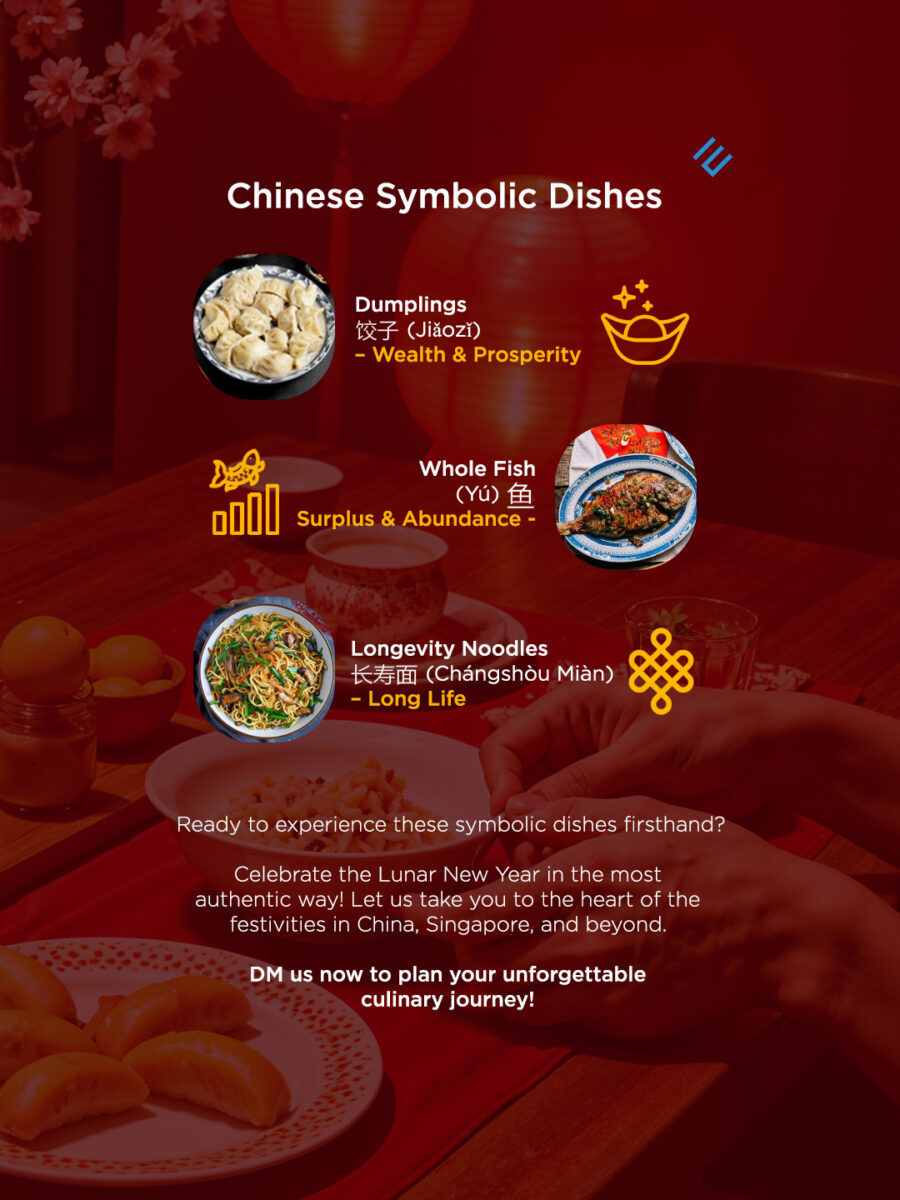
Below are three symbolic dishes you must try during Lunar New Year, each representing a powerful blessing for the year to come.

Dumplings (饺子 | Jiǎozi) - Why Dumplings Matter
Dumplings are among the most iconic Lunar New Year foods, especially in northern China. Their shape resembles ancient Chinese silver ingots, once used as currency, making them a direct symbol of wealth and financial prosperity.
Eating dumplings during the New Year is believed to invite abundance and success. The more dumplings shared, the greater the hope for a prosperous year ahead.
But their symbolism goes beyond money. Dumplings also represent togetherness. Making them is often a family activity, where generations gather around a table to fold, fill, and seal each piece by hand.
A Ritual of Family and Intention
The act of preparing dumplings is as meaningful as eating them. Families often make them together on New Year’s Eve, talking, laughing, and sharing stories while working side by side. This collective effort reinforces unity—an essential value at the heart of Lunar New Year.
Some families hide a coin inside one dumpling. Whoever finds it is believed to receive extra luck in the coming year. The ritual transforms a simple meal into a moment of excitement and shared hope.
Regional Variations and Modern Takes
While traditional fillings include pork, cabbage, and chives, modern variations reflect regional flavors and creativity. Vegetarian dumplings, seafood fillings, and fusion styles have emerged, especially in cosmopolitan cities like Singapore.
Yet no matter the variation, the meaning remains unchanged: dumplings symbolize a wish for a year filled with opportunity and reward.
To taste dumplings during Lunar New Year is to taste optimism itself.
Whole Fish (鱼 | Yú) - The Power of a Single Word
In Chinese, the word for fish—“yú” (鱼)—sounds identical to the word for surplus. This linguistic connection turns fish into one of the most powerful symbols of Lunar New Year, representing abundance that carries over from one year to the next.
A common New Year’s blessing, “Nián nián yǒu yú” (年年有余), literally means “may you have surplus year after year.” Serving a whole fish transforms this phrase into something tangible.
Why the Fish Must Be Whole
During Lunar New Year, the fish is traditionally served whole—head, body, and tail intact. This represents completeness, continuity, and a strong beginning and ending to the year.
Often, the fish is intentionally not fully eaten. Leaving some behind symbolizes that abundance will remain, rather than being consumed entirely.
Presentation matters deeply. The fish is usually placed facing the guest of honor or eldest family member, reflecting respect and hierarchy—values that remain central in Lunar New Year celebrations.
Shared Meaning Across Regions
While preparation styles vary—steamed, braised, or baked—the symbolism of fish is shared across many Lunar New Year celebrations, from family homes in China to grand reunion dinners in Singapore.
Eating fish together reinforces the idea that prosperity is meant to be shared, not hoarded. It is a collective wish for stability, security, and generosity.
Longevity Noodles (长寿面 | Chángshòu Miàn) - More Than Just Noodles
Longevity noodles are instantly recognizable by their length. Unlike regular noodles, they are kept as long and unbroken as possible, symbolizing a wish for long life and enduring health.
During Lunar New Year, these noodles are served to elders as a sign of respect, but they are enjoyed by all as a shared hope for well-being in the year ahead.
The Rule - Never Cut the Noodles
One of the most important customs surrounding longevity noodles is that they should never be cut. Cutting the noodles is believed to symbolically shorten life.
Eating them requires patience and care—values closely tied to longevity itself. The act becomes a quiet lesson in mindfulness, reminding diners to slow down and savor both food and life.
A Dish of Respect and Blessing
Longevity noodles are often served in a simple broth or lightly stir-fried, allowing their form to remain intact. The simplicity emphasizes meaning over extravagance.
In Lunar New Year feasts, this dish is often accompanied by warm wishes spoken aloud, reinforcing its role as a blessing rather than just a meal.
Celebrating Through Food Across Borders - Lunar New Year Beyond One Place
While rooted in Chinese culture, Lunar New Year is celebrated across many countries, each adding local flavors while preserving symbolic meaning. In Singapore, for example, Lunar New Year feasts blend traditional symbolism with multicultural influences, reflecting the country’s diverse heritage.
The shared thread remains intention. Whether in a family kitchen, a temple courtyard, or a festive restaurant, the symbolism of food connects people to the past while guiding hopes for the future.
Food as Cultural Memory
These dishes are more than seasonal specialties. They are edible traditions—memories carried through taste, texture, and ritual. For many families, preparing and eating these foods is how culture is passed down, one generation at a time.
Travelers who experience Lunar New Year through its cuisine gain access to this deeper cultural layer, one that cannot be found in guidebooks alone.
Eating with Meaning
During Lunar New Year, food becomes a language of blessing. Dumplings speak of prosperity. Fish promises abundance. Longevity noodles offer wishes of health and time.
To eat these dishes is not just to participate in a celebration, but to take part in a shared cultural hope for the year ahead. Each bite carries intention, memory, and connection.
For travelers seeking authentic experiences, celebrating Lunar New Year through its symbolic dishes offers something rare: a chance to understand culture not by observing it, but by tasting it.
Because during Lunar New Year, what you eat matters—
and what it means matters even more.